Middle East Tensions Flare: Oil Prices Surge Amid Iran Conflict
Middle East tensions are escalating as Iran intensifies strikes on energy sites, leading to a surge in oil prices past $116 per barrel. Meanwhile, the U.S. military targets Iranian missile launchers, and Congress narrowly rejects a war powers resolution. Extreme weather contrasts hit the U.S., with a heat wave in the West and frost advisories in the East.


Middle East Conflict Escalates, Oil Prices Soar
Tensions in the Middle East have reached a critical point as Iran intensified its strikes on energy sites in neighboring Gulf states. This escalation follows an Israeli attack on a major Iranian gas field, which is the world’s largest. Overnight attacks on Wednesday led to Iran’s president confirming the death of the country’s intelligence minister, calling it a “cowardly assassination” by Israel. This comes after the killings of Iran’s top national security official and the head of its Basij force by Israeli airstrikes earlier in the week.
The conflict has sent shockwaves through global markets, with crude oil prices soaring past $116 a barrel, a nearly 10% increase in a single day. This surge reflects growing anxiety over the world’s oil supply. U.S. forces are actively working to reopen the critical Strait of Hormuz, a vital waterway for global oil transport, as the situation continues to develop.
U.S. Responds to Attacks, Congress Debates War Powers
In response to the ongoing hostilities, U.S. forces unleashed bunker buster bombs targeting Iran’s anti-ship cruise missile launchers along the Strait of Hormuz. Meanwhile, on Capitol Hill, senators narrowly rejected a war powers resolution. This resolution would have directed the president to remove U.S. forces from the conflict without an official declaration of war. The vote’s outcome means the president retains his authority to continue military operations.
President Trump recently attended a dignified transfer ceremony at Dover Air Force Base, honoring six U.S. service members who died in a refueling aircraft crash in Iraq. In total, 13 U.S. service members have been killed since the war with Iran began, with two additional deaths from non-combat causes. The administration faces scrutiny over its rationale for initiating the conflict, with intelligence chief Avril Haines deflecting questions from lawmakers about whether U.S. intelligence supported President Trump’s claims of an “imminent nuclear threat” from Iran.
“Was it the assessment of the Intelligence Community that there was a, quote, imminent nuclear threat posed by the Iranian regime? Yes or no?” asked a senator during a hearing. Haines responded, “Senator, the only person who can determine what is and is not an imminent threat is the President.”
Economic Fallout: Fed Holds Rates Amidst Uncertainty
The escalating conflict in the Middle East has cast a shadow over the Federal Reserve’s recent meeting. The central bank, as expected, decided to leave interest rates unchanged. However, Fed Chair Jerome Powell acknowledged the potential economic impacts, warning that inflation is expected to rise. He stated that it is too soon to determine the long-term effects of the war on the economy.
“The implications of events in the Middle East for the U.S. economy are uncertain. In the near term, higher energy prices will push up overall inflation, but it is too soon to know the scope and duration of the potential effects on the economy,” Powell explained. He emphasized the unpredictability, noting that the economic impact could be significant or minimal. The price of crude oil has surpassed $120 a barrel, raising concerns about sustained high energy costs, particularly for Europe. Experts suggest that if prices remain elevated, the Fed might need to consider raising interest rates to counteract inflation, a stark contrast to earlier expectations of potential rate cuts.
Extreme Weather Contrasts: Heat Wave Grips West, Cold on East Coast
Meanwhile, the United States is experiencing starkly contrasting weather patterns. A late winter heat wave is scorching the West Coast, with record-breaking temperatures reaching triple digits in some cities. Millions are under heat alerts, with places like Tucson and Phoenix bracing for temperatures they typically only see in the summer months. The Phoenix Fire Department has already responded to multiple heat-related rescues on hiking trails, leading the city to close trails during the day.
In contrast, the East Coast is facing frost advisories and below-average temperatures. Parts of the Southeast are experiencing temperatures near freezing, with frost advisories extending from South Carolina to Alabama. While not as severe as the West’s heat, these conditions require residents to continue using extra layers of clothing. This dramatic difference highlights the unpredictable nature of current weather systems.
Allegations Against Cesar Chavez Surface
Disturbing new allegations have surfaced against the late civil rights icon Cesar Chavez. Dolores Huerta, who co-founded the United Farm Workers union with Chavez, revealed in a statement that Chavez sexually assaulted her twice decades ago. Huerta, now 95, stated she was manipulated and forced into sexual encounters, resulting in two children whom she kept secret and arranged for other families to raise.
These revelations came after a New York Times investigation detailed Huerta’s account, along with claims from two other women who allege Chavez sexually abused them starting in their early teens. The newspaper reported finding extensive evidence supporting these claims through interviews and union records. Chavez’s family acknowledged the allegations, calling them deeply painful and expressing wishes for peace and healing for the survivors. The United Farm Workers union announced it would not participate in upcoming annual remembrance events for Chavez’s birthday.
Apple Security Alert and Diplomatic Meetings
In other news, Apple has issued a security alert regarding an elaborate hacking campaign that puts iPhone users at risk. Cybersecurity experts are advising users on protective measures. Separately, President Trump is set to host Japan’s new Prime Minister later today. The meeting, initially focused on trade and strengthening the U.S.-Japan alliance, is expected to be overshadowed by the ongoing war with Iran. Japan, heavily reliant on oil imports that pass through the Strait of Hormuz, faces a delicate position as President Trump has urged allies to send warships to secure the critical waterway, a move potentially against Japanese law.
Source: Morning News NOW Full Episode – March 19 (YouTube)

Related Articles


Israel’s Strategy Against Iran Revealed
Israel's strategy to counter Iran's nuclear ambitions and regional influence centers on containment, utilizing a mix of covert military actions, intelligence operations, and diplomatic pressure. Analysts highlight the growing urgency due to Iran's nuclear advancements, while also noting the persistent risk of escalation in the volatile Middle East.
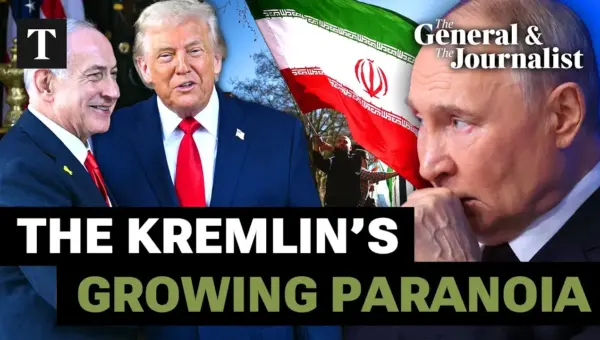
Kremlin Shakes: Elite Discontent Fuels Putin’s Paranoia
Internal turmoil and paranoia are reportedly gripping the Kremlin as President Putin faces growing elite discontent and the realities of the Ukraine war. Meanwhile, Russia's strategic involvement in the Iran conflict highlights complex calculations and potential risks, even as a wider global war remains unlikely.


Stocks Ignore War Risks, Focus on “Taco Moments”
Stock markets appear to be overlooking the severe supply chain risks stemming from the Iran conflict, focusing instead on potential diplomatic de-escalations. While the S&P 500 shows resilience, bond and commodity markets signal deep concern over disruptions to critical resources like LNG, helium, and fertilizers.