Trump’s Middle East War: An Unwinnable Escalation Trap
Professor Robert Pape analyzes the current Middle East conflict, arguing that the U.S. is trapped in an unwinnable war. Instead of weakening, Iran has grown stronger, employing economic warfare and controlling vital oil routes. The U.S. faces unclear strategic goals and a deepening escalation trap.

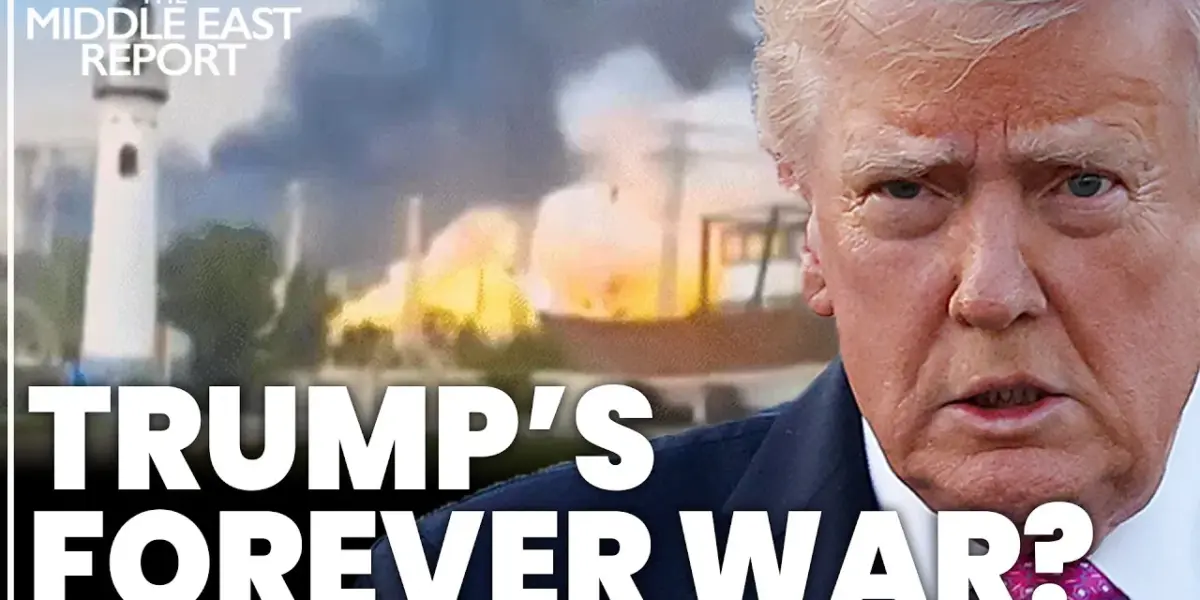
Trump’s Middle East War: An Unwinnable Escalation Trap
The current conflict in the Middle East, now in its third week, presents a complex and troubling picture for the United States. Despite military actions, including bombings and strikes, the situation is not improving. Instead, Iran appears to be growing stronger and more dangerous. This is not the quick victory many expected, but a deepening quagmire, as explained by Professor Robert Pape, a leading expert on international security.
Iran’s Growing Strength
Professor Pape argues that Iran is not losing this conflict. While leaders have been killed, the next generation of leaders is even more determined to fight back. This means that instead of seeing a more peaceful Iran, the world is witnessing a more aggressive regime. Furthermore, Iran’s power has increased. They now control the Strait of Hormuz, a vital waterway through which 20% of the world’s oil passes. This is a significant strategic failure for the U.S., whose main goal in the region for 50 years has been to prevent any single country from controlling such a large portion of global oil. Even Iran itself did not hold this much power before the current conflict began.
This control allows Iran to continue exporting oil, even increasing its shipments slightly. This has brought in significant money, estimated between one and one and a half billion dollars. This money translates to more power, as Iran can also block shipments from other Gulf nations like the UAE. Meanwhile, the goal of preventing Iran from developing enriched uranium, a key concern for 25 years, remains unmet. The bombs have not brought the U.S. any closer to controlling this dangerous material.
Economic Warfare as a Strategy
Iran’s strategy is not a conventional military fight. Instead, it’s focused on economic warfare. As Professor Pape explains, Iran’s battlefield is the global economy. They are targeting economic centers, like oil refineries and gas facilities, to inflict damage on the U.S. and its allies. This is a long-term approach, aiming to weaken the economic and political foundations of their opponents. Their goal is not a quick win, but to create lasting pressure.
This strategy is already having effects. Oil prices have jumped, and Iran’s income has risen. Wealthy Gulf states are losing money due to reduced shipping and a drop in luxury tourism, which is a significant part of their economy. In the U.S., gas prices have risen, and experts warn they could double. This economic pain could have serious political consequences, especially with midterm elections approaching. If economic costs rise, it could make President Trump appear even weaker politically.
The Escalation Trap
Professor Pape warns that the U.S. is falling into what he calls an “escalation trap.” He has studied military conflicts for decades and teaches about the dynamics of escalation – the messy middle ground between bombing targets and achieving political goals. His research shows that air power alone has historically failed to topple regimes.
He outlines three stages of this trap:
- Stage One: Bombing Facilities. Initial bombings targeted nuclear facilities. While they hit their tactical goals, they failed to destroy or fully control the enriched uranium material. The fear is that this material is now dispersing.
- Stage Two: Regime Change by Air. The next step, based on the fear of dispersing nuclear material, was an attempt to achieve regime change through bombing. However, as Pape’s historical research shows, air power alone cannot achieve this.
- Stage Three: Ground Operations. With the first two stages failing strategically, there is increasing pressure for ground operations. This could involve taking limited territorial control, especially in coastal areas of Iran. Pape believes this is the current stage the U.S. is on the verge of entering.
He emphasizes the difference between tactical success (hitting a target) and strategic success (achieving the overall goal). Tactical victories, like destroying a missile launcher, do not guarantee strategic success and can sometimes lead to the opposite outcome due to the political factors involved.
Unclear Strategic Goals
The confusion around strategic goals is a major issue. While President Trump may struggle to articulate a clear victory, the underlying goals are generally understood to be:
- Controlling Iran’s enriched uranium and preventing it from being used for weapons.
- Achieving regime change if controlling the nuclear material fails.
- Weakening Iran as a military threat to the region.
However, the current actions are not achieving these goals. Instead, Iran’s control over oil has increased five-fold, making it a greater potential threat.
Europe’s Hesitation and NATO’s Future
President Trump is looking for other countries to share the burden and costs of this conflict. However, European nations are hesitant to get more involved. They see the escalation trap and the potential for high costs that could destabilize their own governments. They understand the shockwaves Iran is causing in the global economy but are unwilling to deepen their involvement and risk further damage.
This hesitation, along with other issues like the U.S. stance on Ukraine and past disagreements, raises questions about the future of NATO. If the U.S. were to withdraw from NATO, it would mean removing troops and closing bases in Europe. These bases are crucial for U.S. military operations in the Middle East. Losing access to Europe as a staging ground would significantly increase costs and delay the deployment of resources, potentially weakening U.S. global power.
The Trend of Leadership Decapitation
A recent trend in the conflict is the targeting of political leaders. Professor Pape notes that this strategy, known as “leadership decapitation,” emerged in the early 1990s with the rise of precision air power. The idea was that removing leaders would cripple an enemy regime. However, his research, spanning decades and including work for the U.S. Air Force, shows that this strategy has consistently failed.
The allure of precision bombing makes it tempting to target leaders directly. However, this approach has not led to regime change or strategic success. Instead, it often provokes stronger resistance, as seen in the current conflict.
Trump’s Dilemma and the Midterms
President Trump finds himself in a difficult position. He started the conflict but cannot easily end it. He is losing control to other actors like Israel, Russia, and Iran itself. While he can make deals, Iran, now more powerful, will demand much more. This could include an end to sanctions, war reparations, and significant constraints on Israel’s actions, including forcing Israel to accept inspections of its nuclear facilities.
These demands are unlikely to be acceptable, and Iran has no incentive to give up the gains it has made. The strategy of “mowing the grass” – temporarily suppressing Iran only for it to grow back – has been seen before and is no longer effective. President Trump is caught in the escalation trap, facing mounting costs and no clear path to victory, with significant implications for his political future and the upcoming midterm elections.
Why This Matters
This analysis highlights a critical failure in U.S. foreign policy and military strategy. The current conflict in the Middle East, initiated under the Trump administration, appears to be an unwinnable war. Instead of achieving its objectives, the U.S. has inadvertently strengthened Iran and increased global instability. The reliance on military action without clear strategic goals or an understanding of escalation dynamics has trapped the U.S. in a costly and potentially dangerous situation.
The conflict’s economic repercussions, from rising oil prices to potential political fallout, will affect not only the Middle East but also the West. Furthermore, the erosion of international alliances like NATO, driven by strategic disagreements and a lack of shared objectives, weakens collective security. The failure to learn from historical patterns, particularly the ineffectiveness of air power alone and the counterproductive nature of leadership decapitation, suggests a need for a fundamental reevaluation of U.S. foreign policy in the region.
Implications, Trends, and Future Outlook
The trend is towards a prolonged and costly conflict, with Iran employing economic warfare effectively. The U.S. faces a dilemma: continue a costly military engagement with no clear end in sight or attempt a diplomatic solution that may require significant concessions. The weakening of alliances like NATO is a worrying trend that could leave the U.S. more isolated and less capable of projecting power. The future outlook suggests continued economic disruption, heightened geopolitical tensions, and potential for further escalation, all while the core issue of Iran’s nuclear program remains unresolved.
Historical Context and Background
The U.S. involvement in the Middle East has a long history, often driven by the strategic importance of oil and regional stability. The goal of preventing any single power from dominating the Strait of Hormuz has been a cornerstone of U.S. policy for decades. The conflict with Iran has specifically been linked to its nuclear program since the early 2000s, when international attention focused on its uranium enrichment facilities. Previous administrations have grappled with how to contain Iran’s nuclear ambitions, employing sanctions and diplomatic pressure, with varying degrees of success. The current conflict represents a significant escalation, moving beyond sanctions and diplomacy into direct military confrontation, with Professor Pape arguing it has trapped the U.S. in a cycle of escalation with no easy exit.
Source: Trump has trapped the US in a forever war in the Middle East l Prof. Robert Pape (YouTube)

Related Articles

U.S. Iran Tensions Rise Amid Shifting Alliances
Rising tensions between the U.S. and Iran are creating a volatile geopolitical situation. With conflicting signals on de-escalation and potential shifts in alliances like NATO and U.S.-Israel relations, the path forward remains uncertain. The global economy and regional stability hang in the balance.


Iran Targets US With Cyberattacks, Escalating Digital Warfare
Iran is increasingly using cyberattacks to challenge the U.S., as seen in a recent hack of the FBI director's account. Experts say this is a strategic shift due to Iran's limitations in conventional warfare. The U.S. needs to strengthen its digital defenses, focusing on encryption and cloud computing, rather than solely relying on traditional security measures.

Iran Hacks FBI Chief, Exposing U.S. Cyber Vulnerabilities
A recent hack of FBI Director Kash Patel's personal email by an Iran-linked group highlights Iran's growing cyber threat to the U.S. Experts explain how simple security oversights are exploited, emphasizing the need for basic defenses like two-factor authentication to protect against propaganda and potential infrastructure attacks.