Europe Faces Deep Freeze Amid Warming Planet: AMOC Fears
Scientists warn that Europe could face extreme cold, even as the planet warms, due to a weakening ocean current system called the AMOC. Melting ice and increased freshwater could disrupt this vital heat highway, leading to catastrophic climate shifts worldwide. While the exact timing is uncertain, experts stress the urgency of addressing climate change to avoid a potential deep freeze.

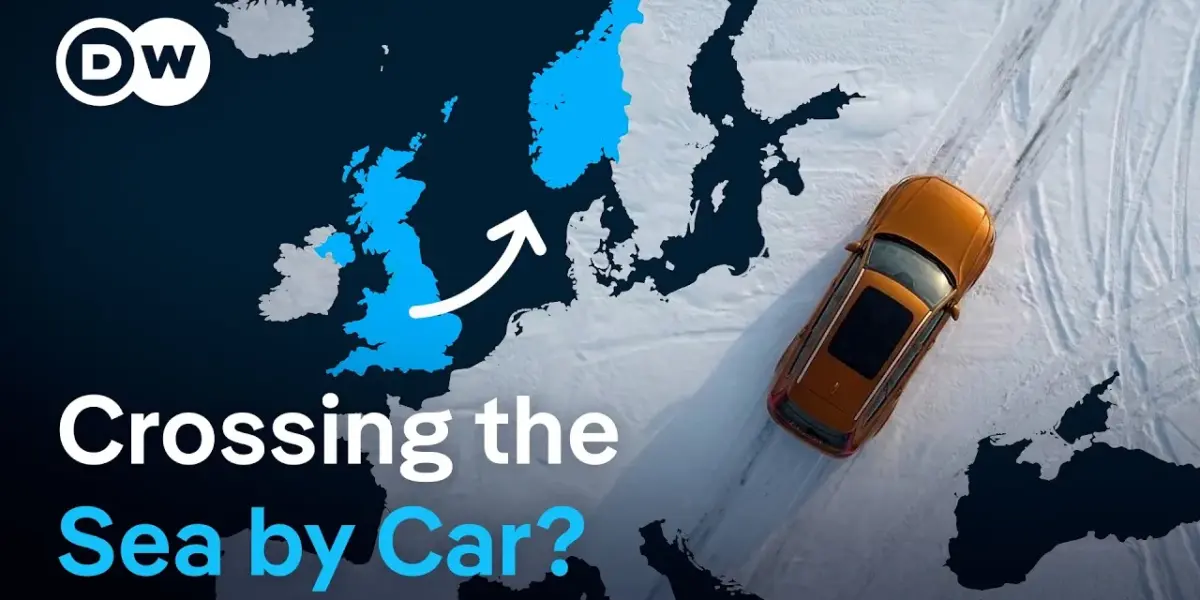
Europe Could Freeze in Warming World, Scientists Warn
In eastern Estonia, an ice road formed over the Baltic Sea in early February 2026, allowing cars to travel between the mainland and nearby islands. While locals found it a convenient way to travel, the scene hints at a concerning scientific prediction: parts of the Northern Hemisphere could face permanent deep freezes, even as the planet warms. This potential paradox is linked to a critical ocean current system known as the Atlantic Meridional Overturning Circulation, or AMOC.
Arctic Warming Fuels Extreme Weather
Recent extreme cold snaps across Europe, including frozen lakes and canals in Berlin and the closure of shipping routes in Estonia due to ice, have been linked to a weakening of the stratospheric polar vortex. This mass of cold air usually stays in the Arctic. However, as the Arctic warms, this vortex can become unstable and spill southward, bringing short bursts of freezing temperatures. This highlights the difference between weather, which is short-term, and climate, which is the long-term average. While these cold spells are weather events, scientists believe they could become more frequent as the Arctic continues to warm.
The AMOC: A Global Heat Highway
Beyond the immediate weather events, climate models are looking at a more profound change: the potential weakening or even collapse of the AMOC. This vast system of ocean currents acts like a global heat highway. It carries warm water from the tropics, near Brazil and the Caribbean, northward towards Europe. As this water reaches Greenland, it cools, becomes saltier and denser, and sinks. This sinking motion drives the current, pulling more warm water north. This process is crucial for Europe’s relatively mild and stable climate, and it also influences monsoon patterns in India and China.
Melting Ice Threatens Ocean Currents
The AMOC’s critical sinking mechanism relies on cold, salty water. However, global warming is causing Arctic ice sheets, particularly in Greenland, to melt at an accelerated rate. This meltwater is fresh and less dense than saltwater. As more fresh water enters the ocean, it makes the surface water warmer and lighter, hindering its ability to sink. Scientists fear this could slow down the AMOC, or even cause it to collapse entirely. If the AMOC weakens, less heat would be transported north, causing the tropics and the Southern Hemisphere to warm further, while northwestern Europe could experience significant cooling.
Catastrophic Consequences Predicted
A collapse of the AMOC would have far-reaching and potentially catastrophic consequences. While Hollywood depictions, like the movie “The Day After Tomorrow,” are exaggerated, the underlying concern is real. Without the northward heat transport, tropical regions would become hotter. Changes in the AMOC could drastically alter weather patterns worldwide. Studies suggest a potential collapse could lead to nearly 50% more monsoon rain in the Amazon, but 20% less in India, impacting millions of farmers who depend on these rains. In Southeast Asia, a shorter rainy season could threaten crop yields for over 100 million people.
Europe Faces Extreme Cold
For Europe, the consequences could be severe regional cooling. Some projections show average winter temperatures dropping by up to -10° Celsius (14° Fahrenheit) on the continent, and even -20° Celsius (-4° Fahrenheit) off the coast of Norway. Maps illustrating potential temperature changes if the planet warms by 2°C and the AMOC collapses show stark contrasts. Some northern regions could experience the opposite of global warming, with sea ice covering areas like Copenhagen and Edinburgh even in March. This would effectively make northwestern Europe an isolated, colder region compared to the rest of the world.
Scientific Uncertainty and Future Outlook
While the potential for an AMOC collapse is a serious concern, scientists emphasize that there is significant debate within the research community. Direct observations show a gradual weakening of the AMOC, but the data collection period is relatively short, only about 20 years. However, this observed weakening aligns with what climate models predict. The exact timing of a potential collapse remains uncertain and depends heavily on the pace of future global warming. Some scientists suggest that rapid warming could counteract the cooling effect of a weaker AMOC. Yet, even a small risk, like a 1% chance of collapse, carries immense potential consequences, prompting calls for urgent action to reduce fossil fuel use and slow global warming.
The future of the AMOC and its impact on global climate remain a critical area of research. While a complete collapse is currently predicted for after 2100, the observed weakening and the potential for drastic consequences underscore the need for immediate action to mitigate climate change. Slowing global warming by ending fossil fuel reliance is seen as the key to preventing such extreme scenarios and ensuring that ice roads remain rare snapshots of exceptional winters, rather than a permanent feature of a changing climate.
Source: Why Europe could deep freeze in a warming world | DW News (YouTube)

Related Articles


Inslee Slams Trump on Economy Amidst Rising Gas Prices
Former Washington Governor Jay Inslee strongly criticized former President Donald Trump's economic policies and his response to rising gas prices. Inslee slammed Trump as 'out of touch with reality' amidst market turmoil and the closure of the Strait of Hormuz. He also warned of potential legislative efforts to shield the oil and gas industry from climate change accountability.


Satellites May Pollute Earth’s Atmosphere, Harm Ozone
Earth's atmosphere may face a new threat from the growing number of satellites burning up upon re-entry. Scientists warn that the resulting particles could deplete the ozone layer and impact climate, urging for greater research and regulation.
Heat Dome Scorches 14 States, Shatters Records Early
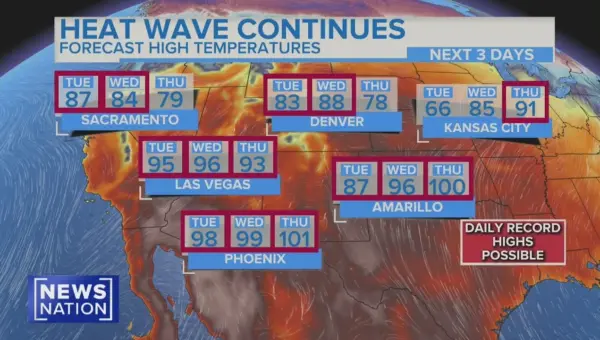
A powerful heat dome is causing record-breaking temperatures across 14 states, pushing summer-like heat into early spring. Meanwhile, Hawaii faces severe flooding due to interconnected weather systems. These extreme events highlight growing concerns about climate change.