China Aids Iran, US Summit Postponed Amid Tensions
China's ongoing support for Iran, including supplying advanced missiles, has escalated tensions and led to the postponement of a key summit with President Trump. Beijing's actions in the Strait of Hormuz and its role in the global semiconductor supply chain, particularly concerning Taiwan, are raising significant concerns for U.S. foreign policy and global markets.

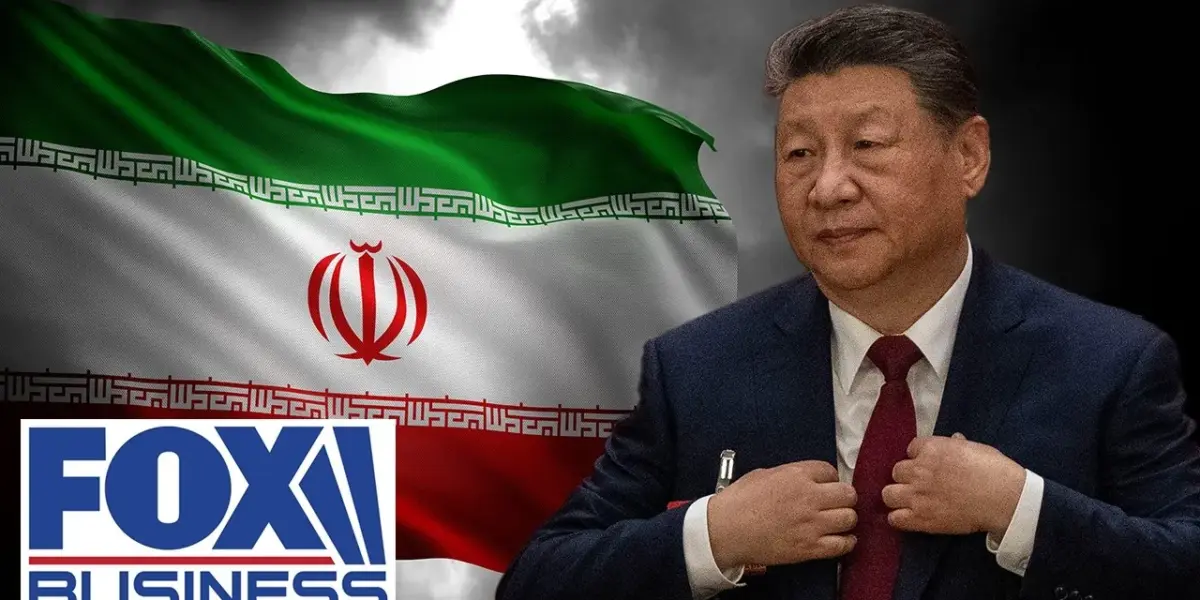
China’s Support for Iran Fuels Global Tensions, Delays US Summit
President Trump’s planned trip to Beijing, set for late March, has been postponed by five to six weeks. The commander-in-chief needs to remain in the United States to address ongoing domestic priorities. This delay comes as tensions rise over China’s role in supporting Iran, particularly concerning the Strait of Hormuz. China has rejected President Trump’s request for help in securing this vital oil passage. Instead, Beijing is urging all parties to stop military actions and avoid further escalation.
China’s Unwavering Support for Iran
Gordon Chang, a senior fellow, stated that Beijing does not wish to alter the current situation in the region. China continues to receive oil through the Strait of Hormuz, as Iran allows tankers bound for China to pass safely. Chang called it unrealistic to expect Chinese cooperation at this critical moment. He highlighted that China has been actively aiding Iran for years, with recent support becoming even more significant. A new report indicates that China has offered Tehran public support, helping it survive international isolation.
This support includes substantial oil sales, with China purchasing over 90% of Iran’s exports. Furthermore, China helps Iran maintain its international connections. Chang pointed to a disturbing detail: the supersonic missiles Iran fired at the USS Abraham Lincoln aircraft carrier were Chinese-made. Iran possesses more of these Chinese missiles. If such a missile were to hit an American ship, it could instantly change the relationship between the U.S. and China. Chang believes China’s support for Iran is comprehensive, short of sending combat troops. He controversially suggested considering China an “enemy combatant” during the ongoing conflict.
“The support that China has given Iran… is across the board. It’s everything except for combat troops. We should consider China enemy combatant an enemy combatant during the course of the war.”
Economic Levers and Trade Investigations
Experts suggest that China’s primary goal is to outlast President Trump’s term. Given China’s continued work with Iran, its claims of mediation and desire for an open Strait for oil seem contradictory. The question arises: when will the U.S. impose further tariffs and sanctions on China? It is argued that China is not acting as a benevolent party in this situation. Some propose that the U.S. should seize tankers attempting to pass through the Strait. This action could impose costs on China, potentially bringing Beijing to the negotiating table.
The U.S. is also pursuing trade investigations against China. In 2018, President Trump imposed tariffs, and investigations are ongoing. These include looking into allegations of forced labor in China. Under Section 307 of the Tariff Act of 1930, products made with forced labor are prohibited from entering the United States. It is argued that customs officials at the border could prevent such goods from entering without needing further lengthy investigations.
Taiwan’s Strategic Importance and Semiconductor Dominance
Recent assessments suggest China is not currently planning to invade Taiwan in 2027, a date previously highlighted by Admiral Davidson. However, Beijing has not ruled out using force to achieve reunification. China continues military drills in areas it claims as its own. The situation in Hong Kong, where China imposed national security laws, is seen as a potential model for Taiwan. However, unlike Hong Kong, Taiwan has a robust defense capability.
A significant factor in the U.S. interest in Taiwan is its dominance in semiconductor chip production. Taiwan, particularly the company TSMC, produces 92% of the world’s most sophisticated semiconductor chips. Samsung produces the remaining 8%. These chips are crucial not only for consumer electronics like phones but also for advanced U.S. weaponry. If China were to take control of Taiwan, it could hold the world hostage with its control over these vital components. This underscores President Trump’s directive for companies to move supply chains back to America, reducing reliance on adversaries for critical goods.
Market Implications and Investor Outlook
The geopolitical tensions and China’s actions have significant implications for global markets. The postponement of the U.S.-China summit highlights the strained relationship. China’s continued support for Iran, despite U.S. pressure, creates uncertainty in energy markets and shipping lanes like the Strait of Hormuz. Investors should monitor developments in the Middle East and the U.S. response to China’s actions.
The semiconductor industry faces particular risk. Any conflict involving Taiwan could disrupt the global supply of essential chips, leading to price increases and potential shortages. This could impact earnings for companies reliant on these components. Memory chip prices are already soaring due to high demand from hyperscale data centers, a trend expected to continue in the coming weeks and months. Investors should also watch ongoing U.S. trade investigations into China, which could lead to further tariffs and sanctions, affecting various sectors.
Source: 'ENEMY COMBATANT': Chang ESCALATES warning over China’s role (YouTube)

Related Articles

U.S. Iran Tensions Rise Amid Shifting Alliances
Rising tensions between the U.S. and Iran are creating a volatile geopolitical situation. With conflicting signals on de-escalation and potential shifts in alliances like NATO and U.S.-Israel relations, the path forward remains uncertain. The global economy and regional stability hang in the balance.


Iran Targets US With Cyberattacks, Escalating Digital Warfare
Iran is increasingly using cyberattacks to challenge the U.S., as seen in a recent hack of the FBI director's account. Experts say this is a strategic shift due to Iran's limitations in conventional warfare. The U.S. needs to strengthen its digital defenses, focusing on encryption and cloud computing, rather than solely relying on traditional security measures.


Iran Hacks FBI Chief, Exposing U.S. Cyber Vulnerabilities
A recent hack of FBI Director Kash Patel's personal email by an Iran-linked group highlights Iran's growing cyber threat to the U.S. Experts explain how simple security oversights are exploited, emphasizing the need for basic defenses like two-factor authentication to protect against propaganda and potential infrastructure attacks.