Trump’s ‘Off-the-Front-Lines’ NATO Remarks Spark International Outrage and Strategic Concerns
Donald Trump's recent claim that NATO troops "stayed a little back" from the front lines in Afghanistan has ignited international outrage, particularly in the UK where 457 service members died. Critics, including an American observer, lambasted the remarks as deeply insulting to allies who made significant sacrifices, strategically damaging to U.S. foreign relations, and a misrepresentation of NATO's vital role in the conflict.

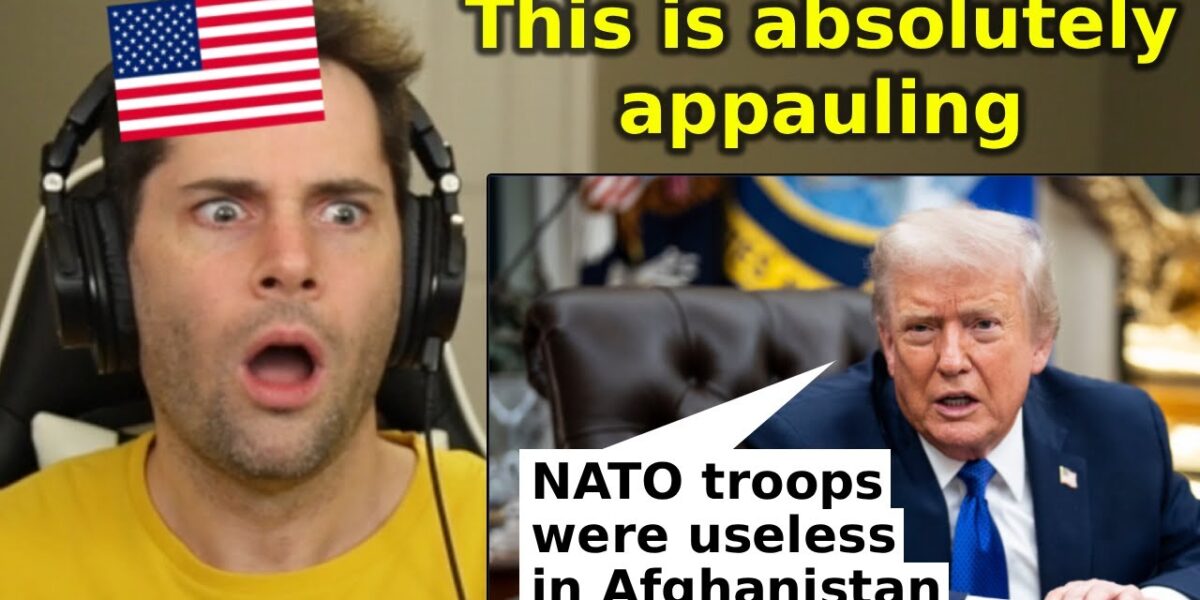
Trump’s ‘Off-the-Front-Lines’ NATO Remarks Spark International Outrage and Strategic Concerns
Former President Donald Trump has ignited a fresh wave of international condemnation following controversial remarks suggesting that NATO troops in Afghanistan “stayed a little back, little off the front lines.” The comments, made during a recent interview, have provoked widespread outrage among veterans, military personnel, and political figures in allied nations, particularly in the United Kingdom, where hundreds of service members lost their lives in the conflict.
The contentious statement comes amidst Trump’s ongoing criticism of the North Atlantic Treaty Organization (NATO) and its member states, further exacerbating concerns about the stability and cohesion of critical international alliances. Critics argue that such assertions are not only factually incorrect and deeply insulting to those who served but also strategically damaging to the United States’ global standing and its relationships with key partners.
The Provocative Statement and Immediate Backlash
During an interview with Fox News, Donald Trump reiterated his long-held skepticism about NATO’s commitment to the United States, suggesting that the alliance would not support America if asked. He then specifically addressed the involvement of allied troops in Afghanistan, stating, "They’ll say they sent some troops to Afghanistan or this or that and they did. They stayed a little back, little off the front lines."
This off-the-cuff remark immediately drew a furious reaction from an American observer, who expressed profound disbelief and anger. "What in God’s name would possess him to say something like that?" the observer questioned, highlighting the severe disrespect inherent in the statement. "That is so incredibly insulting because I know for a fact that troops from other countries that were allies with us during the Afghanistan thing, troops from many other countries definitely lost their lives. People died trying to help the United States with that whole operation."
The sentiment resonated deeply with those familiar with the sacrifices made by allied forces. The observer emphasized the profound loyalty demonstrated by allied nations in joining the U.S. in Afghanistan, especially given that the conflict was primarily initiated by the United States following the September 11th terrorist attacks.
Outrage Across the Atlantic: The UK’s Stinging Rebuke
The former President’s comments have been met with particular fury in the United Kingdom, a nation that stood shoulder-to-shoulder with the United States throughout the Afghanistan campaign. British media outlets, including the BBC, reported widespread outrage among Members of Parliament (MPs) and veterans. The collective security clause of NATO, Article 5, was invoked for the first and only time in the alliance’s history after the 9/11 attacks, leading to a robust international response in Afghanistan, in which the UK played a significant role.
The human cost for the UK was substantial, with 457 British service personnel losing their lives in the conflict. Steven Kinnock, a UK Health Minister, publicly expressed his disappointment, stating, "Our armed forces are the definition of patriotism, courage, dedication, professionalism. They put their lives on the line to defend our country." He underscored the reality of the sacrifice: "457 British soldiers lost their lives. That is, you know, that is the reality."
For many, Trump’s assertion that allied troops "stayed off the front lines" is an "absolute insult" to these fallen heroes and their families. The American observer echoed this sentiment, calling it "the most disrespectful thing you can like in this world if you think about it. When somebody lays their life down for you to to pull to to put that into question or minimize the significance of that… it’s just outrageous."
NATO’s Indispensable Role in Afghanistan: A History of Shared Sacrifice
The war in Afghanistan, which began in October 2001, saw an unprecedented display of international solidarity. Following the invocation of Article 5, NATO launched its International Security Assistance Force (ISAF) mission, which grew to include contributions from over 50 countries, including all 28 NATO member states and numerous partner nations. This mission was designed to combat terrorism, stabilize the country, and train Afghan security forces.
Allied troops were deployed across Afghanistan, engaging in combat operations, counter-insurgency efforts, and nation-building initiatives alongside American forces. They operated in some of the most dangerous regions, including Helmand, Kandahar, and Kunar provinces, often leading patrols, conducting raids, and facing direct enemy fire. To claim they "stayed back" ignores the reality of their extensive and often deadly contributions.
Beyond the UK’s 457 casualties, thousands of other allied service members from nations like Canada, Germany, France, Italy, Denmark, Poland, and Australia also made the ultimate sacrifice, fighting and dying alongside American counterparts. These nations sent troops, equipment, and resources, demonstrating a profound commitment to collective security and the principles of the NATO alliance.
The American observer passionately refuted Trump’s claims, stating, "Our allies died for us to help us. If that’s not being on the front lines, I don’t know what is." He further highlighted the strategic folly of alienating allies: "Is he trying to piss everyone off? Is he trying to make everyone hate us even more? Our ally, our NATO allies, he’s trying to make them mad. So what is he trying to make it so nobody wants if we were ever under attack, terrorist attacks, war? Would he prefer no no one come to help us? That we don’t have any allies? What is the point in saying this?"
A Pattern of Criticism: Trump’s Strained Relationship with NATO
Donald Trump’s recent comments are not an isolated incident but rather fit a broader pattern of his rhetoric concerning NATO. Throughout his presidency, he frequently criticized alliance members for not meeting their defense spending targets (2% of GDP), labeling some as "delinquent." He repeatedly questioned the value of the alliance and even reportedly mused about withdrawing the United States from NATO, sending shockwaves through diplomatic and security circles.
His insistence that the U.S. has "never really asked anything of them" is also directly contradicted by historical events, most notably the invocation of Article 5 after 9/11. This consistent questioning of NATO’s fundamental principles and its members’ contributions has created significant unease among allies, leading to concerns about the future of transatlantic security cooperation.
The American observer articulated this concern, noting that Trump seems to be "trying to like boast about how the United States doesn’t need NATO, which is just a separate idiotic thing to say." He added, "We have 100% requested help before in Afghanistan is like a perfect example of that."
Strategic Fallout and Damaged Reputation
The implications of such statements extend far beyond immediate outrage. Strategically, undermining the contributions of NATO allies risks eroding trust and weakening the alliance’s deterrent capabilities. In an increasingly complex global security landscape, strong alliances are considered vital for addressing shared threats, from terrorism to cyber warfare and geopolitical rivalries.
Comments that disparage the sacrifices of allied service members can lead to resentment and a diminished willingness to cooperate in future crises. The American observer lamented the potential long-term damage: "There’s already been like untold damage to the American reputation. People don’t want to do business with us. People don’t want to invest in the United States. It’s not seen as reliable anymore. And now this, people aren’t even going to want to like ally with us for military defense."
Furthermore, such remarks can be seen as a gift to adversaries who seek to sow discord within Western alliances. By creating divisions and fostering mistrust, they potentially weaken the collective response to aggression and destabilize international order. The observer concluded with a powerful apology, stating, "on behalf of the United States. Apologies for our president’s statement on that. That’s outrageous and Americans don’t think that." He underscored the gravity of the situation, calling it "one of the dumbest, most disrespectful things I’ve ever heard Donald Trump say."
Conclusion: A Test of Alliance Resilience
Donald Trump’s assertion that NATO troops "stayed a little back" in Afghanistan represents a profound insult to the thousands of allied service members who served, fought, and died alongside American forces. It has provoked a strong backlash internationally and domestically, highlighting the deep respect many Americans hold for their allies.
The incident serves as a stark reminder of the delicate nature of international diplomacy and the critical importance of honoring the sacrifices made in the name of collective security. As the world navigates ongoing geopolitical challenges, the resilience of alliances like NATO depends not only on shared strategic interests but also on mutual respect and recognition of shared burdens.
Source: American Reacts to Trump Disrespecting NATO Troops that Fought in Afghanistan (YouTube)

Related Articles

Trump’s Allies Rebel: Conservatives Slam President’s Policies
Prominent conservative figures and lawmakers are openly criticizing President Trump's policies in 2026, signaling a growing divide within the movement. From Candace Owens questioning the Iran conflict to Senator Rand Paul challenging trade policy, a wave of dissent is challenging the president's agenda.

Trump Threatens Fed Chair Powell, Faces Nomination Blockade
President Trump is threatening to fire Fed Chair Jerome Powell over a renovation probe, creating a political stalemate. Senator Tom Tillis is blocking Trump's nominee, Kevin Warsh, until the investigation concludes. Warsh himself faces scrutiny over his vast personal wealth, estimated between $135-226 million, raising conflict of interest concerns.

Trump’s Grip Weakens as Allies Falter, Democracy’s Future Hinges
Donald Trump's approval ratings are plummeting, even among his core supporters, signaling a potential collapse of the MAGA movement. Global events, like Hungary's shift to democracy, and domestic economic woes are fueling discontent and opening doors for broader political coalitions.