Middle East Conflict Fuels Oil Price Surge, Sparks Political Debate
Tensions in the Middle East have escalated, driving oil prices above $116 per barrel amid retaliatory strikes between Iran and Israel. The conflict has sparked political debate in Washington over the rationale for U.S. involvement and congressional war powers.


Middle East Conflict Escalates, Oil Prices Soar
Tensions in the Middle East have sharply intensified, leading to a dramatic rise in crude oil prices and sparking heated political debate in Washington. Overnight, Iran escalated its attacks on energy sites in neighboring Gulf states, including a key facility in Qatar. This action is seen as retaliation for an earlier Israeli strike on a major Iranian gas field, which is the world’s largest.
The price of crude oil surged past $116 per barrel, marking an almost 10% increase in a single day. This sharp rise reflects growing anxiety over the stability of the global oil supply. Following the overnight attacks, Iran’s President confirmed the death of the country’s intelligence minister, calling it the latest in Israel’s “cowardly assassinations.” This follows the earlier deaths of Iran’s top national security official and the head of its Basij force in Israeli airstrikes.
The conflict has also impacted U.S. service members. President Trump attended a dignified transfer of remains for six U.S. service members who died in a refueling aircraft crash in Iraq. In total, 13 U.S. service members have been killed since the conflict began, with two others dying from non-combat causes.
U.S. Responds, Political Divisions Emerge
In response to the ongoing hostilities, the U.S. unleashed bunker buster bombs targeting Iran’s anti-ship cruise missile launchers near the Strait of Hormuz. Meanwhile, in Washington, a significant political divide emerged as senators narrowly rejected a war powers resolution. This resolution would have directed the President to remove U.S. forces from the conflict without an official declaration of war.
NBC News Chief International Correspondent Keir Simmons reported from Riyadh, Saudi Arabia, highlighting the tense atmosphere. He described attending a meeting of Arab and Islamic foreign ministers while missiles were being intercepted over the capital city. “We were not intimidated,” stated the Saudi Foreign Minister, describing the attacks as a “blatant attempt at blackmail” timed to coincide with the diplomatic gathering.
The Saudi minister emphasized that the current situation makes Iran an unreliable partner. He added, “The reality is, any re-engagement with Iran, this conflict will end at some point.” While some allies, like Oman, advocate for helping the U.S. exit the conflict, the prevailing mood among Gulf countries suggests a point of no return has been reached in regaining trust with the Iranian regime.
Oil and Gas: The Centerpiece of the Conflict
The conflict’s focus has increasingly centered on oil and gas exports. President Trump issued a strong statement, calling on Israel to halt attacks on Iran’s major gas field, which is shared with Qatar. He vowed to “massively blow up the entirety of that natural gas field” if Iran continues to attack energy infrastructure in the Gulf region.
This exchange highlights the critical role of energy in the ongoing hostilities. The strikes on the Ras Laffan gas facility in Qatar are directly linked to the surge in gas prices. The situation is described as a moment of profound danger and escalation, with the back-and-forth targeting of energy infrastructure underscoring its central importance to the war.
Intelligence and Political Scrutiny
Amid the escalating conflict, the Trump administration faces scrutiny over its rationale for initiating the war. During a congressional hearing, Director of National Intelligence Tulsi Gabbard deflected questions about whether U.S. intelligence supported President Trump’s claims of an imminent nuclear threat from Iran.
When pressed by senators, Gabbard stated, “The only person who can determine what is and is not an imminent threat is the President.” This response drew sharp criticism, with lawmakers arguing that it is precisely the intelligence community’s responsibility to assess and report on such threats. Critics suggested that Gabbard’s evasiveness indicated a potential contradiction between White House statements and intelligence assessments.
Further complicating the administration’s narrative, Joe Kent, a former ally of President Trump and Director of the National Counterterrorism Center, resigned. Kent publicly stated that Iran was not on the verge of obtaining a nuclear weapon, directly contradicting the President’s rationale. Sources indicate Kent is now under FBI investigation for allegedly leaking classified information.
Federal Reserve Monitors Economic Impact
The ongoing war in the Middle East has also cast a shadow over economic outlooks. The Federal Reserve, as expected, left interest rates unchanged following its recent meeting. However, Fed Chair Jerome Powell acknowledged the war’s potential impact on the economy.
Powell warned that inflation was expected to rise in the near term due to higher energy prices. He stressed, however, that it was “too soon to know” the full scope and duration of the potential effects on the economy. “Nobody knows,” Powell stated multiple times during a press conference, emphasizing the uncertainty surrounding the conflict’s long-term economic consequences. With crude oil prices topping $120 a barrel, the Fed faces a challenging environment as it tries to manage inflation and economic stability.
Looking Ahead
The situation remains highly volatile, with the conflict showing no signs of immediate de-escalation. The political debate in Washington over the President’s authority to wage war without congressional approval is likely to continue. Meanwhile, the global economy will be closely watching oil prices and the potential ripple effects of this escalating Middle East crisis.
Source: LIVE: NBC News NOW – March 19 (YouTube)

Related Articles

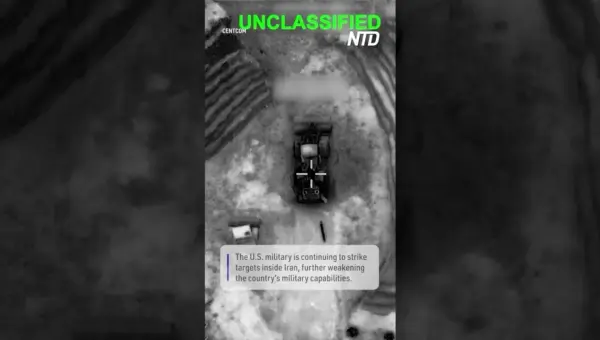
US Strikes Cripple Iran’s Military Might, CENTCOM Reports
U.S. Central Command reports ongoing strikes inside Iran are significantly weakening its military power. This direct action aims to reshape regional security dynamics, but carries risks of escalation. The long-term impact depends on Iran's response and ability to adapt.


House Funds DHS Short-Term, Senate Stalemate Looms
The House has passed a short-term bill to fund the Department of Homeland Security, but the Senate is expected to reject it. This temporary measure highlights ongoing political divisions and the challenges in reaching long-term budget agreements in the U.S. Congress.


Iran Targets US With Cyberattacks, Escalating Digital Warfare
Iran is increasingly using cyberattacks to challenge the U.S., as seen in a recent hack of the FBI director's account. Experts say this is a strategic shift due to Iran's limitations in conventional warfare. The U.S. needs to strengthen its digital defenses, focusing on encryption and cloud computing, rather than solely relying on traditional security measures.