Fed’s Powell Faces Inflation Doubts Amid Market Turmoil
Federal Reserve Chair Jerome Powell's comments on inflation and the economy are facing scrutiny, as markets react to geopolitical uncertainty and differing economic outlooks. While some analysts warn of stagflation and a looming crisis, others see resilience despite sector-specific risks.

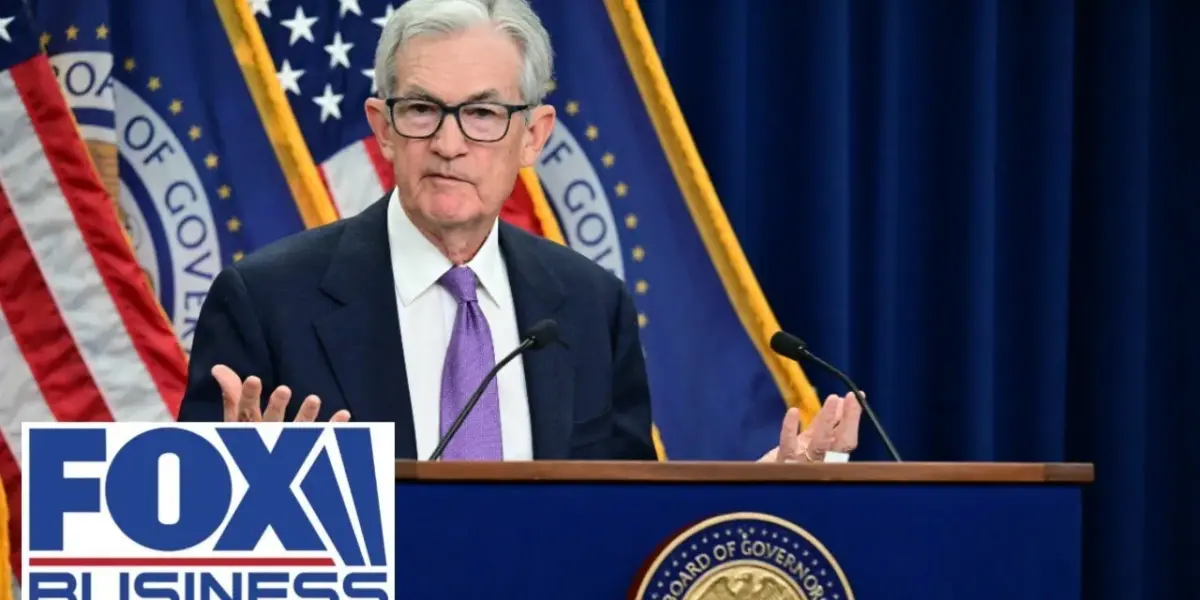
Powell’s Inflation Stance Questioned as Markets React to Economic Uncertainty
Federal Reserve Chair Jerome Powell’s recent statements on inflation and the economy are drawing sharp criticism from some market watchers. As the Dow Jones Industrial Average tumbled 709 points, investors grappled with uncertainty stemming from global events and the Federal Reserve’s own outlook. The market’s reaction highlights a growing divergence in views on the health of the U.S. economy and the path forward for monetary policy.
Oil Shock and Inflation: A Lingering Unknown
A key point of discussion during Powell’s press conference revolved around the potential impact of oil price shocks. When asked about the duration of such effects, Powell stated, “Nobody knows.” He acknowledged that higher oil prices could reduce personal income and consumption, but also noted the possibility of lower-than-expected outcomes. This admission of uncertainty contrasts with the Federal Reserve’s stated commitment to achieving its 2% inflation target.
“The economic effect could be bigger, smaller, much smaller, much bigger, we don’t know. People are writing down something that makes sense that they have no convictions… If we have a long period of higher gas prices, that will weigh on personal income and consumption but we don’t know if that will happen.” – Jerome Powell
This ambiguity fuels concerns among economists like Peter Schiff, Chief Economist and Market Strategist at Euro Pacific Asset Management. Schiff argues that the Fed is failing to grasp the true extent of inflation. He points to a significant jump in the Producer Price Index (PPI) in February, which rose 0.7% and annualized to 8.4%, as evidence of a substantial inflation problem the Fed is not adequately addressing.
Schiff’s Dire Economic Outlook
Schiff contends that the Federal Reserve’s decision to hold rates steady, or even consider cuts, is misguided. He believes the Fed should be raising interest rates, not cutting them, to combat inflation. According to Schiff, every rate cut since the summer of 2023, when the Fed Funds rate was above 5%, has been a mistake. He advocates for substantial rate hikes, potentially hundreds of basis points, and a return to quantitative tightening, a policy of reducing the Fed’s balance sheet.
His assessment of the broader economy is bleak. Schiff cites a low Q4 GDP growth of 0.7% and a total GDP growth of 2.2% for the previous year, which he notes was below the 2.8% growth in 2024, indicating a rapid slowdown even before recent geopolitical events. He warns of an impending recession and a looming housing crisis, exacerbated by a national debt that has surpassed $30 trillion and is projected to soar higher. Schiff dismisses Powell’s comparison of current conditions to the 1970s, stating, “It’s worse than 1970s.”
Nathan Sheets’ More Optimistic View
Nathan Sheets, Chief Economist at PGIM Quantitative Solutions and former Federal Reserve official, offers a more tempered perspective. While acknowledging the economic challenges, Sheets maintains an optimistic outlook, driven by a resilient U.S. consumer and ongoing significant investment in artificial intelligence. He describes the corporate sector as lean, efficient, and globally competitive.
Regarding rate cuts, Sheets finds the rationale “tenuous.” He suggests that from the Fed’s perspective, the federal funds rate may still be slightly above a neutral level, meaning it’s not overly restrictive or overly stimulating for the economy. He notes that while there was some dissent on the Federal Open Market Committee (FOMC) favoring a quarter-point cut, no members were actively voting for a rate hike, likely due to concerns about market reactions and the potential impact on the economy.
Housing Sector Concerns and 2008 Parallels
Both analysts touch upon the housing market, a sector showing clear signs of weakness. While Sheets believes the broader economy can grow despite softness in real estate, he identifies housing as the “softest part of the economy” and a significant risk. Schiff draws parallels to 2008, pointing to declines in homebuilder stocks like Toll Brothers, Lennar, and Pulte Group, and the homebuilders index. He warns of increased leverage in the current market, suggesting a potential for a financial crisis if the Fed were to implement the right policies (i.e., hiking rates significantly).
Sheets acknowledges the housing sector’s vulnerability but maintains his baseline forecast for continued economic growth. He views the situation as a risk rather than an immediate crisis, contrasting with Schiff’s more alarmist predictions.
Powell’s Term and Legal Scrutiny
A notable moment in the press conference involved a question about Powell’s term, which was set to expire. He addressed a Department of Justice subpoena attempt related to testimony about headquarters cost overruns, stating he had no intention of leaving until the investigation was fully resolved. On the decision of whether to continue serving as Governor after his term ends, Powell stated he had not yet made that decision, but would base it on what is best for the institution and the public.
Sheets suggested that Powell’s position gives him an advantage, but also incentivizes political actors to resolve the situation. He believes Powell’s continued influence at the Fed remains significant, particularly if Congress were to react to the ongoing scrutiny.
Market Impact and Investor Considerations
The confluence of geopolitical tensions, inflation concerns, and the Fed’s uncertain policy path creates a volatile environment for investors. The conflict in the Middle East adds another layer of unpredictability, particularly concerning oil prices. Schiff views this as a prime opportunity to invest in gold and gold mining stocks, arguing that war is inflationary and will lead to higher budget deficits, forcing the Fed to monetize debt and accelerate inflation.
He advises selling U.S. stocks and bonds, which he believes are overvalued, and preparing for “massive stagflation and high inflation.” Sheets, while more cautious, agrees that the current environment is not ideal. The market’s reaction, with the Dow seeing significant losses, underscores the fragility of investor confidence amidst these complex economic crosscurrents.
Source: Powell doesn’t understand the economy or inflation, economist argues (YouTube)

Related Articles

AI Threatens White-Collar Jobs, Reshaping U.S. Workforce
Artificial intelligence is poised to significantly reshape the U.S. job market, raising concerns among recent graduates and experienced professionals about future employment. While some lawmakers call for regulation, experts emphasize adaptation and learning to work with AI.

Iran Conflict Sparks Market Volatility, Experts Weigh In
Geopolitical tensions in the Middle East have rattled global markets, with stocks falling and safe-haven assets like the U.S. dollar strengthening. Experts suggest the market may have overreacted, creating potential buying opportunities, but warn of a "bumpy journey" ahead due to infrastructure damage and potential oil shortages. Concerns also linger about the Federal Reserve's independence amidst political commentary.
Markets Wobble as Geopolitics Shift Dramatically
Global markets are showing volatility as geopolitical tensions rise, with the Nasdaq nearing correction territory. Concerns over consumer spending, rising costs, and the nation's fiscal health are intensifying. Analysts debate whether current events represent short-term market noise or a fundamental "reinvention of geopolitics" with long-term implications.