Miller’s War Spin Crumbles Under Scrutiny
Stephen Miller's defense of the Trump administration's actions regarding the Strait of Hormuz faced sharp criticism for its perceived spin and contradictions. The analysis questions the administration's claims of swift military success and highlights the economic fallout and lack of foresight regarding Iran's retaliation.

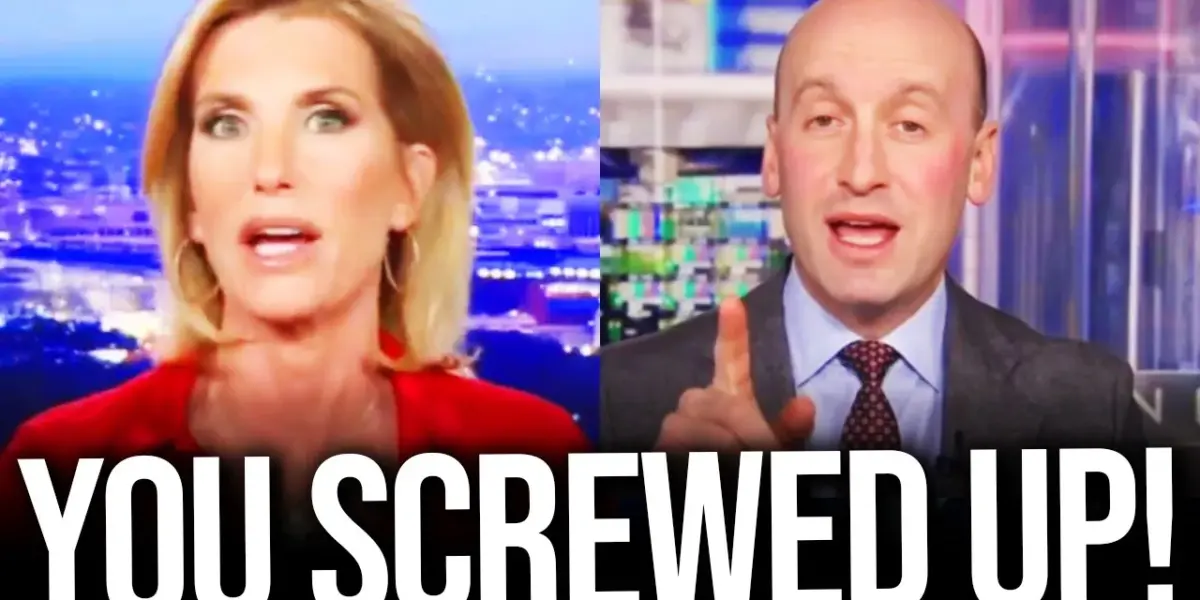
Miller’s War Spin Crumbles Under Scrutiny
Watching Stephen Miller, a former top official in the Trump administration, debate foreign policy on live TV has become a predictable event. On the Adam Mockler feed, his appearances are often highlighted for what’s described as his use of “repulsive lies.” A common pattern emerges: Miller starts interviews calmly, but as the discussion continues, he becomes increasingly agitated, often ending up shouting. This intensity, some observers note, can be unsettling, even for the interviewer.
The recent exchange focused on the Strait of Hormuz, a critical shipping lane. Iran’s ability to threaten this narrow passage directly impacts global oil supplies and prices. During a Fox News interview, Miller was asked why the situation there had become a persistent problem, especially after the U.S. had reportedly weakened Iran’s military. Miller’s response was surprising. He argued that the situation had resolved much faster than expected, claiming that military objectives had been achieved in days, not months or years, due to President Trump’s decisive leadership.
This interpretation was met with strong criticism. The analysis presented on the Mockler feed called Miller’s explanation “the craziest spin I’ve ever seen.” The argument was made that it’s impossible to frame the administration’s failure to secure the Strait of Hormuz as a success. Doubts were raised about the conflicting claims regarding Iran’s military strength. If Iran’s nuclear capabilities were “obliterated” months ago, yet they can still strike ships in the Strait, and if their navy is supposedly dismantled, how do they still pose a threat? This inconsistency, critics argue, points to the administration misleading the public.
Historical Context: Strategic Waterways and Geopolitics
The Strait of Hormuz has long been a focal point of international concern. This narrow waterway, at its thinnest point only two miles wide, connects the Persian Gulf to the open ocean. For decades, it has been a vital route for oil tankers, carrying a significant portion of the world’s oil supply. Any disruption here, whether through conflict or political tension, can send shockwaves through global energy markets, leading to price spikes and economic instability. The U.S. has historically sought to ensure freedom of navigation through the Strait, often through naval presence and diplomatic pressure.
The Spin vs. Reality
Miller’s claim that military objectives were achieved rapidly contrasted sharply with reports suggesting the U.S. was preparing for a potentially long operation to secure the Strait. The commentary highlighted the economic consequences, noting how rising fuel prices affect airline tickets and consumer costs. The argument was made that initiating a conflict that spikes oil prices just before an election shows extremely poor political judgment.
“If Donald Trump quite literally stood up and took a [expletive] on the Oval Office desk, Steven Miller would be on Fox News that night seeing that Donald Trump has just broken ground in unique plumbing methods.”
This strong statement illustrates the frustration with Miller’s attempts to reframe negative events as positive outcomes. The core issue, as presented, is the contradiction between the administration’s claims of success and the ongoing instability and rising costs associated with the situation in the Strait of Hormuz.
Debating the Strategy and Its Costs
Miller further asserted that President Trump’s approach was not a “politically correct battle” but a ruthless pursuit of objectives. This statement raised questions about what “politically correct” or “woke” means in a military context. The commentary pointed out that while some Republicans claim the U.S. is not at war, others say it is, adding to the confusion. Miller insisted that Iran’s leadership and military infrastructure have been “decapitated and obliterated,” with their navy sunk and missile programs annihilated.
However, the counterargument was that Iran still possessed enough capability to inflict damage, forcing the U.S. to mobilize forces and seek help from other nations to protect its assets. This raised concerns about the wisdom of initiating a conflict that led to American casualties and required international intervention. Miller’s assertion that the U.S. was uniquely positioned to handle the situation, partly due to “unleashed American energy,” was met with skepticism. Critics argued that Trump’s policies had actually led to higher global energy prices, not lower ones, and that claiming to “unleash Venezuelan energy” was also questionable.
Anticipation and Accountability
The interview also touched upon the failure to anticipate Iran’s retaliation. Host Laura Ingram asked why the administration didn’t foresee Iran striking other countries, including U.S. bases, and inform the president. Miller’s response shifted the focus, suggesting that Iran’s actions revealed its “blood lust” and recklessness, particularly if it pursued nuclear weapons. He framed Iran’s missile launches, even at non-combatant nations, as proof of their dangerous nature.
This explanation was seen as sidestepping the question. The commentary stressed that while the Iranian regime’s actions are condemned, the U.S. doesn’t have the unilateral authority to engage in regime change, citing past failures of such interventions. The idea that military planning was “exquisite” was questioned, especially when U.S. service members were dying and retaliation was occurring. The claim that Iran was receiving help from Russia was acknowledged by Miller, though he maintained U.S. capabilities were far superior.
Why This Matters
This exchange highlights a critical tension in political discourse: the way complex foreign policy events are framed and communicated to the public. When leaders or their surrogates present heavily spun narratives that contradict observable realities – like rising oil prices or ongoing military actions – it can erode public trust. The debate over the Strait of Hormuz and Iran underscores the importance of clear, fact-based communication regarding military engagements and their consequences. It also raises questions about strategic foresight, accountability, and the true cost of conflicts, both in human lives and economic terms.
Implications and Future Outlook
The analysis suggests a trend where political figures may attempt to control the narrative by emphasizing perceived victories while downplaying or reinterpreting setbacks. This approach, if successful, can mask strategic miscalculations or policy failures. The prolonged instability in critical regions like the Strait of Hormuz, coupled with economic pressures, will likely remain a significant issue for policymakers and the public alike. Future situations will likely be scrutinized for similar attempts at narrative control, testing the public’s ability to discern objective reporting from political spin. The effectiveness of such spin will depend on the public’s access to reliable information and their willingness to question official accounts.
Source: Fox Host SNAPS and CALLS OUT Stephen Miller! (YouTube)

Related Articles

Trump’s Iran Claims: Shocked or Deluded by War Games?
Donald Trump claimed surprise over Iran's actions in the Strait of Hormuz, but experts suggest retaliation was inevitable. Military war games likely predicted such a scenario, raising questions about the advice given to the President.
U.S. Iran Tensions Rise Amid Shifting Alliances
Rising tensions between the U.S. and Iran are creating a volatile geopolitical situation. With conflicting signals on de-escalation and potential shifts in alliances like NATO and U.S.-Israel relations, the path forward remains uncertain. The global economy and regional stability hang in the balance.

Protesters Challenge Presidential Power, Ignite Debate
Millions are protesting nationwide under the "No Kings" banner, challenging presidential authority and policies they deem unconstitutional. Organizers emphasize First Amendment rights while debating foreign policy, immigration, and the balance of power.