Senator’s Brawl Highlights Threat to Civil Discourse
A recent Senate hearing exposed a disturbing willingness to embrace violence in political disagreements. The exchange, involving threats and justifications of physical confrontation, raises alarms about the decline of civil discourse. This incident highlights concerns over the fitness of nominees and the broader impact on democratic norms.

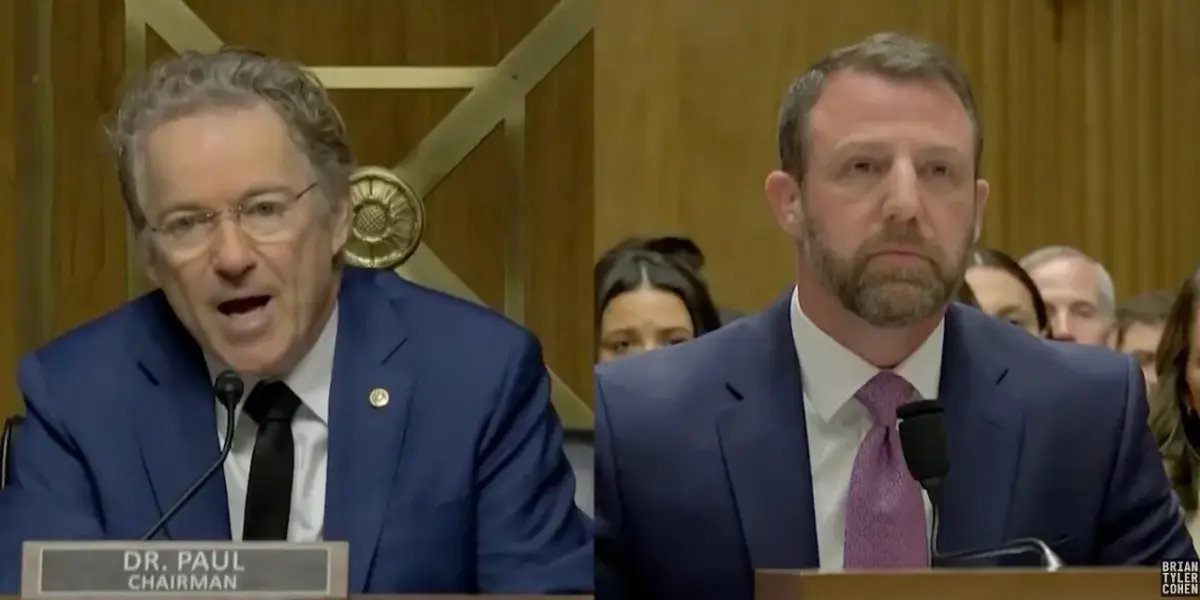
Senator’s Brawl Highlights Threat to Civil Discourse
A recent Senate hearing turned chaotic, revealing a disturbing willingness among some politicians to embrace violence as a way to settle disagreements. The exchange, which involved a heated argument about a nominee for a high-level government position, quickly devolved from political debate into personal threats. This incident raises serious questions about the state of political discourse and the examples being set for public servants and citizens alike.
A Heated Exchange Unfolds
The core of the conflict centered on the nomination of Mark Wayne Mullen to lead a federal agency. One senator, referencing a past physical altercation involving another individual, suggested that sometimes people need to be physically confronted. This sentiment was met with strong criticism, with the accuser stating, “Sometimes people just need to be punched in the face.” The accused senator, while later clarifying he doesn’t believe in political violence, initially seemed to defend the idea of physical confrontation as a way men settle differences. He even alluded to historical precedents like dueling, though it was pointed out that dueling has been illegal for a long time and often involved fleeing the country.
The argument escalated, with accusations of character assassination flying back and forth. One senator accused the other of lauding an assault, implying that the initial aggressive stance was the true starting point of the conflict. The exchange highlighted a deep distrust and animosity, moving far beyond policy differences into personal attacks and justifications of aggression. The gravity of the situation was underscored by the historical example of Charles Sumner, who was brutally beaten with a cane in the Senate, an event that saw a senator hold others at gunpoint to prevent intervention.
Questioning the Nominee’s Fitness
Beyond the personal clash, the hearing also scrutinized Mullen’s suitability for the role. Critics pointed to his past statements and the context of his nomination. Senator Rand Paul, for instance, expressed strong reservations, stating that Mullen’s justification of political violence and the idea that “people just need to be punched in the mouth” made him unfit to lead federal law enforcement. Paul emphasized that while political differences are normal, wishing violence upon someone is unacceptable, especially when Mullen seemed to understand the violent assault he himself suffered. He concluded that Mullen was unacceptable and unfit for the position.
The transcript also included a critical perspective on individuals associated with Donald Trump, suggesting a pattern of replacing ousted figures with those who are perceived as worse. This viewpoint questioned the wisdom of appointing someone like Mullen, who was described as having tried to publicly fight a witness, to lead an agency facing serious issues. The suggestion was made that there might be more appropriate candidates for such a sensitive role.
A Divided Political Landscape
Despite the strong opposition from figures like Senator Paul, Mullen’s nomination appeared likely to proceed. It was noted that Democrat John Fetterman had already announced his intention to vote for Mullen, ensuring the nomination would move out of committee. Mullen himself expressed optimism about gaining broader support, emphasizing his commitment to serving everyone regardless of political affiliation once in the role. He stated his focus would be on enforcing policies passed by Congress and securing the homeland.
However, the commentary accompanying this development suggested that such appointments are ultimately reflections of Donald Trump’s leadership. The argument was made that Trump often chooses individuals not for their competence, but for their perceived loyalty and willingness to carry out his agenda. This perspective framed the situation as a symptom of a larger problem, where loyalty to a specific leader overshadows the principles of public service and integrity.
Why This Matters
This incident is more than just a political spat; it’s a stark warning about the erosion of civility in public life. When elected officials resort to threatening language and seem to justify violence, it sends a dangerous message. It normalizes aggression and suggests that disagreement can be resolved through force rather than reasoned debate. This can have a chilling effect on open discussion and encourage a more hostile political environment for everyone. The focus on personal attacks and past grievances distracts from the actual work of governing and addressing the real challenges facing the country.
Implications and Future Outlook
The willingness to consider individuals with a history of promoting or engaging in violence for leadership positions is concerning. It suggests a political climate where aggression is rewarded and restraint is seen as weakness. This trend could lead to further polarization and a breakdown of trust in institutions. The commentary also highlights the influence of partisan loyalty over qualifications, a dynamic that can lead to less effective governance.
Looking ahead, the normalization of such behavior could have long-term consequences for democratic norms. It becomes harder to find common ground when opponents are viewed as enemies to be defeated, rather than colleagues with differing perspectives. The reliance on social media to spread messages and bypass traditional media also plays a role, as it can amplify extreme voices and create echo chambers. The situation underscores the need for a renewed commitment to respectful dialogue and a focus on substantive policy over personal animosity.
Source: OMG: Republicans CLASH in INSANE moment at hearing (YouTube)

Related Articles
Trump’s Fabricated Deals Fuel Doubts About His Leadership
Donald Trump's recent claims about negotiating custom markers and success with Iran have been met with strong denials from the involved parties. These fabrications raise serious questions about his leadership and ability to provide accurate information, impacting national security and economic stability.
Advisors Shield Trump From War Truths, Fueling Danger
President Trump is reportedly being fed a diet of manipulated information regarding the war with Iran. Advisors allegedly curate video updates to show only U.S. successes, while downplaying or hiding setbacks. This deliberate 'cocoon of ignorance' prevents Trump from seeing the full picture, leading to potentially dangerous decisions and a distorted view of reality.

Trump’s Inner Circle Fuels Cognitive Concerns
Former Trump aide Miles Taylor argues that Donald Trump's current circle of advisors is worsening his cognitive decline. Unlike his first term, Taylor claims there's no one to correct him or say "no" to bad ideas. This lack of checks and balances raises concerns about leadership effectiveness and decision-making.