China’s Leaders Show Cracks: What the ‘Two Sessions’ Revealed
China's recent 'Two Sessions' revealed unusual signs of internal pressure, including high delegate absences, a dull atmosphere, and a lowered economic growth target. These events suggest Beijing is facing significant challenges, with subtle shifts in military messaging and the disappearance of key allies raising questions about leadership stability.

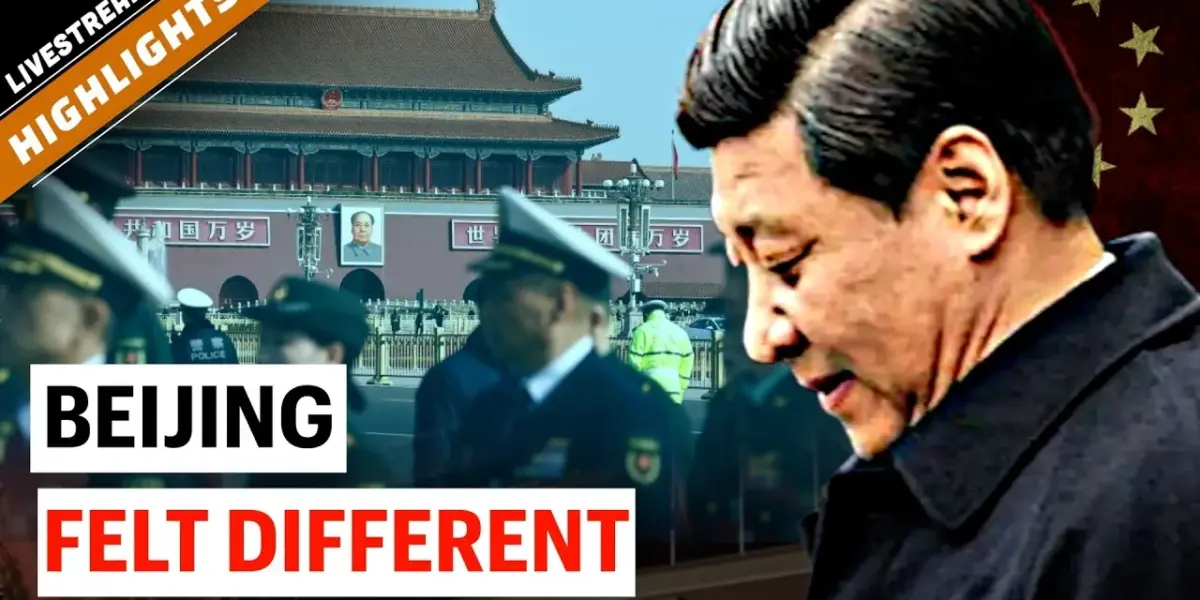
China’s Leaders Show Cracks: What the ‘Two Sessions’ Revealed
China’s annual political meetings, known as the ‘Two Sessions,’ recently concluded, and while they might seem like routine events, several unusual signs point to deeper issues within the country’s leadership. This year saw more officials absent than ever before, a noticeably dull atmosphere, and a government report that openly admitted economic struggles. These signals suggest Beijing is facing significant pressure, both at home and abroad.
Empty Seats and Yawning Officials
One of the most striking observations from this year’s Two Sessions was the high number of delegates who were absent. At the opening session, 113 delegates didn’t show up. By the closing session, that number rose to 116. This is the highest number of absences since Xi Jinping came to power, excluding the 2022 meetings held during strict COVID lockdowns. This widespread absence is unusual for a country where discipline is usually paramount.
Beyond the empty seats, the general mood of the meetings was described as unusually ‘lax and dull’ by Hong Kong’s newspaper, The Standard. While Communist Party officials are typically trained to maintain a composed and controlled appearance, reporters noticed officials rubbing their eyes, yawning, and using tissues. Such displays of fatigue or disinterest are rarely seen in public, especially during high-profile political events.
Economic Realities Emerge
The government work report, delivered by Premier Li Qiang, contained signals about China’s economy that were hard to ignore. For the first time, the official economic growth target was set below 5%, aiming for 4.5% to 5%. This is a significant shift, as it’s the first time in over 30 years that China’s official growth target has fallen below this 5% mark. It signals that Beijing is openly acknowledging serious economic challenges.
Many indicators suggest that China’s economy may already be shrinking, making even the lowered target difficult to achieve. Another key point from the report was the reduced focus on the real estate sector. Last year, stabilizing the housing market was ranked sixth among policy goals. This year, it dropped to tenth place. This suggests that Beijing may be largely stepping back from efforts to revive the struggling property market, which holds a large portion of Chinese household wealth.
Instead of real estate, President Xi Jinping is pushing for ‘new quality productive forces,’ focusing on areas like artificial intelligence and quantum computing. This focus on technology aligns with China’s strategic competition with the United States. However, it also shows a decreased interest in real estate, an industry largely driven by private companies that Xi has historically viewed with suspicion.
A Dissenting Vote?
In a rare development, the vote on the government work report saw one delegate vote against it, with two abstentions. Within the highly controlled Chinese Communist Party system, opposing a report is almost unheard of. These meetings are often described as political theater or ‘rubber stamps,’ where opposition is virtually non-existent. The fact that one person dared to vote ‘no’ is seen as a significant, albeit small, sign of progress and courage in a system that demands strict conformity.
Military Unease and Police Presence
The military delegation also presented unusual signals. Before the meetings, there was speculation that Xi might use the event to pressure generals into publicly pledging loyalty or to remove some of them. However, this did not happen. No military leaders publicly supported Xi’s decision to remove two top generals, Zhang Xiaoyang and Liu Juni, from their positions.
An unusual presence at the military delegation meeting was Public Security Minister Wang Xiaohong, a close Xi ally. Wang is the head of the police, not the military, and his attendance was highly irregular. Reports suggest that special police units played a role in arresting senior military leaders, an action that has reportedly caused strong resentment within the People’s Liberation Army (PLA). Wang’s presence might indicate Xi’s reliance on police to control the military or a move to reassure the PLA and calm anger after the arrests.
Furthermore, a significant number of top generals were absent from the military delegation’s meeting. Out of 18 full generals, only six appeared on screen, including active duty and retired officers. This absence of so many high-ranking military leaders is another unusual development.
Media Avoidance and Softened Rhetoric
The military delegation also avoided media exposure, not holding their usual open day for journalists. Even at official press briefings, attendance was strictly controlled. The PLA spokesperson also appeared to carefully adjust their language, likely to avoid upsetting potential visits from US officials.
Traditionally, the PLA delegation strongly criticizes Taiwan independence at press events. Last year, the spokesperson directly accused Taiwan of seeking independence with US help. This year, however, the language shifted to ‘external forces’ instead of specifically naming the United States. The tone also changed from emphasizing military deterrence to speaking about striving for peaceful reunification and targeting only a ‘small number’ of separatists. Even descriptions of military activity were softened from ‘deterrence’ to ‘training and improving combat readiness.’
An Ally’s Disappearance
Another notable absence was Ma Xingrui, a Politburo member and long-time Xi ally. He was not present at any of the Two Sessions events. Ma was removed from his position as Xinjiang party secretary last July and has not been reassigned since. His prolonged absence and lack of a new post have fueled rumors about his political downfall.
Ma is considered a key member of Xi’s inner circle, and his situation is seen by many analysts as a barometer of Xi’s political strength. There was anticipation that Xi might use the momentum from other personnel changes to bring Ma back. His continued absence suggests that Xi may be struggling to maintain control over personnel decisions and political vetting, even among his closest allies.
Why This Matters
The unusual occurrences at China’s Two Sessions are more than just minor glitches; they are potential indicators of underlying instability and pressure. The high number of absences, the dull atmosphere, and the lowered economic growth target all point to a leadership grappling with significant challenges. The subtle shifts in military rhetoric and the absence of key figures like Ma Xingrui suggest internal power dynamics are at play.
Implications and Future Outlook
These signals suggest a China facing internal economic headwinds and potentially internal political friction. The government’s reduced focus on real estate and increased emphasis on technology indicate a strategic pivot, but the success of this pivot remains to be seen. The military’s subdued public stance and the careful wording regarding Taiwan might reflect a desire to avoid escalating tensions while still maintaining a strong position. The prolonged absence of allies like Ma Xingrui raises questions about Xi Jinping’s grip on power and his ability to manage personnel effectively.
Historical Context
For decades, China’s political system has been characterized by strict control, public displays of unity, and high economic growth targets. The events of the recent Two Sessions deviate significantly from this norm. The lowering of the growth target below 5% is a historic admission of economic difficulty. The rarity of dissenting votes and the controlled public image of officials have always been hallmarks of the system. Any cracks in this facade, such as yawning officials or a single dissenting vote, are therefore highly significant.
The military’s role has also always been central to the CCP’s power. Historically, any signs of internal dissent or unease within the PLA have been swiftly addressed. The current situation, with unexplained absences of generals and apparent resentment over police involvement in military affairs, suggests a departure from past practices. The shift in media access and public statements, particularly regarding Taiwan, also indicates a calculated effort to manage external perceptions amidst internal complexities.
Source: Something Was Off at China’s Two Sessions — And It’s Bigger Than It Looks (YouTube)

Related Articles


Mexico Navigates US-China Rivalry
Mexico is caught in a geopolitical tug-of-war between the United States and China. The nation must carefully balance its economic needs and strategic interests with both superpowers. This situation highlights Mexico's growing importance in global affairs.
First-Time Protester Cites War, Prices as Key Concerns
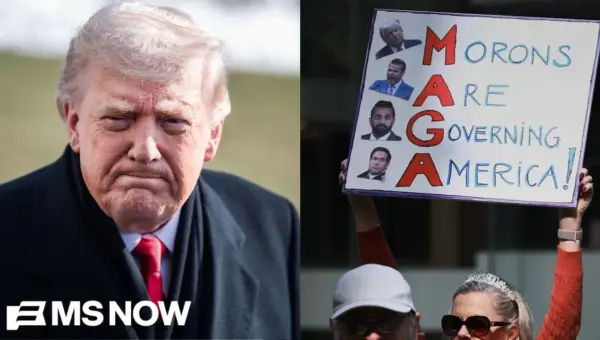
An auto technician from Louisiana, Jared McCallup, joined his first major protest, the 'No Kings' movement, citing war profiteering and rising prices as his primary concerns. He aims to be a voice for those too afraid to speak out. McCallup's experience highlights the growing economic anxieties among everyday Americans.

Germany’s Anti-AfD Firewall Crumbles Amidst Shifting Politics
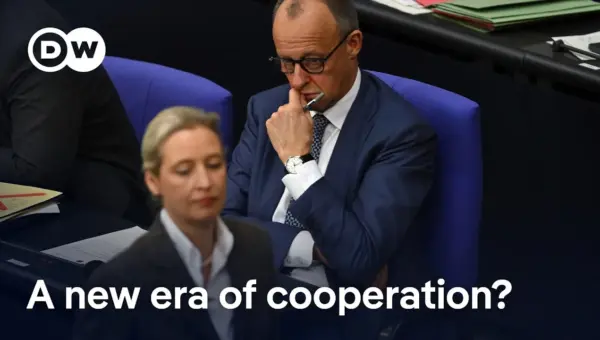
Germany's political 'firewall' against the far-right AfD party is showing significant cracks due to rising AfD popularity and recent instances of cooperation. Historically rooted in Germany's experience with Nazism, the firewall aimed to prevent extremist parties from gaining power. However, shifts in the AfD's rhetoric and increased AfD strength, especially in eastern Germany, are challenging this long-standing political norm.