Trump’s Iran War: A ‘Lame Duck’ Presidency Looms
Expert Robert Pape warns that President Trump's approach to the Iran conflict is leading to an "escalation trap." He predicts a "Lyndon Johnson 2.0" scenario, where the war could cripple Trump's presidency, regardless of tactical military wins. The path forward involves difficult choices to avoid a larger, unrecoverable loss.


Trump’s Iran War: A ‘Lame Duck’ Presidency Looms
The conflict with Iran, which began nearly three weeks ago, has quickly moved beyond simple military victories. While initial reports suggested an easy win for the U.S. and Israel, the situation has become far more complex and serious. Political science professor Robert Pape, who has studied war strategy for years, explains that the current approach is leading to unintended and negative consequences, potentially trapping President Trump in a no-win scenario.
The Escalation Trap Explained
Pape uses a model he calls the “escalation trap” to understand the situation. He identifies three stages that a conflict like this can follow, and warns that the U.S. may already be in the later stages.
Stage One: Tactical Success, Strategic Failure
The first stage involves tactical military actions, like bombing missile sites. Pape acknowledges that these attacks can be precise and successful in destroying specific targets. However, he argues that these actions do not achieve the war’s main goals. President Trump has stated these goals include regime change in Iran, preventing Iran from obtaining enriched uranium for nuclear weapons, and weakening the country overall.
Pape points out that even if leaders are targeted, history shows this often leads to more radical leaders taking over, not positive change. Regarding enriched uranium, the efforts have not secured the material and may have even caused it to disperse. Furthermore, Iran continues to export oil, earning billions of dollars that can fund its activities, making the country arguably stronger, not weaker.
Stage Two: Desperation and Regime Change
When the initial tactical goals aren’t met, and there’s fear about dispersed nuclear material, the conflict can move to stage two: a push for regime change. Pape explains that this isn’t usually the starting goal but becomes a desperate measure when other objectives fail. This is precisely what he predicted would happen, and he believes it is now unfolding.
Stage Three: The Ground War Dilemma
The final stage, which Pape believes the U.S. is now approaching, is the ground war dilemma. This means the U.S. must either cut its losses or commit to a full-scale ground invasion. He warns that a ground war would be incredibly costly and difficult to win, comparing the potential outcome to the Vietnam War, where battles were won but the war was lost.
The Illusion of Control
Pape suggests that leaders often fall prey to the “illusion of control.” This happens when they are presented with detailed plans and confident assessments from military leaders, leading them to believe they can control the escalation of a conflict. He notes this is a human tendency, not specific to any one president or political party. The focus on tactical success overshadows the complex political realities and the potential for unintended consequences.
Why This Matters: The ‘Lyndon Johnson 2.0’ Scenario
The most striking prediction Pape makes is that President Trump could become “Lyndon Johnson 2.0.” This means his presidency could effectively end prematurely, becoming a “lame duck” before its term is up. Just as President Johnson was deeply affected by the Vietnam War, Trump could face a similar fate if the Iran conflict escalates.
Pape explains that even with strong public relations skills, which he attributes to Trump, a prolonged and costly war would alienate supporters and damage his political standing. He believes that even a significant portion of Trump’s base would turn away if the war leads to major losses or a prolonged commitment of troops. This could lead to a loss in future elections and a shift in political power, potentially to figures like Alexandria Ocasio-Cortez.
Historical Context: Decades of Failed Regime Change
Pape draws on over 100 years of history to show that decapitation strategies, like assassinating leaders or targeting high-ranking officials, rarely lead to successful regime change. He uses the example of Israel’s efforts against Hamas, where killing leaders has not weakened the group in the long run. When a leader is removed, the replacement often has to be even more radical to prove their strength against an attacker, making the situation worse.
He also highlights the immense difficulty and danger of operations like removing enriched uranium. An operation to secure such material would require controlling an area the size of the city of London for weeks, facing constant attacks. This is a far cry from quick hostage rescues and would likely result in massive casualties and an inability to achieve the objective.
Future Outlook: A Lose-Lose Situation
Pape concludes that the current path is a lose-lose situation for President Trump. The choice is between a smaller, potentially recoverable loss now, or a larger, likely unrecoverable loss later. He suggests that the only real option is to cut losses, which would require providing strong security guarantees to Iran and Israel, a difficult but necessary step.
The professor warns that there could be even more stages to this escalation trap, including the potential for increased terrorism, which Iran has historically supported. The current conflict is not isolated and carries the risk of widening into a larger regional war. The focus on military tactics without a clear understanding of political outcomes is the core problem, leading to a dangerous and unpredictable future.
Source: Trump is 'trapped' on Iran. This is what will happen next | Robert Pape (YouTube)

Related Articles

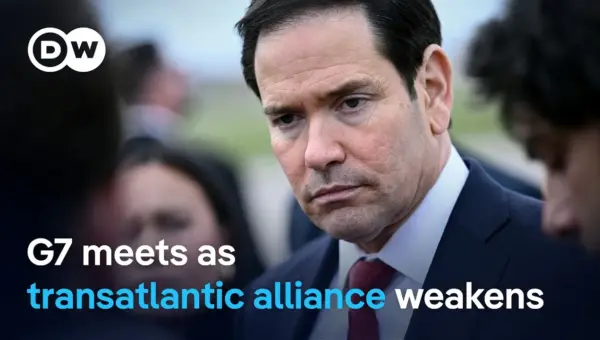
G7 Allies Clash Over Iran War Strategy, Urge Focus on Russia
G7 foreign ministers met in Paris, revealing deep divisions over the U.S. war with Iran. European allies urged the U.S. to pressure Russia, linking its actions to the conflict and fearing support for Ukraine will wane.
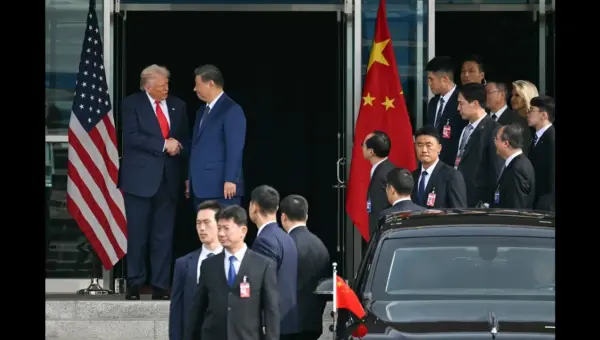
Trump’s “Walk Away” Tactic Signals Tougher Stance on China
Retired Air Force Brigadier General David Stillwell believes President Trump's strategy of being willing to walk away from negotiations puts pressure on China. This tactic, combined with US global actions and strengthened alliances, signals a more assertive American foreign policy.

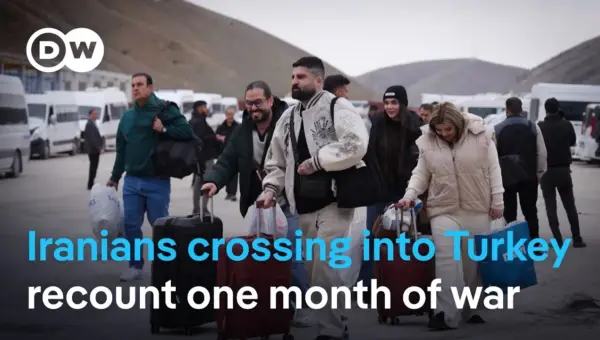
Iran War Exodus: Refugees Flee to Turkey Amidst Bombings
A train from Tehran brings refugees to Turkey, fleeing daily bombings and economic collapse. Many express deep fear for loved ones left behind, while some hold onto national pride and hope for victory. The conflict's impact is also felt economically in Turkey, with rising gas prices.