Sweden’s Loki System Bolsters NATO Drone Defense
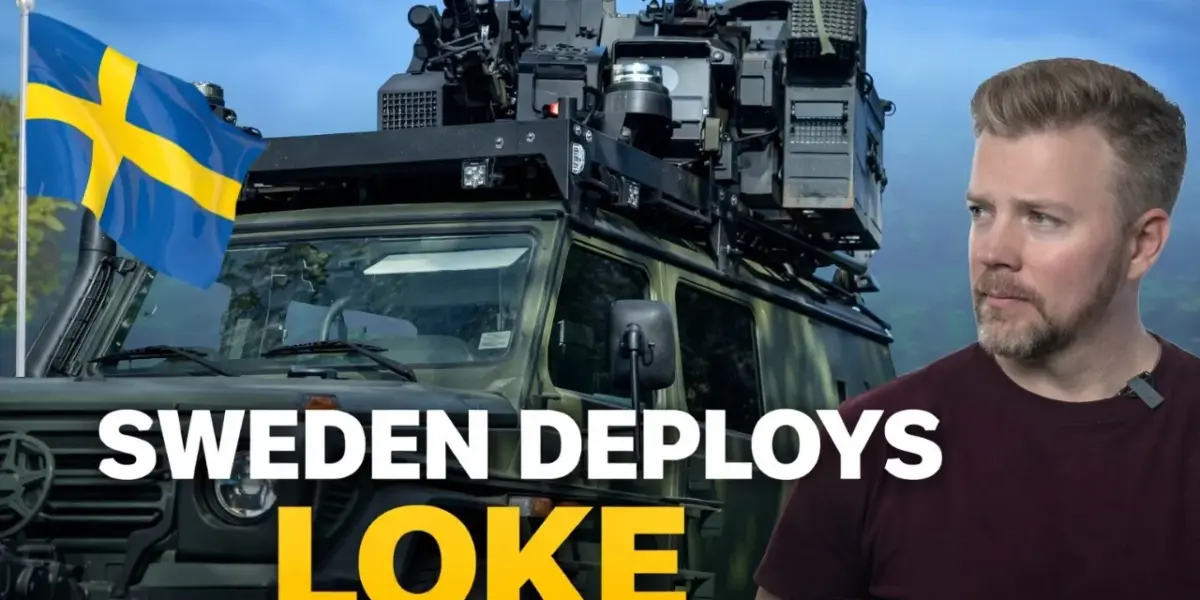
Sweden's Loki counter-drone system has completed its first NATO combat deployment in Poland, protecting a logistics hub. This modular system, integrating advanced radar, weapon stations, and electronic warfare capabilities, has generated significant interest across the alliance. Its rapid development and field validation highlight Sweden's new role as a key provider of drone defense technology.

Sweden’s Loki System Bolsters NATO Drone Defense
Sweden’s Loki counter-drone system has completed its first combat deployment with NATO, protecting a vital logistics hub in Poland. This deployment marks a significant moment for Swedish defense capabilities and highlights the growing importance of counter-drone technology within the alliance. The success of Loki has generated significant interest from other NATO member nations, prompting questions about acquiring similar systems.
The development of Loki was not a planned initiative to create a counter-drone superpower. Instead, it emerged as a response to the evolving battlefield needs, particularly influenced by Ukraine’s experiences. Swedish defense company Saab has been developing individual components of an advanced counter-drone system for years. These components, when integrated, form a comprehensive architecture capable of detecting and neutralizing aerial threats.
Key Components of the Loki System
The Loki system is built upon several key technologies:
- Giraffe Radar: Developed by Saab since the 1970s, the current Giraffe 1X variant is a 3D multi-mission radar. It handles air surveillance, drone detection, and ground-based air defense. This is a mature system with international customers.
- TrackFire Remote Weapon Station: This is a stabilized, remotely operated mount. It can be equipped with machine guns, grenade launchers, or missiles. The TrackFire system is already in production and has been proven in operational use.
- Electronic Warfare (EW) Capabilities: Sweden has invested heavily in EW for decades, a strategic necessity given its geographical position between NATO and Russia during the Cold War. These capabilities are now being adapted for counter-drone roles.
The integration of these existing components into the Loki system was a direct result of observing the demands of modern warfare, especially drone activity in Ukraine. Saab recognized that it already possessed the necessary radar, weapon, and jamming technologies. The innovation lay in connecting them to create a cohesive counter-drone solution.
The Bofors 40mm Gun: A Historical Perspective
Loki can be integrated with the Bofors 40mm gun, a Swedish-designed weapon system with a long history. Originally developed in the 1930s, the Bofors 40mm gun has been continuously updated and remains in service. Its ability to engage drones, even after decades of development, underscores the enduring effectiveness of well-designed military hardware. Ukraine has been using Swedish equipment, including modernized versions of this historic gun, to counter Russian drones.
Modular Design and Rapid Development
A crucial aspect of Loki is its modularity. The system’s development cycle was significantly compressed, with Saab, the Swedish Defence Materiel Administration (FMV), and the Swedish Air Force completing the evaluation in just 84 days. This rapid process resulted in a flexible system that can incorporate new sensors and adapt quickly. The system’s architecture allows for the simultaneous tracking of targets in both physical and electromagnetic spaces.
This modularity means the system is constantly evolving. Lessons learned from exercises and deployments are fed back into the design, leading to continuous improvements. The NATO deployment in Poland provided Loki with invaluable real-world validation while the system was still in its development phase. This is a departure from typical defense procurement, where systems are usually mature before deployment.
NATO Deployment in Poland
From April to September 2025, Loki was stationed at Malbork Air Base in Poland. Its mission was to protect a logistics hub that supported the flow of aid into Ukraine. This was not a controlled test environment but a real operational area where Russia has a vested interest in disrupting supply lines. The system operated under genuine threat conditions, providing critical data for its ongoing refinement.
Nordic Collaboration and Industrial Ecosystem
The Loki system has evolved beyond a purely Swedish solution, becoming a collaborative Nordic effort. During field testing on the island of Gotland, Saab integrated passive sensors from Denmark’s My Defense, an electro-optical sensor from Estonia’s Marduk Technologies, and an acoustic sensor from Norway’s Squarehead Technology. This integration, alongside the BAE Systems’ 40mm Triton Gun system, has created a multi-national capability.
This collaboration signifies the development of a regional industrial ecosystem for counter-drone technology. Denmark, Estonia, Norway, and Sweden have all contributed components to the same modular architecture, strengthening regional defense ties and industrial cooperation.
Nimrix: The Next Generation Counter-Drone Missile
Another significant development is Saab’s Nimrix missile. This hard-kill, fire-and-forget counter-unmanned aerial system (UAS) missile is designed to fill the gap between current gun systems and larger, more expensive surface-to-air missile (SAM) systems. Nimrix is small, lightweight, and equipped with an infrared seeker capable of countering evasive drones.
The missile’s airframe is 3D printed, allowing for rapid prototyping and faster scaling of production. This is crucial for keeping pace with the fast evolution of drone technology. Nimrix is intended to provide a cost-effective solution for engaging drone swarms, offering a sustainable way to counter threats that would be prohibitively expensive to engage with traditional missile systems.
Strategic Implications for NATO
Sweden’s entry into NATO in March 2024, coupled with its advanced counter-drone capabilities, provides the alliance with a significant advantage. At a time when NATO’s operational experience has highlighted a widespread lack of effective drone defenses, Sweden brings a proven, field-tested system. This positions Sweden not just as a consumer of defense equipment but as a key supplier.
The substantial TrackFire order from the U.S. Army, worth $1.5 billion for deliveries between 2026 and 2028, indicates strong, committed demand for this technology. Furthermore, Saab’s collaboration agreement with the KTH Royal Institute of Technology, focusing on UAV and microelectronics research, formalizes a critical feedback loop. This institutional pipeline connects the front lines of drone warfare with Sweden’s leading defense industry.
Countries that lead in counter-drone technology will likely dominate the market within NATO. Sweden’s success stems from its ability to develop an integrated architecture, deploy it rapidly, and gather real-world operational data. This proactive approach, enabled by having the right components readily available, has positioned Sweden as an accidental counter-drone superpower.
Conclusion
Sweden’s Loki system represents a new era in NATO’s drone defense strategy. Born from necessity and accelerated by the conflict in Ukraine, it showcases the power of modular design, rapid innovation, and international collaboration. The system’s combat deployment and subsequent interest from allied nations underscore its effectiveness and Sweden’s emerging role as a key provider of counter-drone solutions.
Source: Sweden's Loke Just Changed NATO's Drone War Forever (YouTube)

Related Articles


U.S. Iran Tensions Rise Amid Shifting Alliances
Rising tensions between the U.S. and Iran are creating a volatile geopolitical situation. With conflicting signals on de-escalation and potential shifts in alliances like NATO and U.S.-Israel relations, the path forward remains uncertain. The global economy and regional stability hang in the balance.


Trump’s War Talk Stuns Financial Crowd
Donald Trump's recent speech in Miami focused on his foreign policy, particularly his critical views on NATO and his vision for international relations. He declared the U.S. would no longer defend NATO allies, questioned the value of existing alliances, and suggested renaming the Strait of Hormuz. The speech also touched on his personal views of success, his allies, and his perceived role as a global peacemaker.

Trump Critical of NATO as Iran Conflict Escalates
President Trump voiced frustration with NATO's lack of involvement in the Iran conflict while the U.S. military prepares for a sustained campaign. Reports indicate significant damage to Iran's military, but tensions remain high with ongoing missile strikes and a recent attack on a Saudi air base wounding U.S. personnel.