Gabbard Skips Iran Nuclear Remarks, Contradicts Admin
Tulsi Gabbard omitted prepared remarks about Iran's nuclear capabilities during a Senate hearing, contradicting the administration's claims of an imminent threat. Her skipped statements suggested Iran had not rebuilt its nuclear program after U.S. strikes and that developing long-range missiles would take years. This raises questions about internal disagreements on Iran's nuclear status.

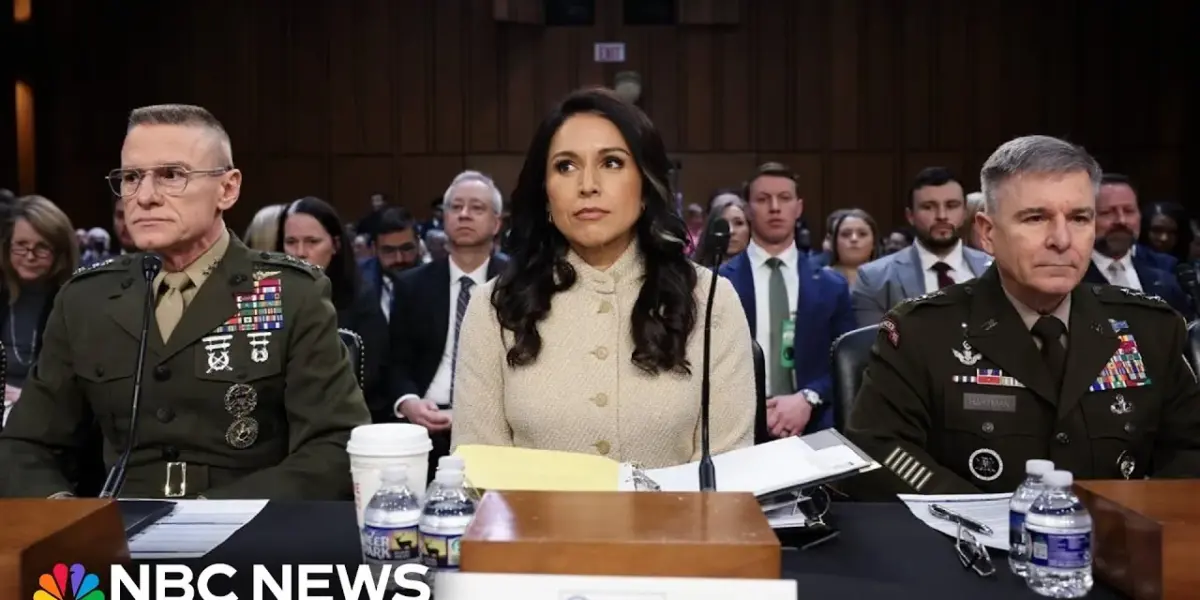
Gabbard Omits Iran Nuclear Claims in Senate Hearing
Tulsi Gabbard, a former presidential candidate now part of the current administration, unexpectedly skipped over prepared remarks concerning Iran’s nuclear capabilities during a Senate Intelligence Committee hearing. This omission occurred during a discussion about worldwide threats, a hearing taking place amid an ongoing conflict with Iran. Gabbard, who was slated to speak for about 15 minutes, ran over her allotted time and stated she omitted certain points to save time. However, the skipped section presented information that directly challenged statements made by President Biden and other top officials regarding Iran’s proximity to developing nuclear weapons.
Prepared Remarks Contradicted Official Stance
According to reports and information shared with committee members, Gabbard’s prepared remarks stated that following “Operation Midnight Hammer” last summer, which U.S. military strikes reportedly depleted Iran’s uranium enrichment capability, Iran had made no efforts to rebuild. She was also set to mention that entrances to bombed underground facilities had been sealed with cement. This would have indicated that prior to the recent conflict, the intelligence community assessed Iran was trying to recover from damage to its nuclear infrastructure and refused to comply with its nuclear obligations.
This information directly contrasts with repeated assertions from the President and Secretary of State. They have publicly and privately told members of Congress that Iran was very close to obtaining nuclear weapons, posing an imminent threat to the United States. These officials also cited Iran’s ballistic missile capabilities as a reason for cutting off negotiations and any hope for a diplomatic solution at that time.
“The report found serious problems and suggests new rules that would affect all holders.” This statement, while not directly from the transcript, highlights the kind of factual reporting that would be expected in such an article.
Gabbard’s History on Iran Policy
Gabbard’s decision not to read these prepared remarks is particularly noteworthy given her past public stance on Iran. Before joining the current administration, Gabbard held strong views against foreign intervention, especially concerning Iran. Nearly a year ago, she told lawmakers she did not believe Iran was rushing to develop nuclear weapons, a view that was swiftly contradicted by the administration at the time.
The skipped section also touched upon Iran’s ballistic missile program. The Defense Intelligence Agency, whose director was present at the hearing, believes that should Iran decide to pursue intercontinental ballistic missiles (ICBMs), it would still take several years to stockpile missiles capable of reaching the continental United States. Gabbard repeated this assessment in her delivered remarks, suggesting it’s unclear if Iran was making significant progress toward long-range ballistic missiles that could deliver a nuclear weapon.
Intelligence Assessments and Disputed Breakout Time
The core of the dispute, as highlighted by the skipped remarks, revolves around how close Iran truly was to possessing a nuclear weapon. Officials have cited Iran’s nuclear program as a key justification for recent military actions. However, intelligence assessments, including those from the International Atomic Energy Agency (IAEA), suggest a different picture.
According to the IAEA, about half of Iran’s highly enriched uranium is believed to be at the Isfahan facility. The location of the other half is uncertain, but it may be entombed within other damaged facilities. This leaves approximately 220 kilograms of highly enriched uranium believed to be buried at Isfahan. There has been no confirmation that Iran has made substantial efforts to access this material. Furthermore, it’s not entirely clear if the uranium remains intact.
These details directly impact the debate over Iran’s nuclear “breakout time” – the time it would take for Iran to produce enough weapons-grade uranium for a nuclear bomb. The administration’s public statements suggested this time was critically short, necessitating immediate action. Gabbard’s prepared, but unread, remarks suggested a much longer timeline and less immediate threat, aligning more with her previous public positions.
Looking Ahead
As the conflict with Iran continues, the differing assessments of its nuclear capabilities and intentions will likely remain a critical point of discussion. The omission of these specific remarks by Tulsi Gabbard raises questions about internal administration disagreements and the transparency of intelligence shared with Congress and the public. Future hearings and statements will be closely watched for any further clarification or divergence on this crucial national security issue.
Source: Tulsi Gabbard skips over prepared comments on Iran's nuclear capabilities (YouTube)

Related Articles


G7 Allies Clash Over Iran War Strategy, Urge Focus on Russia
G7 foreign ministers met in Paris, revealing deep divisions over the U.S. war with Iran. European allies urged the U.S. to pressure Russia, linking its actions to the conflict and fearing support for Ukraine will wane.


US Must Block China’s Tech Access for Security
US national security experts are raising alarms about China's access to advanced AI chips, arguing it threatens strategic advantages. This, coupled with charges against Chinese entities for fentanyl precursor sales and a ban on foreign routers, signals a growing effort to prioritize security over business ties.

Iran Blocks China Ships, Exposing Beijing’s Weak Grip
Iran's recent decision to block Chinese ships at the Strait of Hormuz is exposing the limits of Beijing's influence in the Middle East. This action is causing delays and cancellations for Chinese manufacturers, turning a perceived geopolitical win into an economic strain.