Judge Halts RFK Jr.’s Vaccine Policy Power Grab
A federal judge has blocked RFK Jr.'s antivaccine policies, ruling his committee members were improperly appointed. The decision rejects the government's claim that such actions are beyond court review and upholds established public health procedures. This ruling is a significant win for scientific expertise and a check on unchecked executive power.


Judge Blocks RFK Jr.’s Antivaccine Agenda, Upholds Public Health
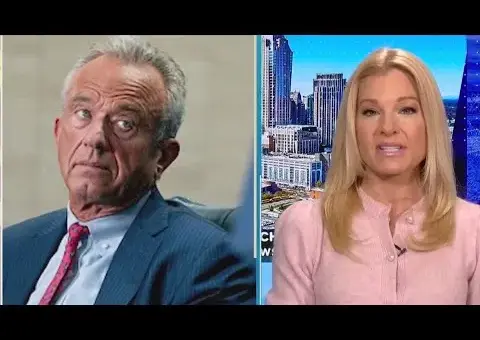
A federal judge has delivered a significant blow to Robert F. Kennedy Jr.’s efforts to reshape vaccine policy. The judge struck down the antivaccine policies promoted by Kennedy’s appointed committee, ruling that its members were not properly selected. This decision halts Kennedy’s attempts to remove critical vaccines from the childhood schedule. It is a major loss for him and, importantly, rejects the government’s argument that such actions cannot be reviewed by courts.
The Government’s Extreme Stance Challenged
During oral arguments, the judge, Brian Murphy, used hypothetical scenarios to challenge the government’s extreme position. He asked if a policy promoting measles, like the CDC suggesting “measles lunches,” would be judicially reviewable. The government’s lawyers essentially argued no, stating it would still be “committed to agency discretion by law.” This implies that even if an agency promoted communicable diseases, courts could not intervene. The judge pointed out that this stance would allow unchecked power, letting someone like Kennedy enforce personal theories as public health law without any oversight.
Protecting Public Health Against Resurgent Diseases
The practical implication of this ruling is the protection of public health. Doctors have warned that the U.S. is close to losing its eradicated status for measles. Outbreaks of meningitis and whooping cough are also becoming national concerns again. These diseases, once well-controlled, are now part of public discussion. The judge’s ruling emphasized placing confidence in expertise, grounding his decision in both science and the law, specifically the Administrative Procedures Act. This law guards against arbitrary government actions. Kennedy had purged the Advisory Committee on Immunization Practices (ACIP), a body advising on vaccines since 1964. He replaced its properly appointed members with individuals who shared his views, leaving only a few with actual vaccine experience on the committee.
A Check on Unchecked Agency Power
While this ruling offers a check on actions at the Department of Health and Human Services, similar challenges persist at other agencies like the Department of Education and the EPA. Individuals appointed to lead these agencies sometimes appear hostile to their core missions. They can act with reckless abandon, seemingly undermining the very institutions they are meant to lead, often without clear recourse. However, in this case, the judge stepped in, stating that actions antithetical to an agency’s mission are subject to judicial review. This highlights a crucial difference in how courts may handle direct challenges to agency purpose.
The Broader Battle for Oversight
This case is part of a larger trend of litigation under the Administrative Procedures Act. This Act is frequently invoked when government actions are seen as arbitrary or capricious. The Trump administration, in particular, has seen an increase in such lawsuits due to actions often taken unilaterally, without public input, and sometimes against expert advice. The Trump DOJ plans to appeal this ruling. The outcome on appeal will be critical. It will determine if the principle of court oversight over executive actions, especially concerning public health, will hold.
Historical Context: Assertions of Power and Judicial Rejection
This legal battle echoes broader attempts by the Trump administration and its allies to assert sweeping, unchecked power. Examples include the independent state legislature theory, which sought to give state legislatures unchecked power over election rules. These efforts have frequently faced rejection in courts. A notable instance involved the Trump DOJ claiming actions related to the apprehension and transfer of individuals, like Kilmar Brigo Garcia, were unreviewable. The Supreme Court rejected this, affirming that due process applies even in such cases. This current ruling against Kennedy’s vaccine policy is another instance where a claim of unchecked authority is being shot down by a judge.
Looking Ahead: The Future of Oversight on Appeal
The appeal process will focus on two key questions. First, will this ruling protecting public health and procedural integrity stand? Second, will higher courts reject the idea that Trump’s cabinet members can act with impunity, free from federal court scrutiny? If the latter is allowed, it would significantly weaken the system of checks and balances. Given the Supreme Court’s stance in cases like Kilmar Brigo Garcia, it seems unlikely that federal courts will readily rubber-stamp claims of unreviewable authority. The judge’s ruling was detailed and strongly criticized the radical nature of the power grab, suggesting it might withstand scrutiny.
A Judge’s Powerful Defense of Science and Law
Judge Murphy’s decision was notable for its direct address to the current atmosphere of distrust. He opened by quoting Carl Sagan, stating, “Science, like law, is far from a perfect instrument of knowledge. History is littered with once universal truths that have since come under scrutiny. Nevertheless, science is still the best that we have.” He connected this to the decades-long effort to build an apparatus that marries scientific rigor with government execution. This system has led to the eradication or reduction of many communicable diseases through vaccines. The judge underscored that this marriage of law and science, established since 1964, has yielded immense public benefit. He warned against discarding this system due to distrust in institutions, highlighting the risks involved.
Why This Matters
This ruling is a critical defense of established public health procedures and the rule of law. It pushes back against attempts to politicize scientific bodies and undermine expert consensus. The case highlights the danger of allowing personal ideologies to override evidence-based policy, especially concerning the health of children. Furthermore, it reinforces the principle that government agencies and their leaders are not above judicial review. The outcome on appeal will significantly impact how future administrations can assert or be checked on their executive powers. It speaks to the ongoing struggle to maintain trust in institutions and evidence-based decision-making in an era of widespread skepticism.
Future Outlook: Navigating Distrust and Ensuring Accountability
The trend of challenging institutional authority, particularly in areas of science and governance, is likely to continue. As seen with the media’s perceived capitulation to political figures, maintaining trust requires constant vigilance and accountability. Supporting independent journalism, as exemplified by outlets like All Rise News, becomes crucial. These platforms can provide fearless reporting and analysis, helping the public understand complex issues and hold power accountable. The legal battles ahead will shape whether the United States can effectively manage public health and governance in an environment marked by deep societal divisions and distrust.
Source: Fed up judge deals MAJOR BLOW to RFK Jr. in court (YouTube)

Related Articles


New COVID Variant Fuels Health Concerns Amid Allergy Season
A new, more contagious COVID-19 variant from the Omicron family is spreading across the U.S., detected in wastewater and potentially evading vaccines. The timing complicates symptom identification as allergy season begins, with experts advising symptom duration and accompanying fever as key differentiators.


Vaccine Hesitancy: A Doctor’s Warning on Health Risks
A doctor warns that jokes about science and vaccines can have dangerous real-world health consequences. The rise of misinformation is linked to outbreaks of preventable diseases like measles and the rejection of essential newborn care.

RFK Jr. Eyes Peptide Access, Sparking Health and Safety Debate
Health Secretary Robert F. Kennedy Jr. is advocating for expanded access to synthetic peptides, sparking debate over their safety and regulation. While proponents believe increased oversight can improve quality, critics worry about potential health risks from less-tested compounds.