US Strikes Iran Missile Sites Near Hormuz Strait
U.S. forces deployed powerful GBU-72 deep penetrator bombs on Iranian missile sites near the Strait of Hormuz. These strikes aim to neutralize threats to international shipping and reinforce freedom of navigation. The operation occurs amid internal turmoil in Iran's leadership.

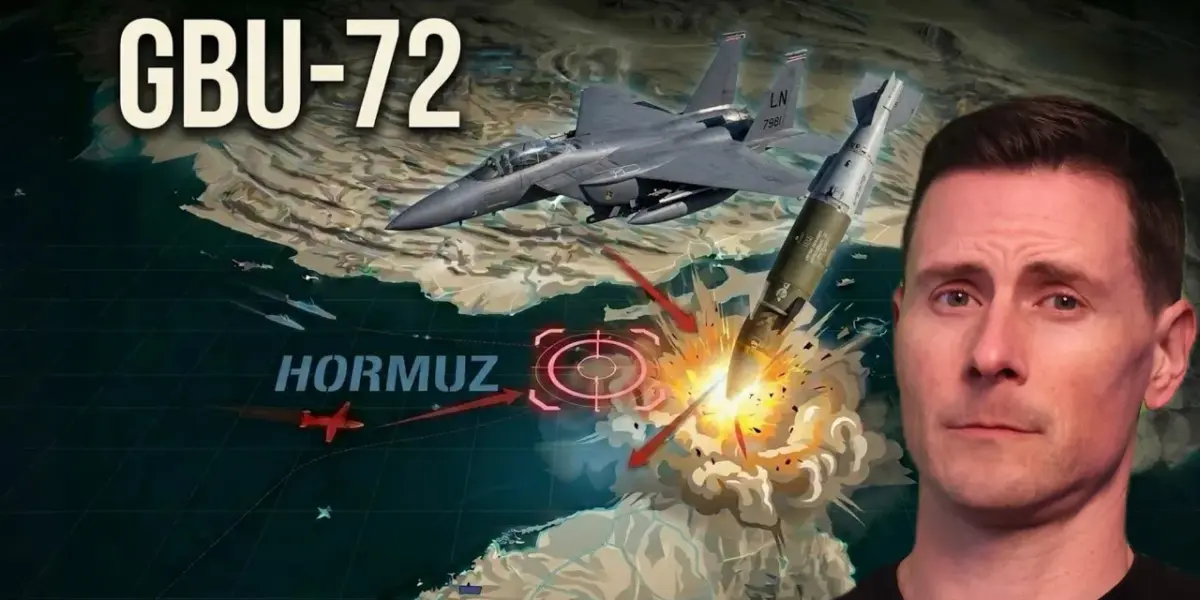
US Unleashes Deep Penetrator Bombs on Iranian Missile Sites
On March 18th, 2026, U.S. forces struck hardened Iranian missile sites near the vital Strait of Hormuz. These strikes, part of Operation Epic Fury, involved multiple 5,000-pound GBU-72 deep penetrator munitions. U.S. Central Command (CENTCOM) confirmed the precision strikes targeted anti-ship cruise missiles. These weapons threatened international shipping and naval vessels in the crucial waterway.
Strategic Importance of the Strait of Hormuz
The Strait of Hormuz is a narrow waterway, about 21 miles wide at its narrowest point. Approximately 20% of the world’s oil passes through this strait daily. Iran has previously threatened to disrupt shipping here, using it as leverage. Controlling or threatening the strait gives Iran significant influence and a bargaining chip in regional politics.
Deep Penetrator Munitions: GBU-72
The GBU-72 is a large, 5,000-pound bomb designed to penetrate hardened targets like underground bunkers. These munitions are crucial for destroying deeply buried or heavily protected weapons systems. They are a key tool for achieving decisive effects against fortified enemy positions.
F-15E Strike Eagles: Delivery Platform
The F-15E Strike Eagle is a twin-engine, all-weather strike fighter. It is well-suited for delivering heavy ordnance like the GBU-72. The F-15E can fly at supersonic speeds and has a significant combat radius, allowing it to operate effectively in regions like the Persian Gulf. Its ability to carry a large payload and its advanced targeting systems make it a premier platform for such precision strikes.
Broader Context: Leadership Vacuum and Geopolitical Impact
These strikes occur amid significant turmoil within Iran’s leadership. Just days prior, Ali Larajani, described as Iran’s de facto leader and chief of the Supreme National Security Council, was reportedly killed in strikes within Iran. This has created a leadership vacuum, weakening the regime’s command structure. The targeting of missile sites threatening the Strait of Hormuz further isolates Iran and diminishes its ability to project power and disrupt global energy flows.
Marine Expeditionary Unit Deployment
Adding to the military posture in the region, a 2,500-strong Marine Expeditionary Unit (MEU) is en route. The MEU’s arrival suggests a broader strategy to ensure freedom of navigation. Their mission likely includes neutralizing remaining threats like drones and underwater unmanned vehicles (UUVs). The MEU’s amphibious capabilities could be used to secure key areas around the strait, further reassuring shipping traffic.
Iran’s Response and Asymmetric Warfare
Despite the pressure, Iran has vowed revenge for the loss of its leaders. While its capacity for large-scale attacks may be diminished, Iran retains the ability to conduct asymmetric warfare. This includes launching missiles and drones, and potentially using proxy forces. Recent reports mention limited strikes on cargo vessels and allied sites in the region, indicating Iran’s continued intent to cause disruption, albeit on a smaller scale.
Strategic Implications: Opening the Strait
The strikes on the missile sites are a critical step toward ensuring the Strait of Hormuz remains open. By neutralizing Iran’s ability to threaten shipping with anti-ship missiles, the U.S. aims to restore confidence among commercial vessels. This action strips Iran of a key leverage point without resorting to a ground invasion. The long-term goal appears to be maintaining energy flow and regional stability through decisive military positioning and the projection of superior maritime and air power.
Future Outlook
While the immediate threat to the Strait of Hormuz from these specific missile sites has been reduced, full reopening may take time. The arrival and operational readiness of the MEU will be crucial. The ongoing fracturing of Iran’s leadership and the continued U.S. focus on maritime security suggest a strategy aimed at pressuring the regime and its military arm, the Islamic Revolutionary Guard Corps (IRGC), to prevent further escalations. The F-15E and its advanced munitions, alongside the capabilities of the incoming MEU, represent a comprehensive approach to securing this vital global chokepoint.
Source: F-15E’s Just UNLEASHED Something MASSIVE on Iran (YouTube)

Related Articles

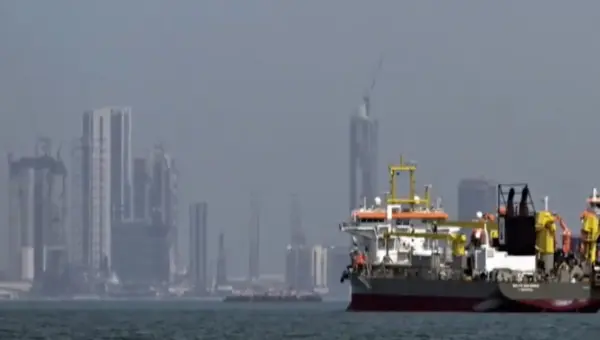
Iran Blocks China Ships, Exposing Beijing’s Weak Grip
Iran's recent decision to block Chinese ships at the Strait of Hormuz is exposing the limits of Beijing's influence in the Middle East. This action is causing delays and cancellations for Chinese manufacturers, turning a perceived geopolitical win into an economic strain.
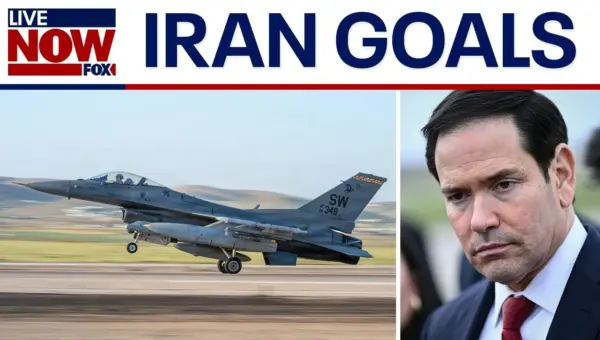
Rubio: US Can Achieve Iran War Goals Without Troops
Senator Marco Rubio outlined a strategy to counter Iran without deploying U.S. ground troops, focusing on weakening the regime and enhancing maritime security. He also criticized Cuba's economic system and expressed concerns about West Bank violence.


Israel Escalates Iran Strikes, Warns of Wider War
Israel has launched significant strikes inside Iran following continued missile fire, warning of further escalation. The conflict risks wider regional instability and economic disruption, especially concerning the Strait of Hormuz.