Lebanon’s “Second Front”: War’s Devastation and Displacement
Foreign correspondents report on the devastating impact of the Israel-Hezbollah conflict in Lebanon, detailing widespread destruction, mass displacement, and the profound human cost. The "second front" of the war is leaving cities in ruins and creating a humanitarian crisis.

Lebanon Faces Escalating Conflict Amidst Regional Tensions
The Middle East is currently experiencing a significant escalation of conflict, with a major focus on the war involving Israel and Hezbollah along Lebanon’s southern border. While international attention has often been drawn to other fronts, the situation in Lebanon represents a critical and devastating “second front.” Foreign correspondents Louise Callahan and Tom Ball of The Sunday Times and The Times, respectively, have been reporting from the ground, detailing the immense destruction and human cost of this ongoing warfare.
Life in the Crossfire: Stories from Lebanon
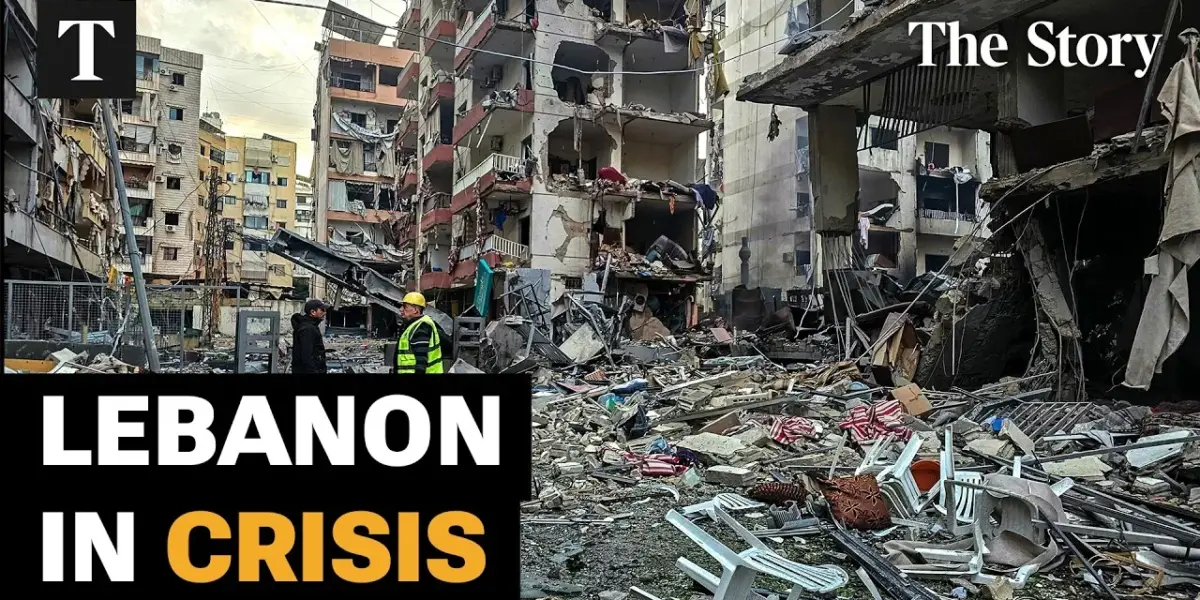
Callahan described visiting T, an ancient city in southern Lebanon, where the impact of Israeli bombardment was starkly visible. She recounted meeting Abu Jaffer, a resident whose neighborhood was hit by an enormous explosion originating from a strike on electricity generators. The scene was one of utter devastation, with twisted metal and smoking rubble. Residents were seen sifting through the debris, searching for any salvaged belongings.
Abu Jaffer shared his harrowing experience of the strike, which occurred as his family was preparing to break their fast during Ramadan. He witnessed a massive explosion and subsequent fire down his street, prompting him to rush out. He described seeing people injured by shrapnel and glass, and finding a severely wounded woman lying in the street. The following morning, he discovered neighbors had been killed, with one man described as being “blown to pieces” and identified by the smell of his burned flesh.
Displacement and Fear Grip Lebanese Cities
The conflict has led to widespread displacement. Callahan noted that in Beirut, the capital, the influx of displaced people has transformed the city. Her friend described the capital as having become a “car park” due to the sheer number of people and cars. It is estimated that one in six Lebanese, or one million people, have been displaced, with many seeking refuge in Beirut, particularly in areas perceived as safer.
This displacement has also created tension. Residents in areas filling up with displaced people express suspicion, fearing that newcomers might be linked to Hezbollah, potentially drawing further Israeli strikes. In T, Israel has declared a large area as an “evacuation zone,” warning residents to leave or face being considered enemy combatants. This directive applies to the entire city, a UNESCO World Heritage site known for its long history of continuous habitation.
Callahan described the scene in T as surreal, with entire neighborhoods left empty and destroyed by bombing, while other areas are crammed with people and cars, creating an atmosphere of uncertainty and fear. The destruction in Beirut has been concentrated in the southern suburbs of Dahiyeh, another densely populated area declared an evacuation zone by Israel. The idea of evacuating such a densely populated area is described as “insane.”
The violence has spread beyond designated zones, increasing fear. Callahan recounted interviewing a family who had fled Dahiyeh to the seafront in Beirut, only for an Israeli strike to hit near them just two days later, suggesting there is no truly safe place.
Humanitarian Crisis and Lack of Support
The Lebanese government is ill-equipped to handle the scale of the crisis. Displaced people are occupying schools, and some families are sheltering in abandoned theaters. Access to food and support is severely limited. Many families have fled their homes due to attacks and a lack of essential supplies, including medicine, forcing them to seek medical help in safer areas.
The situation is compounded by the reduction in U.S. aid funding, which has impacted many local organizations. This has created an “unprecedented displacement crisis,” with people being displaced multiple times and lacking basic necessities. For those without family support, the situation is dire.
The Psychological Toll on Children
The psychological impact on children is profound. Over a hundred children have reportedly been killed in the attacks. Children struggle to comprehend the events, and the fear they witness in their parents leaves them deeply unsettled. The trauma of displacement, loss of schooling, and separation from friends is described as “shaking huge swaths of Lebanon.”
Hezbollah: A Powerful Force in Lebanon
To understand the current conflict, the role of Hezbollah is crucial. Callahan explained that Hezbollah is a Shia Islamist political and militant group backed by Iran, formed in the 1980s to resist the Israeli invasion. While designated a terrorist group by the U.S. and U.K., Hezbollah is also a powerful political movement with seats in parliament and significant influence across the country, particularly in the south and southern Beirut suburbs. They operate like a “state within a state,” running services like banks, schools, and civil defense.
Hezbollah’s ideology includes the complete destruction of the state of Israel. While they have support among Shia communities, their appeal extends to other groups, including some Christians who see them as the only force standing against Israel. However, there is also rising anger among some Lebanese who blame Hezbollah for drawing the country into unwinnable wars.
Israel’s Ground Offensive and Historical Context
Israel announced a ground attack on Lebanon, aiming to destroy Hezbollah. Tom Ball reported from the Hula Valley in northern Israel, near the Lebanese border, where poultry farms have been converted into military staging posts. This area has seen significant damage from Hezbollah rocket strikes, leading to the evacuation of tens of thousands of residents.
Ball described the IDF’s preparations for an expanded incursion, moving beyond limited raids. The stated goal is to seize territory south of the Litani River, approximately 20 km north of the border, to eradicate Hezbollah’s threat. Some in the IDF have compared this operation to the situation in Gaza, involving territorial control and dismantling military infrastructure, including underground tunnels and hideouts.
This is not the first Israeli invasion of Lebanon. Previous incursions occurred in 1978, 1982, 2006, and most recently in 2024. The current operation is notable for the IDF issuing a blanket evacuation order for the area south of the Litani River, and recently expanding it north to the Zarani River, a vast area containing ancient sites.
International Calls for De-escalation vs. Israeli Resolve
While the public mood in Israel largely supports the offensive, international partners, including the UK, Canada, France, Germany, and Italy, have issued joint statements calling for de-escalation. However, soldiers preparing for the operation expressed a belief that Hezbollah is committed to Israel’s destruction and that pushing them further north is a necessary step, despite rocket fire originating from north of the Litani River.
Talks, mediated by France, are reportedly planned, but skepticism exists in Israel regarding the Lebanese government’s ability or willingness to dismantle Hezbollah. The belief is that Hezbollah’s deep entrenchment in Lebanese society and its global financial network make a complete eradication through military means a difficult, potentially “fanciful” prospect.
The Broader War and Iran’s Role
Hezbollah is described as a key asset for Iran, and degrading its capabilities weakens the Iranian state. However, a military incursion into southern Lebanon, even if successful in clearing the area, may not be a decisive blow given Hezbollah’s deep roots within Lebanese society and its international reach.
The ongoing conflict in Lebanon highlights the complex and devastating nature of the “second front” in the Middle East, with profound implications for regional stability and the lives of ordinary citizens caught in the crossfire.
Source: Inside Lebanon As Israel And Hezbollah Wage War (YouTube)

Related Articles
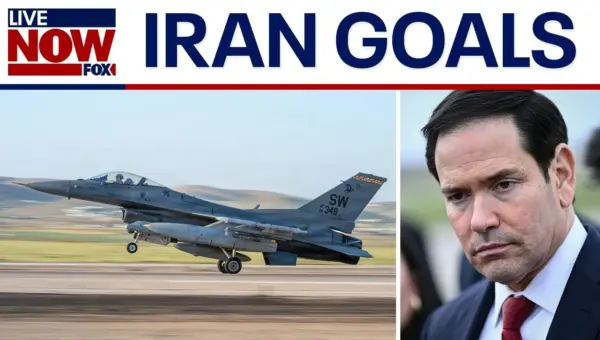
Rubio: US Can Achieve Iran War Goals Without Troops
Senator Marco Rubio outlined a strategy to counter Iran without deploying U.S. ground troops, focusing on weakening the regime and enhancing maritime security. He also criticized Cuba's economic system and expressed concerns about West Bank violence.

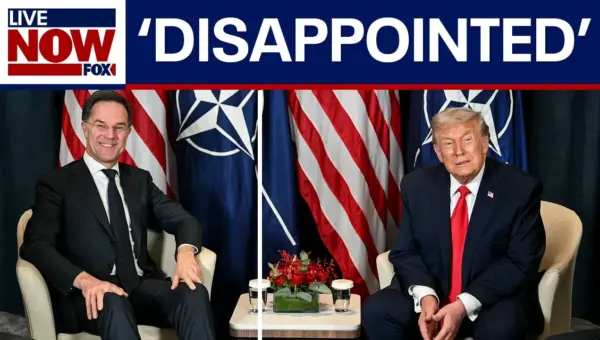
Trump Critical of NATO as Iran Conflict Escalates
President Trump voiced frustration with NATO's lack of involvement in the Iran conflict while the U.S. military prepares for a sustained campaign. Reports indicate significant damage to Iran's military, but tensions remain high with ongoing missile strikes and a recent attack on a Saudi air base wounding U.S. personnel.
Pentagon Weighs 10,000 Troops for Iran Showdown
The Pentagon is reportedly weighing a significant troop increase of 10,000 soldiers to the Middle East, potentially escalating tensions with Iran. This move comes amid reports of U.S. precision strikes and interceptions of Iranian missiles by allies, raising concerns about regional stability and global oil supplies.