Middle East War Escalates, Allies Shun US Strategy
Escalating Middle East conflict sees Iran and Israel exchanging heavy blows, while US strategy faces international criticism. Ukraine's drone warfare dominance offers a glimpse into modern combat's future, as allies increasingly seek de-escalation.


Middle East War Escalates, Allies Shun US Strategy
The Middle East is engulfed in a widening conflict, with escalating tensions between Iran, Israel, and other regional players. Reports indicate widespread strikes and demolitions, drawing criticism of the United States’ role and strategy under the Trump administration. Meanwhile, Ukraine’s innovative approach to modern warfare is highlighted, suggesting a shift in global military thinking.
Escalating Conflict and Regional Instability
A significant escalation has occurred in the Middle East, described as a full-blown war. Iran is reportedly striking targets in Bahrain, Dubai, and across Israel, including Tel Aviv and northern regions. In response, Israel is said to be heavily targeting southern Lebanon and Beirut, causing widespread destruction. Both Iran and its adversaries are using advanced weaponry, including ballistic missiles and drones, leading to significant civilian casualties and infrastructure damage.
Ukraine’s Drone Warfare Dominance
In a stark contrast to the Middle East conflict, Ukraine’s military innovations are drawing international attention. President Zelenskyy of Ukraine has emphasized his nation’s expertise in modern warfare, particularly in drone technology and counter-drone measures. Recent simulations conducted by NATO pitted all of NATO’s military assets against Ukraine’s drone capabilities. In all five scenarios, Ukraine’s forces emerged victorious, overwhelming NATO’s defenses without detection. This outcome underscores the growing importance of drones and effective interception methods in contemporary combat.
Criticism of US Foreign Policy
The United States’ approach to the Middle East crisis is facing severe criticism. The transcript suggests that the Trump administration’s policies have alienated key allies and undermined US influence. Despite significant investments by Gulf states in Trump-linked ventures, these nations reportedly received no warning about US-Israeli actions, leading to feelings of abandonment and resentment. A quote from a young professional in the UAE captures this sentiment: “Israel gets an Iron Dome, and we, the Arab nations, get ‘f***ed.'”
Furthermore, global views of the US have reportedly plummeted. One report indicates a staggering 79% drop in favorable views of the US across 24 countries since the conflict began. This decline is attributed to what is described as Washington’s “warmongering” and a perceived rejection of its military actions. Allies are reportedly distancing themselves, with some NATO members expressing unwillingness to become involved in military operations against Iran.
Russia’s Role and Shifting Alliances
The transcript also points to Russia’s involvement, alleging that Moscow is providing Iran with weapons and intelligence, even as the US lifts sanctions against Russia. This move is seen as financially benefiting Russia, allowing it to profit from oil sales and potentially fund further military actions against Ukraine and its allies. The narrative suggests a bizarre alignment where the US appears to be aiding Russia, which in turn supports Iran, a key adversary of the US and its allies.
European Nations Seek De-escalation
In contrast to the US approach, European nations like the UK, France, and Italy are prioritizing de-escalation and diplomatic solutions. British Prime Minister Keir Starmer has explicitly stated that the UK will not be drawn into a wider war and is focused on reaching a negotiated settlement. This stance reflects a broader European desire to reduce tensions and find peaceful resolutions, even as the US appears to be escalating its involvement.
The Future of Warfare: Drones and Innovation
Ukraine’s success in drone warfare offers a glimpse into the future. Zelenskyy described how Ukraine evolved from simple kamikaze drones to systems capable of shooting down helicopters and fighter jets, and even developing underwater capabilities. The ability to produce thousands of combat-proven interceptors daily, coupled with advanced software for electronic warfare, positions Ukraine as a leader in modern defense. These innovations, born out of necessity, could have significant applications in various global security challenges, including the volatile Strait of Hormuz.
Why This Matters
The current geopolitical situation highlights a significant divergence in international strategy. While the US appears to be pursuing an aggressive, unilateral path in the Middle East, key allies are advocating for de-escalation and diplomatic engagement. The effectiveness of Ukraine’s drone warfare demonstrates a critical shift in military capabilities, suggesting that traditional power structures may be challenged by innovative, adaptable forces. The potential for a wider regional conflict, coupled with a decline in global trust in US leadership, poses serious risks to international stability and economic security. The narrative also questions the effectiveness of past US foreign policy decisions, particularly concerning alliances and strategic partnerships, suggesting a need for re-evaluation and a more collaborative approach to global security challenges.
Historical Context and Background
The Strait of Hormuz, a vital chokepoint for global oil and gas transport, has long been a focal point of geopolitical tension. Iran’s ability to control or disrupt traffic through this narrow waterway has been a significant concern for decades, impacting global energy markets and international trade. The Abraham Accords, intended to normalize relations between Israel and several Arab nations, were seen as a potential shift in regional dynamics, but the current conflict appears to be straining these new relationships. The mention of Winston Churchill by Trump, and the Irish Prime Minister’s counterpoint regarding historical perspectives, also touches on the complex and often differing interpretations of historical events and leadership, underscoring the nuances of international diplomacy.
Implications, Trends, and Future Outlook
The current events suggest a trend towards a more fragmented and multipolar world order. The perceived US retreat from global leadership, or at least a shift in its approach, is creating space for other powers and regional blocs to assert themselves. The success of Ukraine’s drone warfare points to a future where asymmetric warfare and technological innovation play an even larger role. For the Middle East, the immediate outlook is grim, with the potential for a protracted and devastating conflict. The long-term implications include a redefinition of alliances, a potential reshaping of regional security architectures, and a continued struggle to balance national interests with global stability. The economic impact of disrupted trade routes, particularly through the Strait of Hormuz, could be substantial, affecting energy prices and global supply chains for years to come.
Source: All HELL BREAKS LOOSE as Trump is FULLY ABANDONED in WAR!!! (YouTube)

Related Articles

U.S. Iran Tensions Rise Amid Shifting Alliances
Rising tensions between the U.S. and Iran are creating a volatile geopolitical situation. With conflicting signals on de-escalation and potential shifts in alliances like NATO and U.S.-Israel relations, the path forward remains uncertain. The global economy and regional stability hang in the balance.


Iran Targets US With Cyberattacks, Escalating Digital Warfare
Iran is increasingly using cyberattacks to challenge the U.S., as seen in a recent hack of the FBI director's account. Experts say this is a strategic shift due to Iran's limitations in conventional warfare. The U.S. needs to strengthen its digital defenses, focusing on encryption and cloud computing, rather than solely relying on traditional security measures.
Ukraine Strikes Russian Oil Refinery, Eyes Iran Threat
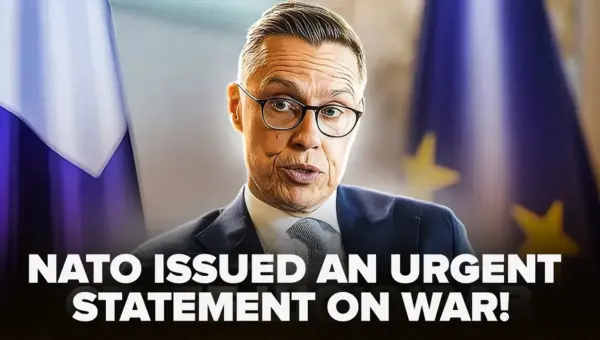
Ukrainian forces struck a key Russian oil refinery, disrupting Moscow's war capabilities. Meanwhile, Finland's president urged continued U.S. support for Ukraine, as Kyiv shares its air defense expertise globally amid growing geopolitical complexities involving Iran and potential sanctions against Hungary.