Iran Strikes Ignite Regional Tensions, US Hits Key Sites
Iran launched retaliatory strikes against Israel, prompting U.S. strikes on key Iranian missile sites near the Strait of Hormuz. Military analysts assess the operations as effective but question Iran's long-term strategy. The conflict highlights regional instability and potential global economic impacts.

Iran Strikes Ignite Regional Tensions, US Hits Key Sites
Overnight, Iran launched retaliatory strikes against Israel, a day after Israel announced the death of a top Iranian intelligence officer. This officer was described by a senior official as having “American blood on his hands,” with his network allegedly targeting current and former U.S. officials, including former President Donald Trump.
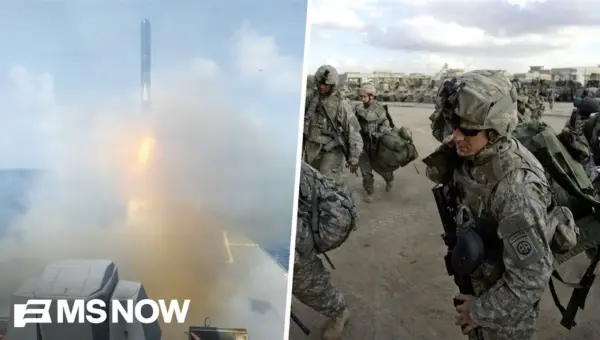
In response, the United States has deepened its military actions in the region. U.S. forces dropped 5,000-pound bombs on Iranian missile sites located along the Strait of Hormuz coastline. CENTCOM, the U.S. military’s Central Command, confirmed these sites posed a significant risk to international shipping routes, a vital artery for global trade.
Military Strategy Assessed
The military execution of operations by both American and Israeli forces has been described as incredible. These actions have led to the degradation of Iran’s military complex and capabilities. For the first time since 1979, Iran is reportedly being punished not just for its actions, but for its underlying motivations and ideology. This approach is seen as a powerful message throughout the region, aiming to restore deterrence.
The conflict has also drawn reactions from Gulf states, many of whom reportedly agree with the strategy to weaken the Iranian leadership. Iran’s past actions, including strikes into the United Arab Emirates, have shifted regional dynamics. Furthermore, Iran’s decision to attack Cyprus has brought the European Union into the discussion, potentially weakening Iran’s arguments and highlighting a perceived diplomatic blindness among some European nations.
Iran is viewed as a threat to global stability, with countries interested in stability seeing Iran as a main adversary. The situation is also linked to the broader geopolitical struggle between the U.S. and China, with energy security and American leverage over China being key factors.
Division of Labor in Operations
A clear division of labor appears to be at play between the U.S. and Israel. The U.S., with its greater military size, is focusing on destroying Iran’s military complex and infrastructure. Evidence of this includes the strikes on missile sites near the Strait of Hormuz. Israel, leveraging its intelligence capabilities, is reportedly targeting Iranian regime members in their hideouts, aiming for the decapitation of leadership.
Both efforts are considered highly successful. However, the sustainability of Iran’s current actions is questioned. The potential closure of the Strait of Hormuz would harm Iran in the long term, making their current strategy unsustainable. The key question remains how much time is needed to see a real change on the ground.
European Stance and Russian Involvement
The stance of European nations, some of whom have stated this is not their war, has been criticized. Iran is seen as a problem for Western civilization, a sworn enemy of Western values since 1979. A lack of active involvement from Europe is considered a significant diplomatic error.
Concerns are also rising about Russia’s role. Reports suggest Moscow is sharing satellite imagery and drone technology with Iran. This assistance reportedly aims to improve Iran’s technology for targeting U.S. forces and provides information on military locations. This comes on top of China’s known support, including purchasing a significant portion of Iran’s oil exports.
Russia’s support is believed to help Iran survive, as Iran’s strategy often involves enduring and remaining standing. However, the ultimate end game for Iran remains unclear. The current actions are expected to significantly weaken Iran’s regional power for decades, requiring extensive rebuilding of destroyed infrastructure.
End Game and Internal Change
The expectation for the end game is that more time is needed. There’s a caution against over-promising outcomes, as this can lead to under-delivery. The hope is to see cracks emerge from within Iran itself. The fall of the Soviet Union, for example, was an internal process.
It is believed that only Iranians can bring down their current regime. The current situation is creating conditions where the Iranian public may have the opportunity to overthrow a regime that is seen as victimizing its own people. This point, that Iranians are the primary victims of their own government, is often overlooked.
The leadership structure within Iran appears to be in disarray following the removal of key figures. The identity of a potential successor remains unknown, indicating a period of significant uncertainty within the Iranian system.
Market Impact
The escalating conflict and retaliatory strikes in the Middle East, particularly involving Iran and Israel, introduce significant geopolitical risk. This risk can directly impact global energy markets, especially given the strategic importance of the Strait of Hormuz. Disruptions or perceived threats to shipping through this vital waterway can lead to increased oil prices and volatility in financial markets worldwide. Investors often react to heightened geopolitical tensions by seeking safer assets, potentially leading to sell-offs in riskier investments like stocks and a move towards assets like gold or U.S. Treasury bonds. The involvement of major powers like the U.S. and potential support from Russia and China adds layers of complexity, influencing international relations and potentially affecting trade and economic stability. Companies with significant operations or supply chains in the Middle East may face increased operational challenges and financial uncertainty.
What Investors Should Know
Investors should monitor the situation closely for potential impacts on oil prices and global supply chains. Geopolitical instability in the Middle East is a recurring theme that can cause short-term market shocks. Understanding the strategic importance of regions like the Strait of Hormuz is crucial for assessing potential economic consequences. The involvement of multiple global powers suggests that any resolution or escalation could have far-reaching international economic and political implications. Diversification of investments across different asset classes and geographies can help mitigate risks associated with such events. Long-term, the focus may shift to the economic resilience of nations and the stability of global trade routes in the face of ongoing geopolitical challenges.
Source: 'WE NEED MORE TIME': War FAR from over as conflict escalates (YouTube)

Related Articles

U.S. Iran Tensions Rise Amid Shifting Alliances
Rising tensions between the U.S. and Iran are creating a volatile geopolitical situation. With conflicting signals on de-escalation and potential shifts in alliances like NATO and U.S.-Israel relations, the path forward remains uncertain. The global economy and regional stability hang in the balance.

Trump Halts Iran Strikes Amid Stalled Diplomacy
President Trump announced a pause on planned strikes against Iran, citing productive talks, though Iran denies negotiations occurred. Reports also suggest a potential U.S. ground operation on Iran's Hark Island. The situation raises concerns about international support for Ukraine and potential shifts in U.S. foreign policy.
Iran Missile Strikes Injure US Troops, Raise War Concerns
Iranian missile strikes have injured U.S. service members, escalating tensions as the conflict nears one month. The attacks are raising concerns about the effectiveness of U.S. military strategy and the depletion of crucial missile stockpiles. Global oil prices have surged, impacting economies worldwide.