Iran Strikes Israel; US Official Resigns Over War
Iran has confirmed its security leadership was killed in Israeli airstrikes and retaliated with strikes against Israel, which claimed to have killed Iran's intelligence minister. Meanwhile, U.S. National Counterterrorism Center Director Joe Kent resigned, citing opposition to the war with Iran, while the nation grapples with extreme weather across the country.


Iran Retaliates Against Israel, U.S. Official Resigns
In a dramatic escalation of regional tensions, Iran confirmed Monday night that its security leadership was killed in airstrikes, and vowed retaliation against Israel. Israel responded Tuesday by claiming it had also killed Iran’s intelligence minister in a strike, a claim Iran has not yet commented on as the conflict intensifies.
Adding to the turmoil, Joe Kent, Director of the National Counterterrorism Center, has resigned from his post. Kent, a vocal supporter of the President, cited the ongoing war with Iran as his reason for leaving. He stated in his resignation letter that he could not, in good conscience, support a war he believes Iran posed no imminent threat to the U.S.
The White House has rejected Kent’s claims, with President Trump calling him “weak on security.” NBC News has a team breaking down the latest developments, including the political and economic fallout of the escalating conflict.
Leadership Vacuum in Iran Amidst Strikes
International correspondent Raf Sanchez, reporting from Beirut, explained the significant leadership vacuum Iran is now facing. “Almost all of the Iranian regime’s previous senior leadership have now been killed,” Sanchez reported. This includes the Supreme Leader and many top security officials.
Ali Larijani, head of Iran’s National Security Council, was confirmed killed in Israeli strikes Monday night. Sanchez described Larijani as a key figure, not a moderate, but a pragmatist. He was seen as a potential insider the U.S. administration could do business with, similar to a role played in Venezuela. His death leaves a significant question mark on future negotiations.
“It is really unclear if and when the White House wants to try to make a deal with Iran, who you would actually call,” Sanchez stated. The Speaker of the Iranian Parliament remains alive and is seen as a hardliner but potentially someone with the clout to make a deal.
Iran’s Retaliation and Cluster Munitions
Iran did retaliate against Israel last night with intensive strikes aimed at Tel Aviv. Tragically, an elderly couple was killed in a suburb of the city while trying to reach a bomb shelter. Iranian cluster munitions were reportedly used in the attack.
Sanchez detailed the devastating nature of cluster munitions. “These weapons are deadly. They basically explode at a high altitude and they send smaller bomblets scattering down to earth in a wide area.” Human rights groups have warned that their use in populated areas may constitute a war crime. Israel’s air defenses are largely holding, but these smaller bomblets are difficult to intercept.
Strait of Hormuz Reopening and Oil Markets
White House economic advisor Kevin Hassett noted that oil tankers are beginning to move through the critical Strait of Hormuz. U.S. Central Command stated that military forces bombed Iranian missile launchers near this vital shipping passageway.
Sanchez confirmed a trickle of oil tankers are now passing through, primarily those flying the flags of countries with good relations with Iran, such as Pakistan and China. However, this is only a fraction of normal traffic, and oil prices remain high, hovering around $100 a barrel. Major oil-producing countries are seeking alternative routes, like Iraq’s deal with Turkey for pipeline transport, but these are no substitute for the Strait of Hormuz.
Lebanon as a Critical Battleground
Lebanon has become a critical battleground in the wider conflict. Israel has been targeting the Iranian-backed militant group Hezbollah. Across the Middle East, over 2,200 people have been killed since the war began, including about 900 in Lebanon from Israeli strikes. The UN reports at least 111 of those killed in Lebanon were children.
Sanchez reported overnight strikes in central Beirut targeting a financial institution with commercial links to Hezbollah. Human rights groups have warned these strikes could be a war crime, as the target was a commercial entity rather than a purely military one. More than a million Lebanese have been displaced, meaning one in five people in the country are now homeless due to the fighting.
Joe Kent’s Resignation and White House Response
NBC News political reporter Megan Leibowitz discussed Joe Kent’s resignation from Washington. She highlighted that this is the first notable resignation over the President’s handling of the war in Iran.
Kent directly attributed his resignation to the war, stating Iran posed no imminent threat to the U.S. He criticized the decision to get involved, arguing the war started due to pressure from Israel. Kent, a former combat veteran whose wife died in a terrorist bombing in Syria, wrote in his letter: “I cannot support sending the next generation off to fight and die in a war that serves no benefit to the American people, nor justifies the cost of American lives.”
President Trump responded by calling Kent “weak on security,” stating, “When I read a statement, I realized that it’s a good thing that he’s out because he said that Iran was not a threat. Iran was a threat.” White House Press Secretary Karoline Leavitt previously stated President Trump had strong evidence Iran was going to attack the U.S. first.
National Intelligence Director to Testify
Kent’s resignation puts his former boss, National Intelligence Director Tulsi Gabbard, in the spotlight. Gabbard is expected to testify before a Senate committee today. She previously stated that as Commander in Chief, President Trump determines what is considered an imminent threat, and after reviewing information, he concluded Iran posed one.
Leibowitz noted that Gabbard has been largely quiet during the war. “It will be really interesting to watch what she has to say,” she added. Lawmakers are expected to question her about worldwide threats, and Kent’s resignation is likely to be a prominent topic.
President Trump Shifts Stance on Strait of Hormuz Assistance
President Trump’s stance on seeking international help to reopen the Strait of Hormuz has shifted. He recently stated that allies were reluctant to get involved and that the U.S. no longer needs their help.
Trump wrote on Truth Social: “Because of the fact that we have had such military success, we no longer need or desire the NATO countries assistance. We never did. We do not need the help of anyone.” This comes after he had previously expressed that countries responded positively to his requests for help in reopening the crucial waterway, which Iran has vowed to keep closed.
Expert Analysis on Kent’s Resignation and National Security
Jameel Jaffer, founder and executive director of the National Security Institute at George Mason University, offered his perspective on Kent’s resignation. He found it interesting that Kent took three weeks to resign after the events, and particularly noted Kent’s claim that the war was “fomented by Israel” and a “powerful lobby in America.”
Jaffer stated, “That’s not accurate. That’s not correct.” He explained that the reason for being in Syria was ISIS, and the reason for being in Iran is Iran’s nuclear program and its history of killing Americans. “So we know that Iran is a threat to the United States. And Joe Kent, you know, can’t be the director of the National Counterterrorism Center should know that,” Jaffer remarked.
He believes this resignation creates a divide between Kent, the President, and potentially the Director of National Intelligence. Jaffer also commented on the fracture within the MAGA base regarding the war, though he noted the war still polls strongly among Republicans generally. He predicted Kent might appear on Tucker Carlson’s show, further fueling the fracture within the Republican Party.
Rising Threats and Domestic Security Concerns
Jaffer addressed the fears of many Americans, citing recent incidents like explosives thrown at a mayor’s home, a campus shooting, and an attack on a synagogue. He confirmed that security measures are being increased at places of worship due to the threat of terrorism from Iran and its proxies, who have supported groups like Hezbollah, Palestinian Islamic Jihad, and Hamas.
He warned that Iran could activate sleeper cells in the U.S. and Europe. “We know that the Iranians have long tried to kill American and foreign government officials in the United States, plotting against the Saudi ambassador, plotting against senior former Trump administration officials for years now,” Jaffer said. He also pointed to the rising trend of Islamophobia and anti-Semitism within the U.S. as a separate threat that could lead to irrational actions and attacks.
Extreme Weather Across the U.S.
In stark contrast to the international conflict, the U.S. is experiencing extreme weather. A heat wave is bringing triple-digit temperatures to the West, with extreme heat warnings issued for parts of Southern California and Northern Arizona. This is happening even though it’s only halfway through March.
Meanwhile, the Midwest is digging out from a historic blizzard that dropped record amounts of snow. This extreme weather, combined with the annual influx of spring break travelers and TSA agents calling out sick due to the government shutdown, is causing major delays at airports nationwide. More than a thousand flights have been canceled across the country.
The West is facing record heat, with Los Angeles expected to hit 96 degrees and Phoenix reaching 100 degrees – more than 20 degrees above normal. Even Denver is expected to reach 80 degrees. Conversely, parts of the South and East are under freeze alerts, with temperatures flirting with freezing and the potential for record low temperatures in places like Mobile and Wilmington. Meteorologist Angie Lassman provided the forecast, noting chilly air across parts of the South and East, while the Western half of the country is baking under a strong high-pressure system.
Beyond the conflict and weather, a seven-ton meteor crashed near Cleveland, Ohio, waking the city with a loud boom, adding another unusual event to the day’s news cycle.
Source: LIVE: NBC News NOW – March 18 (YouTube)

Related Articles

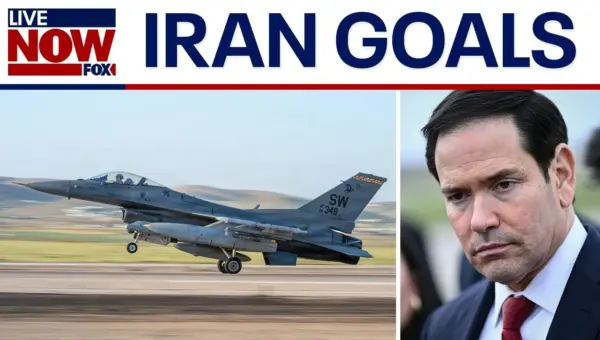
Rubio: US Can Achieve Iran War Goals Without Troops
Senator Marco Rubio outlined a strategy to counter Iran without deploying U.S. ground troops, focusing on weakening the regime and enhancing maritime security. He also criticized Cuba's economic system and expressed concerns about West Bank violence.


Israelis Forge Resilience Amidst Constant Bomb Shelter Drills
Life in Israel is a blend of resilience and constant vigilance, with many families adapting to frequent bomb shelter drills and even sleeping in makeshift shelters. Despite ongoing missile attacks, Israelis strive to maintain normalcy, though businesses face disruption and emotional fatigue is a growing concern.

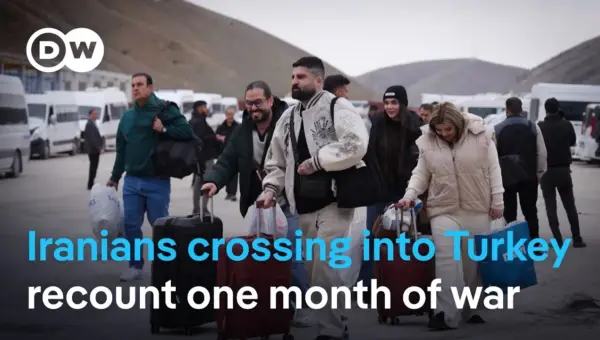
Iran War Exodus: Refugees Flee to Turkey Amidst Bombings
A train from Tehran brings refugees to Turkey, fleeing daily bombings and economic collapse. Many express deep fear for loved ones left behind, while some hold onto national pride and hope for victory. The conflict's impact is also felt economically in Turkey, with rising gas prices.