US Shifts Focus South: New Security Pact Targets Latin America
The United States is launching the 'Shield of the Americas' initiative, focusing security efforts on Latin America and targeting drug cartels. This shift signals a broader U.S. pivot away from global commitments and towards its own hemisphere. The strategy will likely rely on special forces, but faces significant challenges, particularly with Mexico, the U.S.'s largest trading partner.

US Shifts Focus South: New Security Pact Targets Latin America
The United States is launching a new security initiative called the Shield of the Americas. This plan, started by Donald Trump, aims to bring together the U.S. and certain Latin American countries. These nations are chosen because their governments have similar political views. The group includes countries like El Salvador and Argentina. It does not include nations like Colombia or Brazil. It’s important to know that what people consider ‘left’ or ‘right’ in Latin America can be different from the U.S.
These governments can change over time. Elections happen, and leaders switch. So, the list of countries in this new group might change. For example, Colombia has an election coming up that could be very important. The main goal of the Shield of the Americas isn’t about making new trade deals. It’s focused on working together on security matters. The U.S. military plans to increase its presence in Latin America. The main target is fighting drug smuggling organizations.
Historical Context: The Monroe Doctrine and Shifting Priorities
Historically, the U.S. has paid attention to Latin America when outside powers were involved. The Monroe Doctrine, for instance, stated that European powers should not interfere in the Western Hemisphere. It was less about the U.S. owning the region and more about keeping others out. This applied to countries like Germany, the Soviet Union, or China. The U.S. has often been wary of foreign influence in its ‘backyard’.
Now, the U.S. is also reducing its military and economic involvement in other parts of the world, like Europe and Asia. This means more military forces might be used closer to home. Politically, bringing troops back is popular in the U.S. However, some argue this makes the U.S. more likely to get involved in bigger conflicts later.
New Strategy: Special Forces and Limited Footprints
With fewer commitments overseas, the U.S. military has more resources to focus on the Western Hemisphere. Since no country in the region can challenge the U.S. militarily, these forces will be used for different threats. Drug trafficking is a major problem that most agree needs addressing. While some suggest simply reducing demand for drugs, that’s a complex issue with many votes.
The Shield of the Americas agreement, on paper, involves the U.S. and at least 14 other governments. They agree to use U.S. forces to fight cartels. However, the roster of countries will likely change with elections. This means the U.S. won’t build large, permanent bases. Building and maintaining such bases costs billions of dollars and takes a long time to set up.
Instead, the U.S. will likely rely on its special forces. This includes groups like the Green Berets, Rangers, and SEALs, as well as the CIA. The number of special forces operators has grown significantly since the war on terror. After that conflict ended, these highly trained, agile, and often deniable units became the go-to force for presidents to handle various global issues.
Challenges Ahead: Mexico and the Drug Trade
Special forces are well-suited for this mission because they are small and can be deployed quickly. They are effective against specific targets. However, these forces have trained for years to fight in desert-like conditions. Latin America often features mountains and jungles, which are different environments. This means special forces teams might be spread out across the region.
The U.S. needs to decide where to deploy these forces. Working with friendly governments, like in El Salvador, is easier. However, dealing with countries where the government might be less cooperative, like Colombia, presents a different challenge. Historically, countries like Colombia have welcomed U.S. help, but it was often indirect. For example, Plan Colombia in the early 2000s provided equipment and intelligence, but Colombian forces did the direct action.
Special forces can target specific drug operations or leaders. But the drug trade is a massive industry worth billions of dollars. As long as there is demand for drugs in the U.S., special forces alone may not be enough to change the overall situation. This is especially true when considering Mexico.
Mexico: A Critical Partnership at Risk
Mexico is a major challenge. While the current Mexican government is willing to work with the U.S., Mexico is where many large cartels originated. Even with leadership changes, the economic factors driving the drug trade north remain. To truly impact the situation in Mexico, the U.S. might need to deploy tens of thousands of troops. This is a strategy that has not always worked well.
During the war in Afghanistan, the U.S. had 90,000 troops, yet heroin production still increased. Mexico is much larger than Afghanistan, both in size and population. Even a large military deployment in Mexico might not be enough to alter the drug trade’s economics. The U.S. cannot solve these drug problems as long as there is high demand within the U.S. itself.
Global Impact: Economic Ties and Security Choices
While the U.S. can use its tools to disrupt activities in Latin America, the consequences must be considered. Mild disruption of drug production is one thing. But it could damage important political and trade relationships. Mexico is the U.S.’s largest trading partner. Weakening this relationship could make many other U.S. economic activities much more difficult. The decision to increase security involvement in Latin America involves weighing perceived benefits against potential economic and political costs.
Source: The Shield of the Americas || Peter Zeihan (YouTube)

Related Articles
G7 Allies Clash Over Iran War Strategy, Urge Focus on Russia
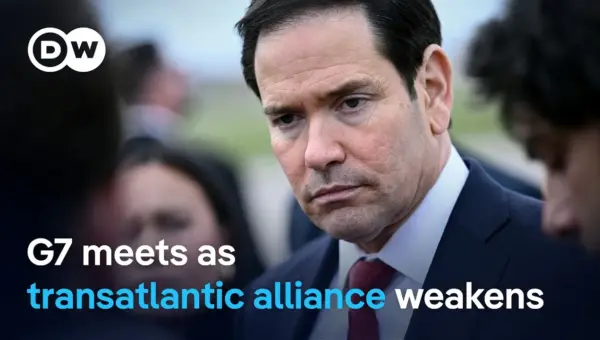
G7 foreign ministers met in Paris, revealing deep divisions over the U.S. war with Iran. European allies urged the U.S. to pressure Russia, linking its actions to the conflict and fearing support for Ukraine will wane.


US Must Block China’s Tech Access for Security
US national security experts are raising alarms about China's access to advanced AI chips, arguing it threatens strategic advantages. This, coupled with charges against Chinese entities for fentanyl precursor sales and a ban on foreign routers, signals a growing effort to prioritize security over business ties.

Iran Blocks China Ships, Exposing Beijing’s Weak Grip
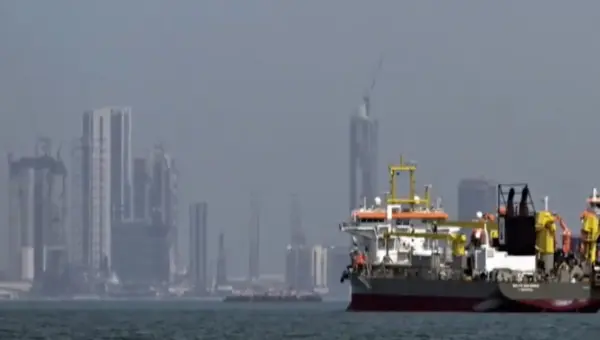
Iran's recent decision to block Chinese ships at the Strait of Hormuz is exposing the limits of Beijing's influence in the Middle East. This action is causing delays and cancellations for Chinese manufacturers, turning a perceived geopolitical win into an economic strain.