Iran Suffers Major Blow as Top Officials Killed Amid Regional Tensions
Israel has eliminated top Iranian security officials Ali Larajani and Gholamreza Soleimani, a move hailed as a major success. Meanwhile, former U.S. President Donald Trump criticizes allies like the UK for not doing enough to secure the Strait of Hormuz, as the UK government considers its naval deployment options amid escalating regional tensions.

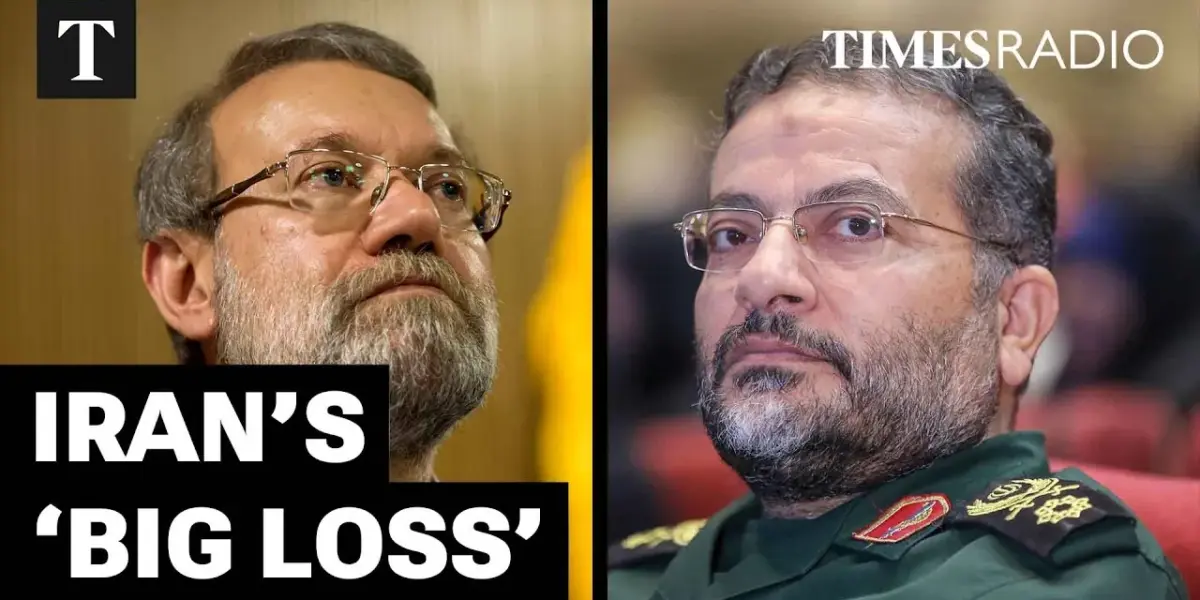
Top Iranian Security Officials Eliminated in Israeli Operation
Iran has suffered a significant setback following the elimination of two key security officials by Israel. The targeted strikes, which Israel has hailed as a major success, removed Ali Larajani, Iran’s top security official, and Gholamreza Soleimani, the head of the paramilitary Basij force. These assassinations are part of Israel’s strategy to weaken Iran’s capacity by targeting senior leadership, a tactic previously employed against groups like Hezbollah and Hamas.
Ali Larajani was a veteran figure in Iranian politics and security, recently appointed to guide the nation through potential leadership succession. His deep integration with the Revolutionary Guard Corps and his extensive network of allies across political and security spheres made him a pivotal figure. Gholamreza Soleimani also held significant influence as the leader of the Basij force, a key component of Iran’s internal security apparatus.
Trump Criticizes Allies Over Strait of Hormuz Security
Meanwhile, former U.S. President Donald Trump has intensified his criticism of NATO allies and other nations, particularly the UK, for their perceived lack of contribution to securing the Strait of Hormuz. Trump expressed disappointment that the UK was not more proactive in contributing naval assets to the region. He suggested that countries should have offered support before a conflict, rather than after it was largely resolved.
Trump’s public statements reflect an ongoing distrust within his administration towards European allies, often viewing them as not contributing enough to collective security. While the U.S. has legitimate concerns about defense spending and burden-sharing, the UK government has cited legal and political reasons for its reluctance to engage in a prolonged conflict in the Middle East. This divergence in approach highlights a broader tension between U.S. and European foreign policy objectives.
UK Assesses Options for Naval Deployment
Despite criticism from Trump, the UK government is reportedly exploring its options regarding the Strait of Hormuz. Sources indicate that the government has sought legal advice on the possibility of deploying naval assets to the region. This discussion comes amid a need for a credible plan to reopen the vital shipping lane, which has been a point of contention and a focus of international concern.
However, the UK faces limitations in its current naval capabilities. Recent decisions to decommission its last minesweeper in the region and a general downgrading of naval assets over the past 15 years have diminished its capacity. While destroyers and other vessels could potentially be deployed if politically necessary, it would not be the optimal solution given the strain such deployments place on ships and the need for maintenance and refitting in challenging environmental conditions.
Wider Regional Implications and Escalating Conflicts
The assassinations in Iran and the ongoing tensions surrounding the Strait of Hormuz are part of a larger, more complex regional conflict. Experts suggest that while Israel’s tactical operations may degrade Iran’s immediate capabilities, they are unlikely to halt Iran’s broader involvement in regional conflicts. Iran has demonstrated resilience and a long-term strategy to counter adversaries by raising costs on multiple fronts.
The conflict is increasingly drawing in global powers, with China and Russia reportedly supporting Iran. This expansion of the conflict beyond a bilateral confrontation between Israel and Iran elevates the stakes to global security concerns. Iran’s strategy of widening the conflict aims to make it difficult for the U.S. and its allies, indicating that despite tactical losses, the overall game is far from over. The targeting of the U.S. embassy in Baghdad, which has occurred multiple times, further illustrates the expanding nature of these confrontations.
What’s Next?
Moving forward, attention will be on Iran’s response to the loss of its key security officials and whether these events will alter its strategic approach. The UK’s decision on naval deployment and the broader implications for U.S.-European relations will also be closely watched. Furthermore, the involvement of global powers like China and Russia suggests that the region’s instability could have far-reaching geopolitical consequences.
Source: Iran Faces A ‘Big Loss’ After Top Security Officials Are Killed | RUSI (YouTube)

Related Articles

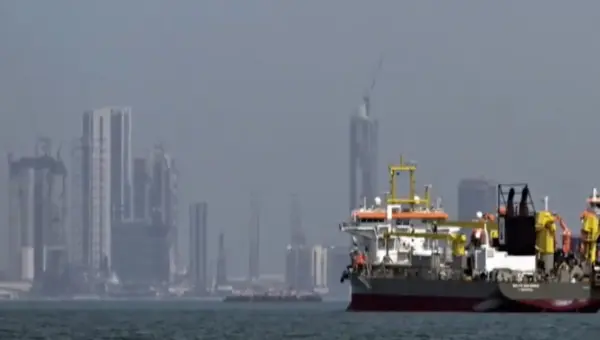
Iran Blocks China Ships, Exposing Beijing’s Weak Grip
Iran's recent decision to block Chinese ships at the Strait of Hormuz is exposing the limits of Beijing's influence in the Middle East. This action is causing delays and cancellations for Chinese manufacturers, turning a perceived geopolitical win into an economic strain.
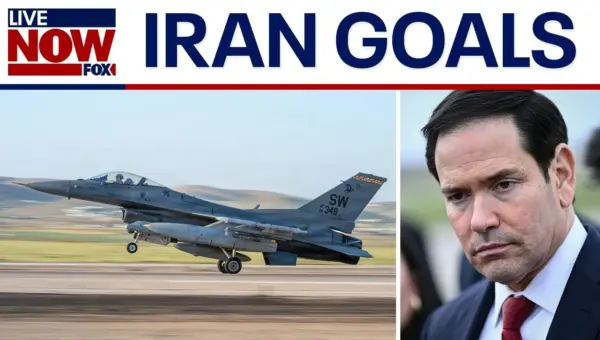
Rubio: US Can Achieve Iran War Goals Without Troops
Senator Marco Rubio outlined a strategy to counter Iran without deploying U.S. ground troops, focusing on weakening the regime and enhancing maritime security. He also criticized Cuba's economic system and expressed concerns about West Bank violence.


Israelis Forge Resilience Amidst Constant Bomb Shelter Drills
Life in Israel is a blend of resilience and constant vigilance, with many families adapting to frequent bomb shelter drills and even sleeping in makeshift shelters. Despite ongoing missile attacks, Israelis strive to maintain normalcy, though businesses face disruption and emotional fatigue is a growing concern.