Illinois Primary Sees Record Turnout, Voters Seek ‘Fighters’
Millions of voters participated in Illinois's primary elections, setting records and indicating a highly engaged electorate. Key races saw Lieutenant Governor Juliana Stratton win the Democratic Senate nomination, while analysts noted a trend of voters seeking strong 'fighters' over purely ideological candidates.

Record Turnout Sweeps Illinois Primaries
Millions of voters flocked to the polls in Illinois for Tuesday’s primary elections, setting a record for participation in a Democratic Senate primary outside of a presidential year. This surge in turnout, surpassing any seen in three decades, signals a highly engaged electorate. The numbers are also on track to exceed the 2004 primary, when over one million voters participated, famously leading to Barack Obama’s Senate victory.
Key Races and Unexpected Victories
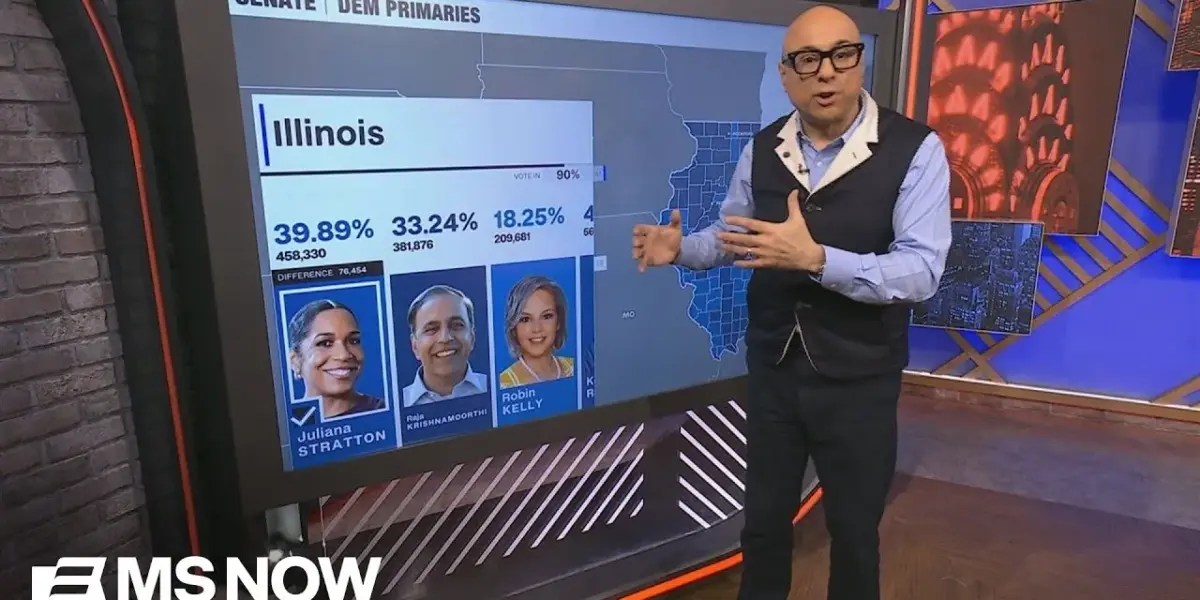
The most closely watched contest was the U.S. Senate race, a crucial race in a state where the primary winner is highly likely to win the general election. This year, the seat is for the position held by Senator Dick Durbin for 30 years. In a significant outcome, Lieutenant Governor Juliana Stratton secured the Democratic nomination. Heavily funded and backed by Governor J.B. Pritzker, Stratton defeated U.S. Representative Raja Krishnamoorthi, who had been leading in some polls. Stratton garnered nearly 40% of the vote, with Krishnamoorthi receiving 33%. Another prominent candidate, U.S. Representative Robin Kelly, also competed in the race.
The Senate race was particularly dynamic. Krishnamoorthi largely presented himself as a moderate, while Kelly had strong ties to the Congressional Black Caucus. Stratton’s alignment with Governor Pritzker, who has taken a firm stance on artificial intelligence, drew attention. Lobbyists concerned about AI policy reportedly worked against Stratton, even offering some support to Kelly in an attempt to split the vote and boost Krishnamoorthi’s chances. However, this strategy did not succeed.
House Races Highlight Diverse Democratic Voices
Several Democratic House primaries were also underway, with many of these races expected to result in general election victories due to Illinois being a reliably blue state. Notably, there were five open seats due to retirements, making some contests particularly competitive.
In the 9th Congressional District, an area with a large number of candidates, Daniel Biss, the mayor of Evanston, won with 29.5% of the vote. This race featured a notable contender in Kat Abu Ghazali, a 26-year-old progressive who, had she won, would have been the youngest woman ever elected to Congress. She secured approximately 25-26% of the vote, narrowly losing to Biss.
Other notable results included the unsuccessful bid of Jesse Jackson Jr.’s son to make a political comeback. In another district, former Congresswoman Melissa Bean won her race, indicating a preference for established candidates in some areas.
Voters Seek ‘Fighters,’ Not Just Ideologies
Beyond the high turnout, analysts observed a key trend: voters appear to be seeking candidates who are perceived as strong advocates, or ‘fighters,’ rather than those who are merely aligned with specific ideological labels. The election results did not show a clear victory for progressives or moderates across the board. Instead, the outcome seemed to depend on the specific strengths of the candidates in each district.
“People are looking for fighters as opposed to folders,” one commentator noted, suggesting that a candidate’s perceived ability to battle for their constituents’ interests may have been more important than their precise political ideology. This suggests a complex and nuanced mood within the Democratic Party, with different factions and viewpoints finding success in various races.
Broader Implications for Midterms
With the midterm elections just months away, the Illinois primaries offer valuable insights into the energy and priorities of the Democratic electorate. While Illinois is a blue state, the high engagement seen here could signal broader enthusiasm that might benefit Democrats in more competitive districts nationwide. The diverse outcomes suggest that the party is not monolithic, and different types of candidates can resonate with voters depending on local contexts and perceived needs.
The pressures and priorities evident in these races, from the influence of money to the internal debates about the party’s direction, will continue to be critical factors as the general election approaches. The focus will be on how these energized voters and the candidates they’ve chosen will perform on the national stage.
Source: "People are looking for fighters as opposed to folders": Millions of voters participate in Illinois (YouTube)

Related Articles


Florida Shockwave: Red State Flip Signals GOP’s Midterm Peril
Democrats have secured key victories in deep-red Florida districts, boosting their chances of winning both the House and Senate in the upcoming midterms. This surprising trend suggests a potential shift in voter sentiment, even in traditionally Republican strongholds.

Polls Reveal Deep Voter Concerns Over War, Economy for Trump
Recent polls and political analysis suggest President Trump faces significant challenges due to voter concerns about the prolonged conflict in Iran and the struggling economy. Republicans are growing anxious as these issues impact the president's standing, while Democrats see an opportunity to present themselves as a more stable alternative.


Democrats Surge Ahead: Midterm Sweep Looms Large
Recent Democratic victories, particularly in Florida, have dramatically shifted midterm election odds, suggesting a potential sweep of both House and Senate. This surge is attributed to voter weariness with Republican tactics and a perceived lack of governing competence. The outcome could reshape legislative priorities and force a strategic re-evaluation within the GOP.