Iran’s Asymmetric Warfare Strategy Traps US and Allies
Iran is effectively waging a war on its adversaries' terms by employing a strategy of asymmetric warfare. This approach, rooted in historical lessons and refined over years, uses drones, cyber attacks, and proxies to drain resources and create global disruption, challenging conventional military power.

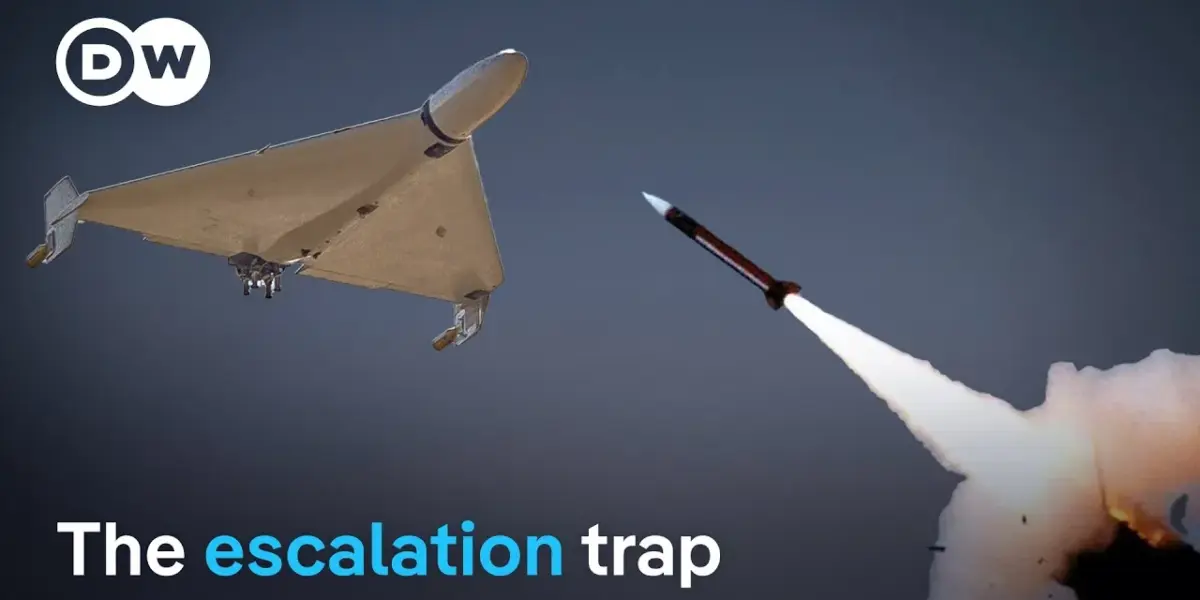
Iran’s “Mosaic Defense” Challenges Global Powers
In a new and complex form of conflict, Iran is employing a strategy of asymmetric warfare that experts say is designed to overwhelm and exhaust its adversaries without engaging in direct, large-scale battles. This approach, which leverages drones, cyber attacks, and proxy militias, aims to disrupt global systems and drain resources, forcing opponents into a prolonged and costly engagement. Security analyst Megan Sutcliffe explains that this strategy, referred to by Iran as “mosaic defense,” has deep roots in its history and has been refined over years as a primary response to hostilities.
Historical Roots of Iran’s Asymmetric Strategy
The origins of Iran’s reliance on unconventional warfare can be traced back to the devastating Iran-Iraq War of the 1980s. This eight-year conflict, marked by immense casualties and the widespread use of chemical weapons, taught Iran a critical lesson: its conventional military might was insufficient to deter or decisively end attacks on its territory. Consequently, the nation began to increasingly focus on non-conventional and asymmetric methods to respond to threats. This historical context highlights a strategic shift driven by a need for survival and effective deterrence in the face of conventional military disadvantages.
“Mosaic Defense”: A Decentralized Approach
Iran’s current strategy, termed “mosaic defense,” is characterized by its decentralized nature. The aim is to attack all facets of an adversary’s capabilities, thereby undermining their strength in ways that conventional warfare cannot achieve. This approach is particularly relevant in the current geopolitical climate, where Iran’s primary goal appears to be regime survival. By employing these tried-and-tested methods, Iran has managed to cause significant global disruption, effectively achieving its objective of remaining in place despite external pressures.
Economic and Military Costs of Conflict
The global impact of Iran’s asymmetric tactics is substantial. The disruption of shipping in crucial waterways like the Strait of Hormuz has led to significant price volatility in international energy markets, with oil prices exceeding $100 a barrel. Furthermore, the military response to drone and missile attacks incurs massive costs. For instance, the United States utilizes expensive interceptor systems, such as Patriot missiles, which can cost over a million dollars per battery. These are often used to counter relatively inexpensive Iranian drones, estimated to cost between $20,000 and $30,000 each. This imbalance creates a significant economic drain on nations involved in intercepting these threats, including Saudi Arabia and the UAE, and also benefits the U.S. military-industrial complex.
Miscalculation and the Risk of a “Forever War”
Despite the long-standing nature of Iran’s asymmetric warfare doctrine, there are indications that U.S. leadership may have underestimated its potential impact. Reports suggest that national security advisors had warned former President Donald Trump about the possibility of Iran’s response, yet he has publicly expressed surprise at the intensity of the actions in the Strait of Hormuz and the Gulf. This potential miscalculation raises concerns that the U.S. and its allies could be drawn into a prolonged and complex conflict with limited control. The Defense Department has pledged to avoid another protracted engagement, but Iran’s strategy appears designed to do just that—to exhaust adversaries over time.
Unclear Objectives and Declared Victories
The shifting timelines for conflict resolution publicly communicated by former President Trump, from an initial estimate of a week to ongoing assurances of imminent victory, highlight a lack of clarity regarding U.S. war aims. Experts like Megan Sutcliffe suggest that completely dismantling Iran’s military in its vast and mountainous terrain is not a realistically achievable short-term goal. Instead, the most probable scenario is that the United States will declare a unilateral victory when it deems it politically convenient. The possibility of regime change, once a stated objective, has also been downplayed. In this context, success is defined not by tangible outcomes but by the ability to declare victory and withdraw, with blame for any unachieved goals potentially being shifted to the Iranian people.
Iran’s Strategic Success and Future Outlook
While Iran’s pressure campaign on the Gulf has not yet led to the desired de-escalation or a ceasefire, and has even strained relations with some neighbors, its core objective of regime survival appears to have been met thus far. The conflict has demonstrated Iran’s capacity to significantly challenge major global powers through unconventional means, forcing them to confront a costly and unpredictable form of warfare. The long-term implications of this strategy remain uncertain, but it is clear that Iran is forcing the U.S. and its allies to re-evaluate their approaches to regional security and conflict resolution. The world watches to see how these dynamics will continue to unfold and shape future geopolitical strategies.
“The result is a situation so chaotic and volatile that it’s hard to predict and much harder to control. Does Washington know how to respond to a form of warfare designed to drain it slowly?”
Source: Are the US and Israel waging a war on Iran's terms? | DW News (YouTube)

Related Articles


U.S. Iran Tensions Rise Amid Shifting Alliances
Rising tensions between the U.S. and Iran are creating a volatile geopolitical situation. With conflicting signals on de-escalation and potential shifts in alliances like NATO and U.S.-Israel relations, the path forward remains uncertain. The global economy and regional stability hang in the balance.


Iran Targets US With Cyberattacks, Escalating Digital Warfare
Iran is increasingly using cyberattacks to challenge the U.S., as seen in a recent hack of the FBI director's account. Experts say this is a strategic shift due to Iran's limitations in conventional warfare. The U.S. needs to strengthen its digital defenses, focusing on encryption and cloud computing, rather than solely relying on traditional security measures.


Iran Hacks FBI Chief, Exposing U.S. Cyber Vulnerabilities
A recent hack of FBI Director Kash Patel's personal email by an Iran-linked group highlights Iran's growing cyber threat to the U.S. Experts explain how simple security oversights are exploited, emphasizing the need for basic defenses like two-factor authentication to protect against propaganda and potential infrastructure attacks.