Israel Claims Killing of Top Iran Security Chief Ali Larijani
Israel claims to have killed Ali Larijani, a top Iranian security official, in a recent strike. If confirmed, this marks a significant escalation. Experts suggest the claim is likely true, but Iran's response remains delayed, leaving the situation uncertain.

Israel Claims Killing of Top Iran Security Chief Ali Larijani
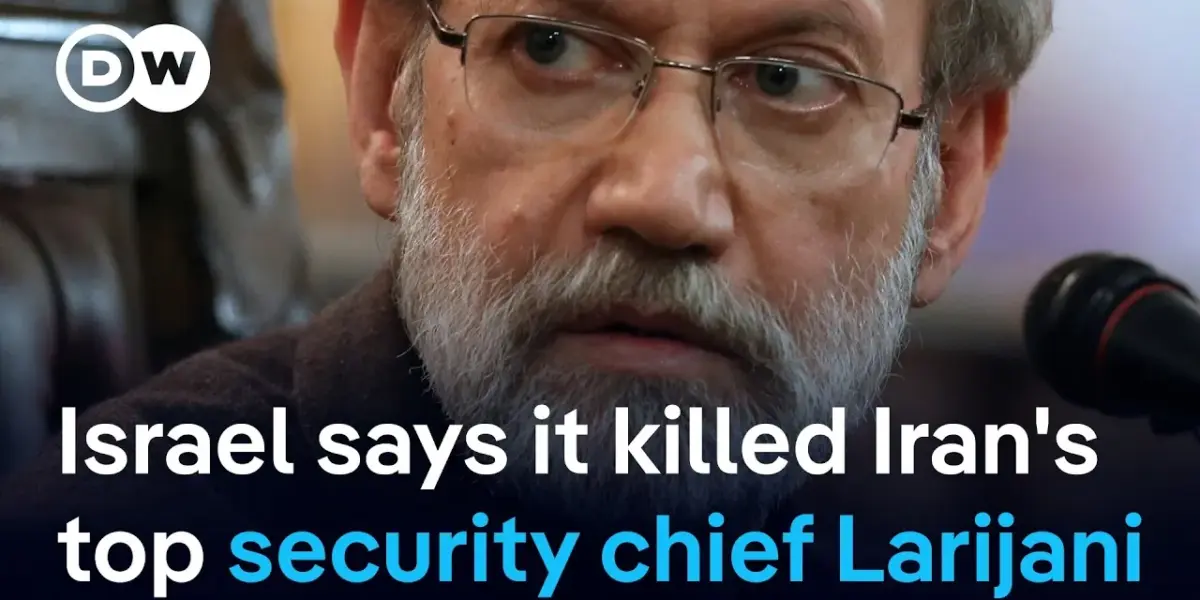
Israel announced it has killed Ali Larijani, a significant figure in Iran’s security apparatus. If confirmed, this would mark the highest-ranking Iranian official lost in strikes since the war began. Iran has not yet officially commented on the claim, with some reports suggesting Larijani may only be injured. Defense Minister Israel Katz also stated a separate strike eliminated the commander of the Basij paramilitary force.
Expert Analysis on the Strike’s Impact
David Manashri, professor emeritus at Tel Aviv University and an expert on Iran, suggested the claim is likely true. He noted Larijani’s importance within Iran’s power structure. Larijani was reportedly set to lead a committee to choose a successor if he were incapacitated. Manashri stated that in the past, individuals killed in conflicts have been replaced by even more dangerous figures.
“Everyone that has been killed was replaced by someone who was worse than him.” – David Manashri
The lack of immediate confirmation from Iran has led to speculation. Manashri noted that Larijani had recently been nominated to lead a committee for succession, making his absence notable. He also highlighted Larijani’s intellectual background, having written on philosophy and previously served as speaker of parliament. However, Larijani had also been disqualified from running for president twice, suggesting some within Iran viewed him as too moderate.
Broader Implications for Iran’s Power Struggle
Manashri emphasized that the focus should be on the situation within Iran and how such events affect the internal power struggle, rather than just the individuals involved. He pointed out that Iran historically avoids direct war, preferring to use proxy forces. He argued that the death of one individual, even a significant one like Larijani, does not fundamentally alter Iran’s strategic approach. The core issue, he believes, is Iran’s struggle for survival and the government’s disconnect with its people.
“The problem is that Iran is now struggling for its survival. The people are not supporting the government. The government doesn’t have they have the force. They have the power. They have they can suppress but they need to find a way to speak with the people and come a solution that people will get the to gain the results of the revolution.” – David Manashri
Iran’s Response and Larijani’s Role
Sarah Bazubandi, a research fellow at the Institute for Security Politics at Keel University, shared insights into Iran’s initial response. Shortly after Israel’s announcement, an account associated with Larijani shared a handwritten note from him offering condolences for fallen naval veterans. Bazubandi noted that Iran has a history of initially denying such claims before confirming them later, citing the Supreme Leader’s case.
Bazubandi described Larijani’s extensive career within the Islamic Republic, including his time as head of broadcasting, a member of parliament, and spokesperson for the Supreme National Security Council. He comes from a well-connected family, with several brothers holding high positions. Larijani himself was considered a potential candidate to become the next Supreme Leader and had reportedly become a key decision-maker since the death of the Supreme Leader.
Impact on the Basij and Potential for Unrest
The strike also targeted the commander of the Basij militia, a force known for its role in suppressing protests. Bazubandi stated that eliminating the head of the Basij could weaken the Islamic Republic’s internal security apparatus. This could potentially embolden any future protests against the regime.
With the Persian New Year approaching, a traditional time for public gatherings, Bazubandi suggested these events could potentially spark further dissent. However, she cautioned that the extent of public willingness to protest and the security forces’ response remain uncertain, especially given the ongoing war conditions. The general mood in Iran is described as somber due to the war and its destruction.
Bazubandi concluded that these targeted assassinations might be seen by some as a moment that Prime Minister Netanyahu has alluded to, where the Iranian people themselves will bring down the regime with external assistance. The potential for these events to become a catalyst for change remains a significant point of observation.
Source: Israel claims killing of Iran's top security chief Ali Larijani | DW News (YouTube)

Related Articles

Rubio: US Can Achieve Iran War Goals Without Troops
Senator Marco Rubio outlined a strategy to counter Iran without deploying U.S. ground troops, focusing on weakening the regime and enhancing maritime security. He also criticized Cuba's economic system and expressed concerns about West Bank violence.


Israelis Forge Resilience Amidst Constant Bomb Shelter Drills
Life in Israel is a blend of resilience and constant vigilance, with many families adapting to frequent bomb shelter drills and even sleeping in makeshift shelters. Despite ongoing missile attacks, Israelis strive to maintain normalcy, though businesses face disruption and emotional fatigue is a growing concern.

Iran War Exodus: Refugees Flee to Turkey Amidst Bombings
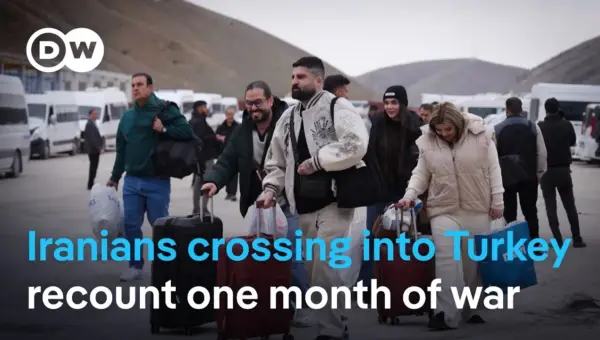
A train from Tehran brings refugees to Turkey, fleeing daily bombings and economic collapse. Many express deep fear for loved ones left behind, while some hold onto national pride and hope for victory. The conflict's impact is also felt economically in Turkey, with rising gas prices.