Nvidia Bets Big on CPUs for AI’s Next Leap
Nvidia is shifting its strategy in the AI hardware race, focusing on the crucial role of CPUs and introducing a new LPU chip designed to boost GPU performance. The company aims to address future AI compute needs and announced renewed manufacturing efforts in China.

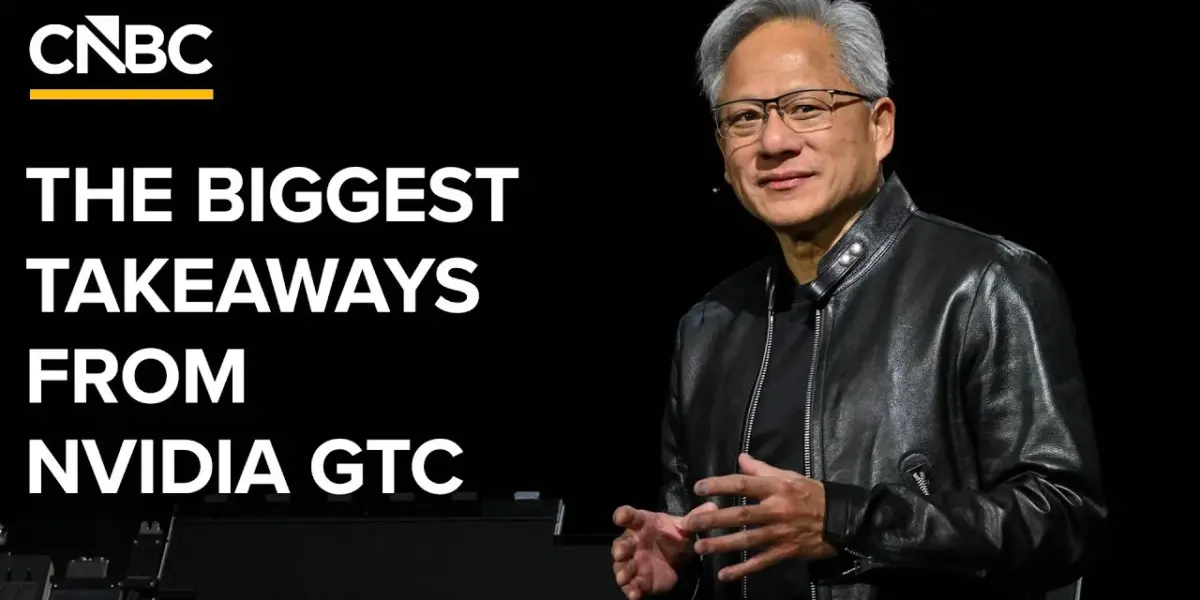
Nvidia Shifts Focus to CPUs Amid AI Compute Demands
Nvidia, the company that became the first ever to reach a $5 trillion market value last year, is changing its strategy. While its graphics processing units (GPUs) have been key to powering artificial intelligence (AI), the company now sees a new challenge: the central processing unit (CPU).
At its recent GTC developer conference, Nvidia showcased a new direction. The company displayed a rack filled entirely with CPUs. These chips, often seen as supporting players to the more powerful GPUs, are suddenly becoming very important. Nvidia believes CPUs could be the next hurdle, or bottleneck, that slows down AI progress.
Introducing the LPU: A Chip for Speed
Nvidia CEO Jensen Huang unveiled a new type of chip called a language processing unit (LPU) during his keynote speech. This LPU is designed with a single goal: to make GPUs run faster. It uses technology from Nvidia’s largest purchase to date, a $20 billion deal for graphics assets completed in December.
The new LPU is expected to be available in the third quarter of 2026. It will be part of a new system holding 256 of these LPUs. This new setup aims to significantly boost how much AI work can be done per unit of energy, specifically improving the performance of Nvidia’s existing GPUs by 35 times in a related system called the Vera Rubin rack.
“We united two processors of extreme differences one for high throughput, one for low latency,” Huang explained, highlighting the chip’s dual focus on processing large amounts of data quickly and responding with minimal delay.
More Memory, More Power
The need for more memory in AI systems remains a critical factor. Nvidia plans to address this by using many of the new LPU chips together. This will allow for a much larger amount of memory, essential for handling complex AI tasks.
A Glimpse of the Future: Cyber Architecture
Huang also gave a preview of Nvidia’s upcoming cyber architecture. This new design will be featured in the next generation of its Ultra scale system, set to ship in 2027. The cyber architecture aims to change how large computer systems are built.
It does this by placing the computer parts, or compute trays, on their sides. This allows for more equipment to fit into the same space, creating a very dense setup. It also promises much lower latency, meaning faster response times for AI applications.
China Market Update
In a private meeting with reporters, Huang provided an update on Nvidia’s business in China. He confirmed that the company has received licenses for its H200 chips and has seen many purchase orders from Chinese customers.
Nvidia is now in the process of restarting its manufacturing for these products. Huang noted that this situation is different from just a few weeks ago. He indicated that their supply chain is becoming active again, and customers can expect to hear more about these developments soon.
Market Impact and What Investors Should Know
Nvidia’s strategic shift towards CPUs and the introduction of the LPU signal a significant development in the AI hardware race. For years, the focus has been almost entirely on the power of GPUs. However, Nvidia’s move suggests that other components are becoming equally vital for the next stage of AI advancement.
Short-Term Implications: Investors might see increased attention on companies that produce high-performance CPUs. The demand for AI infrastructure is clearly growing, and Nvidia’s strategy acknowledges that a complete system, not just a single powerful chip, is needed.
Long-Term Implications: The emphasis on LPUs and system design could lead to more specialized AI hardware. This might mean greater efficiency and lower costs for running AI applications in the future. Nvidia’s success in the Chinese market, despite geopolitical complexities, is also a key factor to watch for global tech companies.
The AI industry is constantly evolving. Nvidia’s latest announcements show that innovation continues at a rapid pace. Companies and investors alike will need to stay informed about these changes to understand the future direction of artificial intelligence technology and its market impact.
Source: Nvidia GTC 2026 — Biggest Takeaways (YouTube)

Related Articles


Finland Tops Happiness Chart, UK Falls to 29th
Finland has once again been named the world's happiest country, while the UK dropped to 29th in the latest World Happiness Survey. The report explores the complex ways happiness is measured and highlights unique Finnish concepts of well-being, alongside concerning trends in youth happiness.


ChatGPT Adds Library Tab, Google Overhauls AI Studio
This week's AI news highlights significant updates from major players. ChatGPT now features a Library tab for easier document management, while Google has overhauled its AI Studio, merging it with an app builder to simplify the creation of multiplayer experiences. We also look at Midjourney V8's performance, user hopes and fears about AI from an Anthropic study, and quick updates from Gamma, OpenAI, and Claude.


Ukraine Gains AI Drone Edge: Russia’s Jamming Weakened
Ukraine is integrating advanced AI drone software from Shield AI, significantly boosting its capabilities against Russian jamming. The Hivemind system enables autonomous flight and swarm tactics, challenging traditional military doctrine and potentially weakening Russia's electronic warfare advantage.