America’s Financial Achilles’ Heel: How Europe’s Unsung Economic Power Redefines Global Influence
A recent analysis challenges the conventional American view of global power, arguing that the United States' military might is fundamentally underpinned by its economic dominance. This dominance, however, is increasingly fragile, built on international trust that is eroding due to unpredictable policies. Europe, holding trillions in US debt and wielding significant trade leverage, emerges as a far more powerful and influential entity than many Americans realize, capable of profoundly impacting the U.S. financial system and global standing.

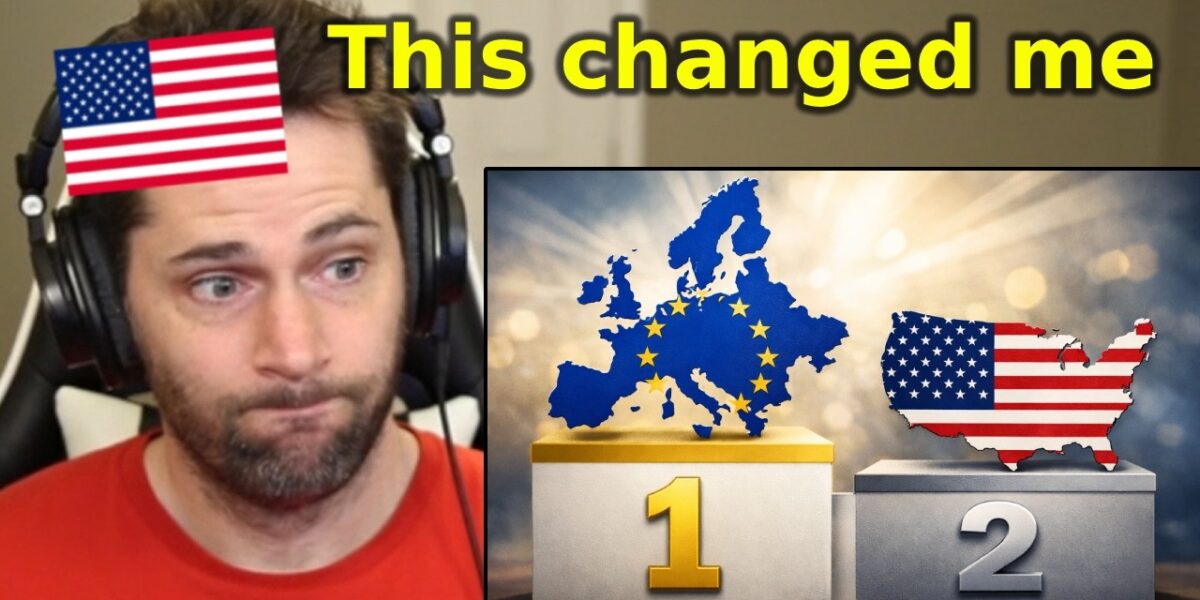
The Shifting Sands of Global Power: A Reassessment of American Hegemony
For decades, the United States has been widely perceived, both domestically and internationally, as the undisputed global superpower, primarily due to its unparalleled military might. However, a compelling analysis by commentator Stefan Woodford, recently reacted to by an American observer, argues that this perception is dangerously incomplete. The true bedrock of American power, it suggests, is not its defense budget but its economic dominance, a system meticulously built and maintained since World War II, and one that is increasingly fragile, particularly in its relationship with Europe.
This perspective challenges a prevalent narrative, especially within certain American circles, that fixates on military spending figures – such as the U.S.’s nearly $1 trillion defense budget compared to Europe’s approximately $450 billion – to conclude that Europe is militarily dependent and politically subservient to American will. Such a viewpoint, the analysis contends, overlooks the intricate economic architecture that underpins the U.S.’s ability to project power globally.
Beyond Military Might: The Economic Core of American Power
The United States’ formidable military, with its 11 aircraft carrier strike groups and over 750 military bases worldwide, is not an independent entity but a direct beneficiary of the nation’s economic supremacy. The ability to fund such an expansive defense apparatus, the analysis explains, stems from the U.S. dollar’s status as the world’s primary reserve currency. This "exorbitant privilege" allows America to borrow at exceptionally low interest rates, as capital from across the globe flows into U.S. Treasury bonds, seeking a safe and stable investment.
This financial leverage enables the U.S. government to finance massive deficits and military expenditures that no other nation could sustain. The global reliance on the dollar for international trade and finance means that transactions are routed through American banks, solidifying the U.S.’s central role in the global economic system. This system, however, is not a natural phenomenon or a matter of destiny; it is a carefully constructed framework, predicated above all else on international trust in American stability, predictability, and adherence to rules.
Europe’s Unseen Economic Leverage: A Sleeping Giant
What many Americans, and indeed global observers, fail to fully appreciate is the immense economic leverage that Europe holds over this delicate system. The analysis highlights staggering figures:
- Investment Power: European countries collectively hold an astonishing $8 trillion in U.S. bonds and equities – nearly twice as much as the rest of the world combined. This represents 56% of all foreign investment in America, underscoring Europe’s critical role in financing the U.S. government and its military.
- Trade Colossus: The economic relationship between the European Union (EU) and the U.S. is the most integrated in the world, together representing 43% of global GDP and nearly 30% of global trade. In 2024, transatlantic trade reached an astounding $1.68 trillion, forming the very foundation of American prosperity.
- Job Creation: European companies directly employ 5 million Americans, a figure larger than the entire population of Ireland, demonstrating the tangible impact of European investment on the U.S. job market.
- Revenue Stream for U.S. Tech: American tech giants like Apple, Google, Microsoft, Amazon, and Meta derive between $160 billion and $300 billion in revenue annually from European customers. The European single market, with 450 million consumers, is a market that U.S. companies simply cannot afford to lose.
- Critical Imports: The U.S. is the world’s largest pharmaceutical importer, with Europe supplying 25% of all active pharmaceutical ingredients used in American drug manufacturing, totaling $170 billion. Furthermore, 90% of U.S. biotech companies rely on imported components. This dependence has significant national security implications, particularly in areas like public health.
These figures reveal a deeply intertwined economic relationship, where the prosperity and stability of one partner are inextricably linked to the other. Any disruption to this relationship, therefore, carries severe consequences for both sides, but particularly for the U.S. system that relies so heavily on global trust and capital flows.
The Fragility of Interconnectedness: Why America is Vulnerable
The analysis draws a stark contrast between America’s deep integration into the global economy and the more insulated approaches of nations like Russia and China. While Russia has spent a decade preparing for isolation, building alternative payment systems and slashing dollar reserves, America has done the opposite. The U.S. is not strong despite its interconnectedness; it is strong *because* of it. Every major global transaction touches the dollar, and every thread of global finance runs through New York.
This interconnectedness, however, becomes a vulnerability when the U.S. acts unpredictably or "like a rogue state." When treaties are threatened, allies insulted, or international norms disregarded, it doesn’t just damage America’s reputation; it shakes the very foundations of the system that makes it powerful. The "trust is cumulative and relational, but it can also dissipate when the hegemon is seen as unpredictable or self-serving," as a Cambridge University paper cited in the analysis highlights.
Threats to Alliances and Prosperity: The "Trade Bazooka"
The analysis vividly illustrates potential European responses to perceived American transgressions. The infamous "Greenland scenario," where a hypothetical U.S. attempt to acquire the Danish territory was seen as a real possibility, served as a stark warning. Such an action, even if hypothetical, would instantly destroy NATO, an alliance that has secured peace in Europe for 75 years and provided America with forward-deployed bases across the continent. Republican Congressman Michael McCaul, Chairman Emeritus of the House Foreign Affairs Committee, explicitly stated that an invasion would "turn Article 5 on its very head and in essence press a war with NATO itself."
Economically, Europe possesses a "trade bazooka" in the form of the EU’s Anti-Coercion Instrument. This mechanism, though never used, allows the EU to shut American companies out of the European single market entirely through restricting trade licenses, blocking access to public procurement, limiting foreign direct investment, and imposing sanctions on specific companies and individuals. France, for instance, has already pushed for a "united and coordinated response" to U.S. tariffs, and a €93 billion retaliatory tariff package, specifically designed to hit Republican states (targeting products like bourbon, soybeans, and aircraft parts), remains on the shelf.
The profound implications for American consumers and patients, particularly regarding critical pharmaceutical imports, underscore the severity of such economic countermeasures. Explaining to American cancer patients why their chemotherapy drugs aren’t arriving because of a diplomatic dispute over an island highlights the tangible and devastating consequences of eroding trust and trade relations.
Erosion of Trust: The Ultimate Cost
The core message resonates: the dollar’s status, America’s ability to borrow cheaply, and its overall global power are inextricably linked to trust. Trust that American institutions are stable, that the rule of law is upheld, and that the U.S. will remain a predictable, reliable anchor of the global system. When this trust erodes, the dollar’s value and its reserve currency status are jeopardized. A Federal Reserve paper confirms this link, stating that "the loss of the U.S. dollar’s reserve currency status may thus presage a large decline in the global power of the US." The markets are already taking notice, with gold hitting record highs and the dollar dropping against the euro in response to past tariff announcements.
The analysis concludes with a sobering thought: the very actions intended to assert American strength—unilateralism, protectionism, and unpredictability—are instead burning down the foundations of its own power. This is not strength, but a "geopolitical equivalent of a billionaire burning his company to the ground."
The Unintended Beneficiaries: Russia and China
In this scenario of a fractured transatlantic alliance and a weakened U.S. financial system, the analysis identifies two clear beneficiaries: Russia and China. As America alienates allies and undermines its own economic framework, it inadvertently creates opportunities for these nations to expand their influence and accelerate the shift towards a more multipolar world order. Russia, already celebrating perceived cracks in the transatlantic alliance, and China, with its own alternative financial systems and massive domestic market, are poised to gain from the U.S.’s self-inflicted damage.
The insights presented serve as a critical wake-up call for Americans to understand the complex, interconnected nature of global power. The long-enjoyed prosperity and influence of the United States are not immutable and are, in fact, highly dependent on the very international relationships and trust that are currently under strain. The consequences of continuing on a path of eroding trust and alienating allies could be profound, irreversible, and ultimately detrimental to America’s standing in the world.
Source: American Reacts to Why Europe is WAY More Powerful Than You Think (YouTube)

Related Articles
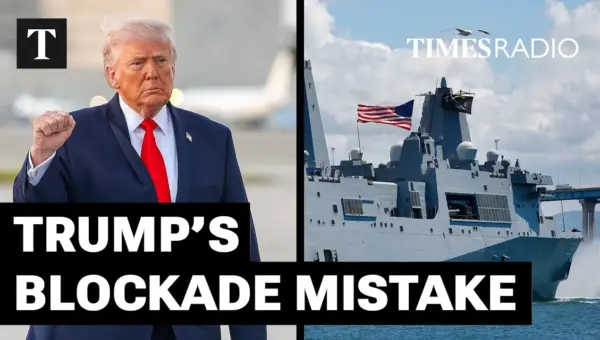
Iran Blockade Sparks War Concerns, Backfires on US, Expert Warns
The U.S. blockade on Iranian ports, aimed at crippling its economy, is sparking concerns of an "act of war" and may backfire, according to former diplomat Barbara Leaf. While the U.S. and Iran prepare for potential peace talks, hardline rhetoric and the blockade's global economic impact complicate diplomatic efforts. A key concern is a potential confrontation with China if U.S. forces intercept Chinese vessels.
US Markets Surge as Iran Tensions Ease, Oil Prices Steady
U.S. stock markets are hitting new highs as tensions with Iran ease, with the S&P 500 reaching record levels. Despite persistent oil prices around $92 a barrel, the U.S. economy shows resilience, boosted by record oil exports. The focus is shifting to the economic confrontation with Iran, including the non-renewal of oil sales waivers, and long-term strategies to bypass the Strait of Hormuz.
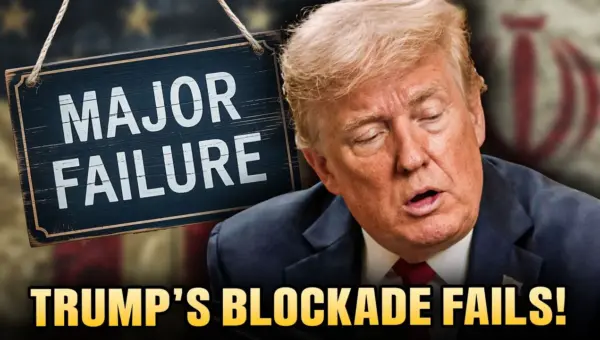
Trump’s Blockade Fails, Allies Shun Mission: A Pattern?
A reported failure of Donald Trump's blockade of the Strait of Hormuz, with ships passing through unimpeded, raises questions about policy effectiveness. This incident, coupled with allies' reluctance to join the mission, suggests a pattern of unintended consequences and strained international relations.