US Navy Faces New Threats in Strait of Hormuz
Defense experts reveal the growing dangers facing the US Navy in the Strait of Hormuz, where drones and explosive boats challenge advanced warships. The narrow waterway demands new strategies to counter rapidly emerging threats, drawing lessons from recent conflicts.

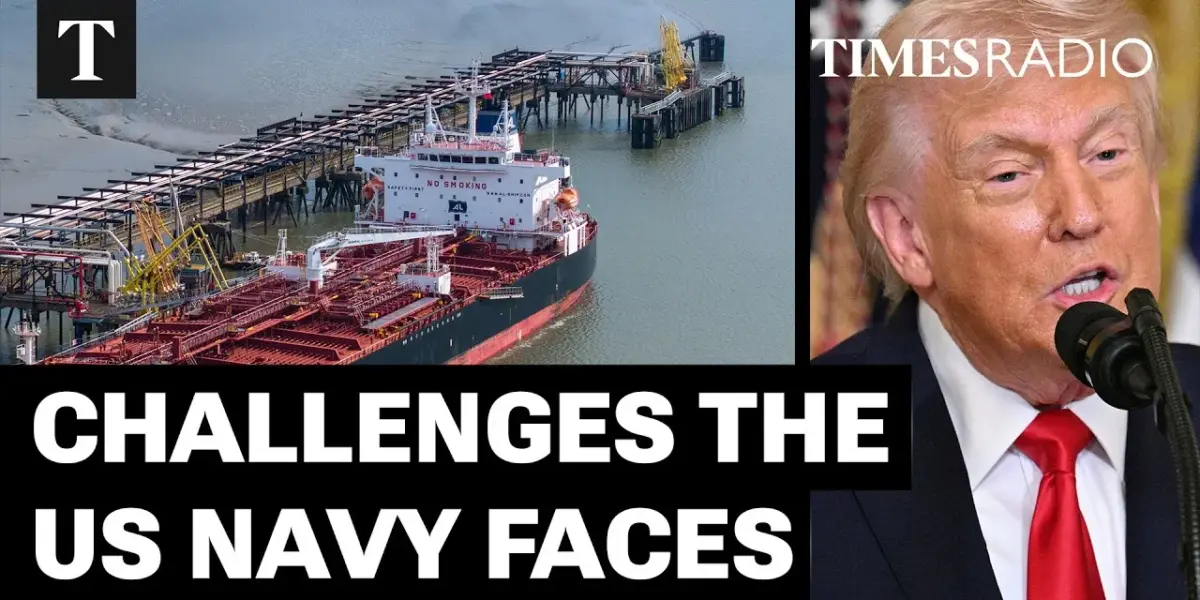
US Navy Faces New Threats in Strait of Hormuz
The United States Navy is facing growing challenges in securing the Strait of Hormuz, a vital waterway for global oil transport. Defense experts highlight that modern warfare tactics, including the use of drones and unmanned explosive boats, pose significant risks to even the most advanced warships operating in the narrow passage. This complex environment demands new strategies to counter threats that can appear with little warning.
A Crowded and Dangerous Waterway
The Strait of Hormuz, at its narrowest point, is only about 25 miles wide. This cramped space is a major concern for naval operations. The shipping lanes, known as the Traffic Separation Scheme, run through the middle of the strait. These lanes actually cross into the territorial waters of both Oman and Iran, making it easy for threats to emerge from close by.
Operating in this area means the U.S. Navy must cover a vast territory. They need to spot potential dangers that could reach them in seconds if they are missiles, or just a few minutes if they are fast attack boats. The goal is to neutralize these threats before they can cause serious harm.
Evolving Threats Challenge Naval Power
Naval officers express anxiety about the diverse threats present in the Strait of Hormuz. These dangers include not only naval mines but also unmanned, kamikaze-style boats packed with explosives. Flying drones and fast attack craft armed with torpedoes are also significant concerns. The effectiveness of these weapons has been demonstrated by Ukraine in the Black Sea, where similar tactics have sunk several Russian warships.
Matthew Savile, who leads the Defense Science Program at the Royal United Services Institute, explained the complexity of the situation. “It is incredibly easy to overlook it,” Savile stated, referring to the strait. He detailed the mix of threats, ranging from anti-ship cruise missiles and potentially ballistic missiles to explosive boats, fast attack craft, and drones. These threats require constant vigilance and rapid response.
Advanced Technology Meets Asymmetric Warfare
The U.S. Navy possesses incredibly powerful surface ships, primarily Arleigh Burke-class destroyers, equipped with a wide array of defensive weapons, guns, missiles, and advanced radar systems. However, the confined nature of the strait limits their effectiveness. “It is a very cramped space,” Savile noted. “And when you’re operating down there, what you’re effectively asking them to do is be able to cover a huge area of territory.”
The short reaction times are a critical factor. Missiles can arrive in seconds, while fast attack craft might take a few minutes. This puts immense pressure on the Navy’s ability to detect and neutralize threats quickly. Savile emphasized the need for air support, stating, “It’s not likely to be a maritime-only problem. You would want overwatch from your own aircraft to help spot those threats and probably deal with them.”
Lessons from Ukraine and the Red Sea
Recent conflicts offer crucial lessons for naval planners. The operations in the Black Sea and the Red Sea near Yemen have shown the challenges of operating in constrained spaces. In the Red Sea, the U.S. and UK faced Houthi rebels using weapons that were difficult to pinpoint and eliminate, despite efforts to strike launch sites. This highlights the difficulty of providing complete security in a large operational area.
Savile pointed out the difference in motivation when dealing with Iran. “The issue with the Iranians is that they already act as if this is an existential fight,” he said. This mindset makes them less susceptible to coercion through threats of violence, as they may perceive their survival as being on the line regardless.
The Risk to Expensive Warships
A former chairman of the Joint Chiefs of Staff reportedly stated, “It only takes one guy in a speedboat to put a limpet mine on the side of one of our ships.” This quote underscores the asymmetric nature of the risks involved. While large tankers might withstand a direct hit from a missile or explosive boat without sinking, they could still be significantly damaged, leading to leaks and endangering their crews.
Modern warships, though heavily armed, are relatively smaller than these massive commercial vessels. A single anti-ship cruise missile or a couple of well-placed mines could pose a serious threat to their survivability. These warships are incredibly expensive, and losing one would be a major blow.
Adapting Naval Defenses
The Navy employs a range of defensive measures, from high-tech electronic warfare like jamming and spoofing to more traditional methods. Sailors with machine guns are still a crucial part of close-in defense. For fast-moving threats like sea-skimming cruise missiles, expensive missile systems are used.
However, for swarming threats like fast attack craft and drones, a combination of onboard machine guns, miniguns, and other cannons is more practical. Cheaper missiles, such as the Martlet missile used on helicopters, are also being considered for dealing with smaller, faster craft. The goal is to match the defensive response to the level of the threat, using less costly options where possible.
The Future of Naval Warfare?
The success of drones and smaller, cheaper weapons in conflicts like the one in Ukraine raises questions about the future of large, expensive warships. “If we’re looking at drones and smaller or cheaper weapons, then operating close to shorelines or in constrained waterways is clearly become riskier,” Savile observed. The Black Sea, an enclosed area, has seen Russian naval vessels attacked both at sea and even near port facilities.
While small unmanned surface vessels (USVs) currently struggle in rough seas and cannot operate far from shore, their role is likely to expand. The U.S. Navy is exploring a “hybrid navy” concept, combining sophisticated weapons with more unmanned ships to offset a lack of personnel and improve targeting capabilities. This approach aims to create a more resilient and adaptable force capable of meeting the challenges of modern naval warfare from multiple angles.
Source: How The US Clears The Strait Of Hormuz | Defence Expert Explains (YouTube)

Related Articles

Iran Blocks China Ships, Exposing Beijing’s Weak Grip
Iran's recent decision to block Chinese ships at the Strait of Hormuz is exposing the limits of Beijing's influence in the Middle East. This action is causing delays and cancellations for Chinese manufacturers, turning a perceived geopolitical win into an economic strain.


Rubio: US Can Achieve Iran War Goals Without Troops
Senator Marco Rubio outlined a strategy to counter Iran without deploying U.S. ground troops, focusing on weakening the regime and enhancing maritime security. He also criticized Cuba's economic system and expressed concerns about West Bank violence.


Israel Escalates Iran Strikes, Warns of Wider War
Israel has launched significant strikes inside Iran following continued missile fire, warning of further escalation. The conflict risks wider regional instability and economic disruption, especially concerning the Strait of Hormuz.