Trump’s Iran Strategy Suffers Major Blow After Key Resignation
Joe Kent's resignation from his counterterrorism role challenges Donald Trump's Iran strategy, arguing the war is unjustified and serves Israeli interests. Analyst Malcolm Nance believes this move significantly hurts Trump and exposes flaws in his approach to foreign policy.

Trump’s Iran Strategy Suffers Major Blow After Key Resignation
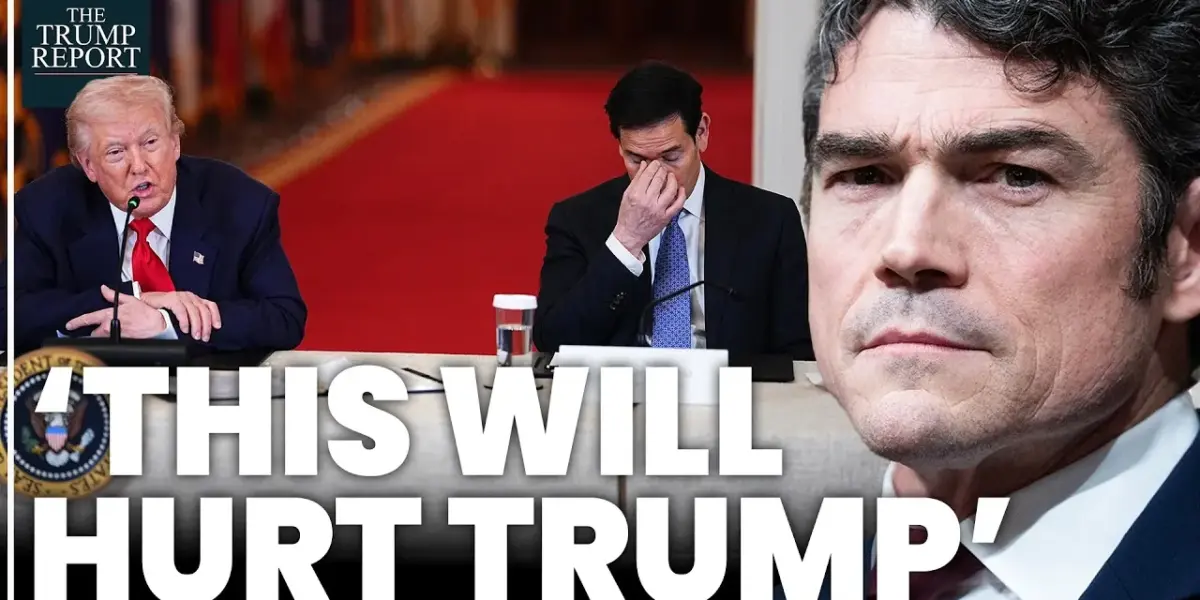
Donald Trump’s approach to Iran has been called into question following the resignation of his top counterterrorism official, Joe Kent. Kent, a decorated special forces officer, stepped down in protest against the war with Iran, stating it was not an imminent threat and was being fought on behalf of Israel. This move is seen by analyst Malcolm Nance as a significant blow to Trump and the MAGA movement.
Kent’s Background and Resignation
Joe Kent is not your typical figure in Trump’s inner circle. He is a decorated special forces officer whose wife, a Navy cryptologist, tragically lost her life in Syria. After a failed congressional run, Kent was brought into the White House to lead the national counterterrorism center at the CIA. Nance considers this one of the few responsible decisions made by the Trump administration.
Kent’s resignation highlights a deep disagreement over the justification and strategy behind the conflict with Iran. He argues that Iran did not pose an immediate danger and that the U.S. is essentially fighting a war for Israel’s interests. This perspective challenges the narrative promoted by Trump and his allies.
Trump’s Misguided War Strategy
Malcolm Nance criticizes Trump’s foreign policy, particularly his belief that projecting power would automatically lead to victory. Nance suggests Trump’s understanding of warfare is shaped by movies and novels, rather than practical experience. He points to Trump’s limited success in Venezuela as an example of his flawed thinking, where a small raid was misconstrued as a decisive victory.
Trump’s decision to go to war with Iran, according to Nance, was more aspirational than strategic. If Trump truly wanted to help the Iranian people, he would have supported the protests that occurred in January, where hundreds of thousands took to the streets. Instead, these protests were met with a brutal crackdown, and the U.S. did not intervene.
The Israel Connection and MAGA’s Divisions
Kent’s accusation that the war is being fought for Israel taps into a sensitive and divisive element within the MAGA movement. Nance points out that half of MAGA supporters hold anti-Semitic views, while the other half are fiercely pro-Israel, sometimes elevating Benjamin Netanyahu above Trump. This creates an uncomfortable alliance and potential friction within the movement.
Kent, with his tough, masculine, special forces image, is a figure that the MAGA base typically admires. His public opposition to Trump’s Iran policy, therefore, presents a stark contrast. Nance likens Kent to a “G.I. Joe” character, whose stance now directly opposes the almost cult-like devotion many in MAGA have for Trump.
Consequences of U.S. Actions in Iran
Nance details the significant, yet ultimately unsuccessful, outcomes of the U.S. military actions against Iran. While the U.S. destroyed Iran’s air force, navy, and air defense systems, these conventional forces were never Iran’s primary means of projecting power. The strikes also inadvertently benefited China by creating a massive demand for weapons replacement.
The objective of regime change failed, as the Iranian regime remains in power, with the Revolutionary Guard Corps (IRGC) maintaining control on the streets. Furthermore, Iran’s ability to project power through asymmetric warfare, such as mines, drones, and high-speed boats, remains intact. These methods, often carried out by small groups, pose a constant threat in crucial waterways like the Strait of Hormuz.
The Strait of Hormuz: A Strategic Chokepoint
The Strait of Hormuz is a critical chokepoint for global oil transport. Iran’s power in this region has historically relied on clandestine and asymmetric tactics, not its conventional navy. Despite U.S. efforts to neutralize Iran’s naval capabilities, Iran continues to use methods like suicide drones and high-speed boats to threaten shipping.
The U.S. appears to have conceded to Iran’s control over who uses the Strait. Recent incidents show ships, including those from countries with warmer relations with Iran, passing through after visual inspection by Iran. This effectively gives Iran an “easy pass” system, allowing it to collect tolls and continue to earn oil income, undermining the stated goals of the U.S. intervention.
Kish Island and the Risk of Escalation
Discussions about seizing islands like Kish Island in the Strait of Hormuz are considered highly risky by Nance. He recalls his own experiences in the region during the Iran-Iraq War and subsequent conflicts with Iran.
An attempt to seize Kish Island, which is close to Iran’s coast and heavily monitored by its mountain defenses, would be a complex and dangerous operation. Nance suggests that while special operations forces might be deployed, the risk of Iranian retaliation with drones and explosives is significant. He also warns that a broad strategy to control all islands in the Strait would require advancing deep into Iranian territory, making it vulnerable to remote drone attacks.
Historical Precedents and Lack of Foresight
Nance draws parallels to historical military operations, such as the 1988 attempts to land on various Iranian islands. He stresses the importance of learning from history, a quality he believes is lacking in the current White House. The risk of losing amphibious ships carrying thousands of Marines to a coordinated Iranian response is a dire possibility.
The current U.S. administration, according to Nance, shows a disregard for history, planning, and basic risk management. While the military will follow orders, the potential consequences of such actions could be devastating, likening it to historical military disasters.
Why This Matters
Joe Kent’s resignation is more than just an internal personnel change; it’s a public repudiation of Donald Trump’s foreign policy by someone with deep expertise in counterterrorism. It exposes the potential flaws in Trump’s strategic thinking and highlights the divisive nature of his approach to Iran, particularly its entanglement with Israeli interests and internal MAGA conflicts.
Implications and Future Outlook
The situation suggests a continued struggle for control and influence in the Strait of Hormuz. Iran’s resilience in the face of U.S. military action, coupled with its continued ability to project asymmetric power, means that the threat to global shipping remains. The U.S. strategy appears to be failing on multiple fronts: failing to achieve regime change, failing to secure vital waterways, and failing to deter Iranian aggression.
The potential for miscalculation and escalation remains high. The idea of seizing Iranian islands, while perhaps appealing for its boldness, carries immense risks that Nance believes are not being adequately considered. The future outlook suggests a persistent, low-level conflict in the region, with Iran adeptly using asymmetric warfare to counter more conventional U.S. power, all while potentially benefiting economically and strategically from the ongoing tensions.
Source: Joe Kent's resignation 'will hurt' Trump and the MAGA movement on Iran | Malcolm Nance (YouTube)

Related Articles

Iran Blocks China Ships, Exposing Beijing’s Weak Grip
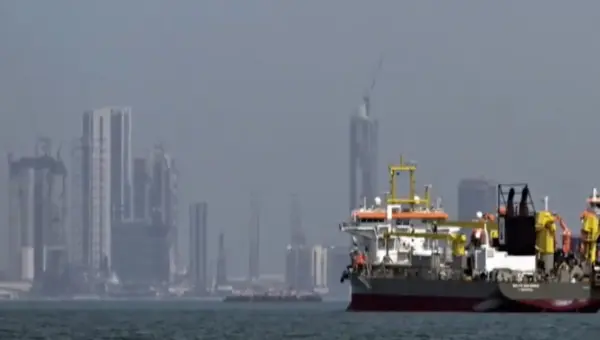
Iran's recent decision to block Chinese ships at the Strait of Hormuz is exposing the limits of Beijing's influence in the Middle East. This action is causing delays and cancellations for Chinese manufacturers, turning a perceived geopolitical win into an economic strain.
Rubio: US Can Achieve Iran War Goals Without Troops
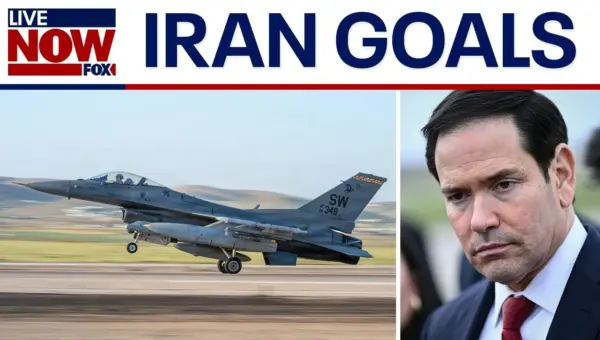
Senator Marco Rubio outlined a strategy to counter Iran without deploying U.S. ground troops, focusing on weakening the regime and enhancing maritime security. He also criticized Cuba's economic system and expressed concerns about West Bank violence.


Israel Escalates Iran Strikes, Warns of Wider War
Israel has launched significant strikes inside Iran following continued missile fire, warning of further escalation. The conflict risks wider regional instability and economic disruption, especially concerning the Strait of Hormuz.