US War Costs Socialized, Iran Conflict Decided by Price
The U.S. war in Iran is highlighting a "payer-decider gap," where global economic costs are spread widely, while decision-making power remains concentrated. This dynamic influences the conflict's duration and has broader implications for international stability and potential future conflicts like a Taiwan invasion.

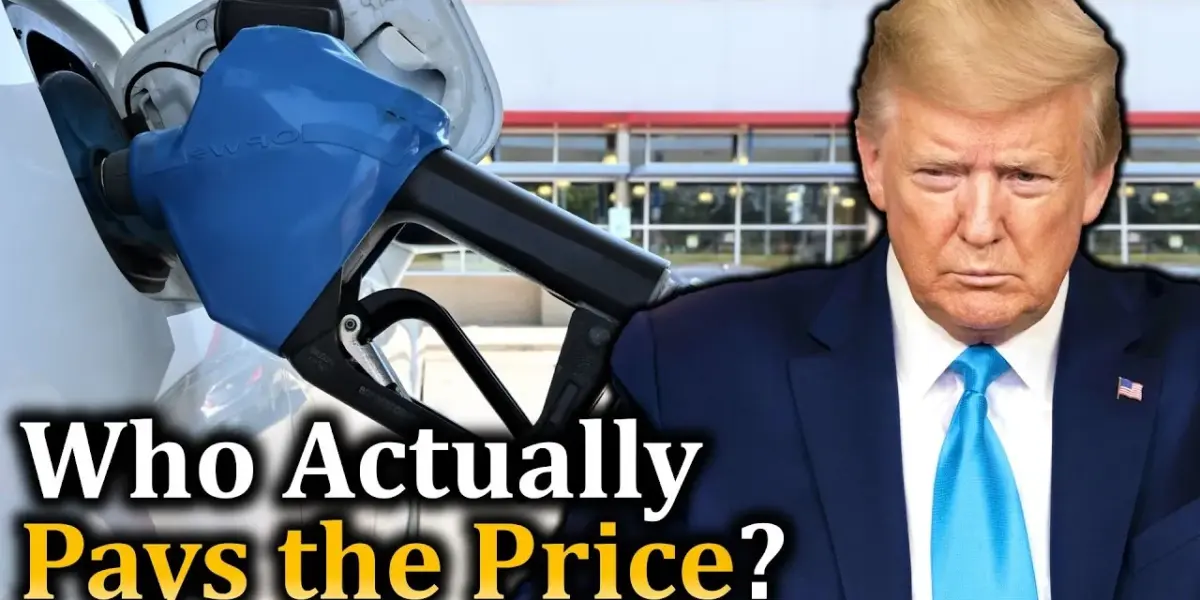
US War Costs Socialized, Iran Conflict Decided by Price
The ongoing conflict with Iran, now in its weeks, is sparking debate about the United States’ ability to sustain it. However, critical misunderstandings about the situation exist. One concerns how the U.S. has effectively spread the costs of war, creating a gap between who pays and who decides to continue fighting. This dynamic has significant implications, not only for the U.S. but also for global stability and potential future conflicts, such as a Chinese invasion of Taiwan.
The Payer-Decider Gap Explained
The core issue is a disconnect between the financial burden of the war and the decision-making power. While the U.S. public feels the pinch of rising prices, particularly at the gas pump, the direct costs to the American government are mitigated by spreading them globally. This allows leaders to make decisions about war without fully internalizing the economic consequences felt by others.
The Pentagon has expressed concerns about U.S. military stockpiles. These concerns are heightened by the need to maintain sufficient resources to deter potential Chinese aggression against Taiwan in the coming years. The closing of the Strait of Hormuz has shifted the public conversation from a focus on military hardware (‘metal’) to national resolve (‘mettle’).
Economic Realities Drive Public Opinion
For the United States, the war’s impact is largely felt through economic concerns. Thirteen casualties over two weeks of fighting, while tragic for the families involved, do not register as a major political issue for the broader American public. This contrasts sharply with the U.S. experience in Iraq, which saw 196 fatalities during the invasion and around 4,500 total casualties during the subsequent insurgency.
Most Americans are not focused on military stockpiles. Instead, everyday economic struggles, like paying bills, take precedence. The phrase “it’s the economy, stupid” rings true, suggesting that economic affordability is a key factor influencing public support for any military action. Inflation, driven by surging oil prices, is a prime example. An increase of about $27 per barrel in oil prices, translating to roughly 67 cents per gallon at the pump, is a visible cost that can erode public backing for a conflict.
While the public may not support the Iranian government, they also may not see a clear benefit in pursuing a costly war. The increased cost of living, however, is a very tangible negative. This is a stark contrast to the Iranian government, which is fighting for its very survival. The U.S. objective is to dismantle Iran’s state apparatus and encourage internal dissent, leaving the Iranian regime with no choice but to prioritize the war’s outcome.
Vietnam Parallels and Crisis Bargaining
The situation draws parallels to Vietnam, where one side’s commitment and perceived stakes were higher than the other’s. This highlights the concept of crisis bargaining, where the perceived costs of war are weighed against the value of the prize. Mathematically, costs can be seen as physical expenses divided by the valuation of the objective. If a nation like the U.S. places little value on the war’s outcome, its costs appear inflated. Conversely, if Iran prioritizes state survival above all else, its perceived costs become minimal.
This dynamic makes protracted conflicts difficult for nations like the United States, which may start from a disadvantageous position regarding the stakes involved. However, the narrative of overwhelming U.S. cost is not entirely accurate. The Trump administration has successfully shifted a significant portion of the war’s costs onto other nations.
Global Economic Ramifications
The closure of the Strait of Hormuz illustrates the payer-decider gap vividly. Increased gas prices affect everyone globally, not just Americans. The U.S., consuming about 20% of the world’s oil, bears only a portion of these direct consequences. Indirect effects on other purchases are also significant. Crucially, the U.S. is a net oil exporter, meaning its oil companies benefit from higher prices, while competitors are reduced.
China, a major oil consumer that imports a large percentage of its supply, faces a more substantial economic impact. This scenario represents a strategic gain for the U.S. Similarly, Cuba, already under an oil embargo, faces severe shortages as global prices rise, making it unattractive for other nations to supply them. These situations, while detrimental to other countries, are not direct costs for the U.S.
Regional partners bear increased military costs due to proximity to Iranian threats. Ukraine faces a resurgent Russia, which benefits economically from the conflict’s impact on global energy markets. These are not costs directly borne by the White House. While this approach may not win allies, it aligns with an “America First” policy, prioritizing national interests over international goodwill.
The Payer-Decider Dynamic in Action
The key takeaway is that the payer-decider gap dictates the war’s trajectory. The ‘payers’ are global citizens, while the ‘decider’ is the U.S. President. When assessing the war’s costs for the U.S., it’s vital to distinguish between direct domestic impacts and broader global consequences. If the administration primarily focuses on domestic concerns, the situation may appear less dire in bilateral negotiations, even as the rest of the world struggles.
This creates a complex geopolitical landscape. The U.S. has requested international assistance to reopen the Strait of Hormuz, extending beyond de-mining to include escorting tankers. However, the global response has been largely dismissive, with many nations arguing that the U.S. created the problem and should fix it. NATO allies, in particular, point out the geographical distance from the conflict zone.
Collective Action Problems and Global Stability
The resistance stems from the fact that other countries are suffering the consequences, while the U.S. internalizes only a fraction of the costs. Despite this, a coalition of nations might eventually relent and provide assistance. Japan, for example, is reportedly considering using naval forces to ensure oil access. This is a classic collective action problem: the flow of oil through the Strait benefits everyone by lowering prices, but individual countries have less incentive to bear the costs and risks of securing it.
This situation has parallels to the potential for a Chinese invasion of Taiwan. Such an invasion would cripple Taiwan’s vital semiconductor industry, potentially triggering a global recession. However, Beijing would only bear a fraction of the economic fallout. If Chinese President Xi Jinping is the sole decision-maker, these global consequences might be disregarded, demonstrating the payer-decider gap once more.
Deterring such an invasion requires a collective effort from other nations. Yet, individual contributions yield little direct benefit to each country, creating a free-riding incentive. This could lead to an underprovision of Taiwanese security and increase the likelihood of Beijing attempting an invasion.
War Termination and Strategic Goals
Another misconception is that the conflict with Iran is an attritional battle leading to total victory or U.S. withdrawal. War termination is rarely so absolute. The U.S. goal is not territorial gain but limiting Iran’s regional influence. While the collapse of the Iranian government is preferred, the U.S. and its allies have significantly degraded Iran’s military capabilities. This degradation makes it unlikely for Tehran to be a major regional player for many years.
The comparison to Vietnam is flawed. The U.S. does not have troops on the ground, and its policy objectives extend beyond Iran’s borders. The degradation of Iran’s military directly serves these broader goals.
Potential Resolutions and Bargaining Friction
The ultimate outcome depends on each side’s commitment to the war. Despite offloading costs, the White House must still contend with the political ramifications of high gas prices. The conflict could resolve in two main ways:
- Scenario 1: President Trump’s Indifference to Elections If President Trump prioritizes the war over electoral prospects, potentially because he faces term limits or does not care about the Republican Party’s long-term success, he might continue the conflict at its current pace. This could lead to a Democratic majority in Congress in 2027, which would then use its power of the purse to curb the war. Republicans in Congress are in a difficult position, facing potential losses in swing districts and the risk of alienating the President.
- Scenario 2: Electoral Considerations Drive Decisions If President Trump is concerned about electoral outcomes, his administration will have to weigh the benefits of weakening Iran against rising costs. This calculus becomes more complex if Iran can launch attacks on U.S. soil, which would strengthen its bargaining position.
In either scenario, the resolution is likely to involve coercive negotiations. Even if the war extends past midterm elections, Iran’s actions and its perception of U.S. commitment will shape negotiations. Deeper issues include the possibility that domestic stability in Iran has not sufficiently subsided to close the window for U.S. action. Furthermore, uncertainty about the U.S. administration’s true commitment level creates bargaining friction, potentially prolonging the conflict until clarity emerges.
The situation highlights a complex interplay of economic pressures, strategic objectives, and political calculations, creating a challenging environment for all parties involved.
Source: The Payer-Decider Gap: How Long Can the U.S. Continue the Iran War? (YouTube)

Related Articles


Trump’s Iran Claims: Shocked or Deluded by War Games?
Donald Trump claimed surprise over Iran's actions in the Strait of Hormuz, but experts suggest retaliation was inevitable. Military war games likely predicted such a scenario, raising questions about the advice given to the President.

Israel’s Strategy Against Iran Revealed
Israel's strategy to counter Iran's nuclear ambitions and regional influence centers on containment, utilizing a mix of covert military actions, intelligence operations, and diplomatic pressure. Analysts highlight the growing urgency due to Iran's nuclear advancements, while also noting the persistent risk of escalation in the volatile Middle East.

Israel Eyes Lebanon Buffer Zone: A Political Ploy?
Israel's military operations in southern Lebanon aim to create a buffer zone and pressure Hezbollah, according to expert Yazid Sayigh. He argues the strategy is more political than military, echoing historical tactics. The ongoing conflict could destabilize Lebanon further, while Hezbollah fights for survival.