Iran Nuclear Threat Looms: Trump Claims Military Action Averted Disaster
Former President Donald Trump claimed military action against Iran averted a nuclear war, criticizing global allies for insufficient support. His remarks during a meeting with Ireland's Taoiseach also touched on NATO, China, and U.S. foreign policy priorities.

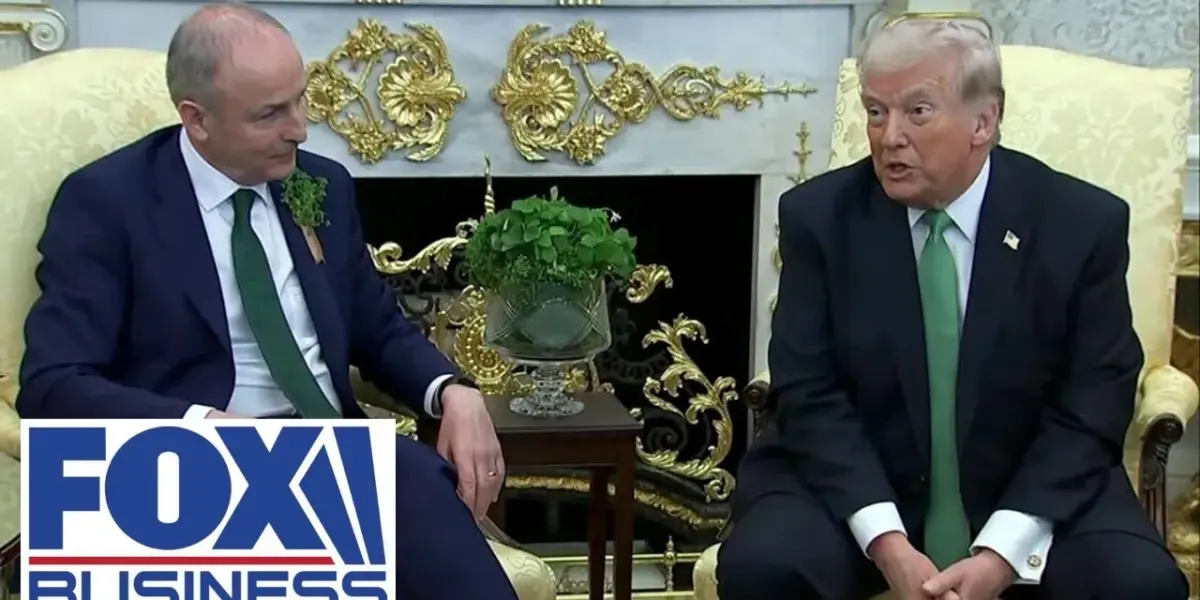
Trump Claims Military Action Averted Iran Nuclear War
During a recent White House meeting with Ireland’s Taoiseach, former President Donald Trump asserted that his administration took decisive military action against Iran, preventing a potential nuclear war. He stated that Iran, described as a “vicious” and “crazy” nation, would have used a nuclear weapon within 24 hours if it had acquired one.
Trump claimed that a raid using B-2 bombers eight months prior to the meeting effectively destroyed Iran’s nuclear weapon capability, thereby averting a nuclear conflict that could have spread to Europe and beyond.
US Support for Iran Operations
Trump highlighted significant support from Middle Eastern countries for efforts against Iran. He specifically mentioned Qatar, the United Arab Emirates, Saudi Arabia, and Bahrain as strong allies, alongside Israel. These nations, he suggested, recognized Iran as a major threat, even if they were hesitant to directly assist in military operations.
He criticized other nations, particularly within NATO, for not providing more substantial support. Trump questioned the value of alliances like NATO if member countries were unwilling to contribute to shared security concerns, especially when the U.S. was heavily involved in supporting Ukraine.
Criticism of Biden Administration’s Policies
The former President strongly criticized the Biden administration’s approach to foreign policy. He estimated that the U.S. had spent between $350 billion and $400 billion on Ukraine, providing equipment and cash at no cost. Trump contrasted this with his own approach, suggesting that allies should contribute more and that the U.S. should not be the sole financier of global security initiatives.
He also revisited the Iran nuclear deal, calling it “one of the worst deals ever made by Barack Hussein Obama.” Trump recalled the delivery of hundreds of millions of dollars in cash to Iran via Boeing 757s, which he characterized as ransom. He vowed that such actions would not happen under his leadership.
Concerns Over Iran’s Nuclear Ambitions
Trump reiterated that Iran has been a long-standing threat, citing 48 years of what he termed “bad” and “vicious” behavior. He emphasized the extreme danger posed by Iran obtaining nuclear weapons, stating that it would have led to immediate use and widespread devastation. The military action, he asserted, was necessary to prevent this outcome.
He also addressed the resignation of his Director of National Counterterrorism, Joe Kent, who reportedly disagreed with the administration’s stance on Iran. Trump called Kent “weak on security” for not viewing Iran as a threat, asserting that all countries recognized the danger.
Transatlantic Relations and NATO
The discussion also touched upon the relationship with NATO and European allies. Trump expressed disappointment with NATO, noting the trillions of dollars spent over the years contributing to U.S. deficits. He suggested that the U.S. should reconsider its commitments if allies are not willing to reciprocate support.
During the meeting, Irish leaders emphasized the importance of the transatlantic relationship and maintaining peace. They acknowledged the global concern over rogue states acquiring nuclear weapons and the need for a peaceful resolution to conflicts, drawing on Ireland’s own history of conflict resolution.
Economic Ties with China
On the topic of China, Trump indicated that a meeting with President Xi was being rescheduled and expected to take place in about five weeks. He described the relationship with China as having improved economically, stating that it was now “very good” for the United States and that a strong working relationship was in place.
Irish Perspective on Global Issues
Irish officials offered a perspective on global events, stressing the importance of peace and stability. They highlighted Ireland’s role as peacekeepers and its commitment to resolving conflicts. They also discussed the economic situation in Cuba, noting its struggles with a non-functional economy and political system.
Regarding immigration and energy policy, Irish leaders expressed a different viewpoint, emphasizing robust rules for legal migration and the need for economic growth through innovation. They suggested that Europe, while facing challenges, remains a good place to live and is implementing stronger mechanisms for legal migration.
In response to questions about potential repercussions for NATO allies, Trump stated that while he was disappointed, he did not have immediate plans to withdraw from the alliance but stressed the need for allies to contribute more effectively.
Concerns Over Energy Policy
Trump also voiced strong criticism of wind energy, particularly windmills, calling them environmentally damaging, unsightly, and inefficient. He contrasted this with oil and gas, suggesting that countries like the UK should utilize their own resources, such as those in the North Sea, rather than relying on foreign sources or less reliable renewable energy.
He expressed concern about the direction of Europe, particularly regarding immigration and energy policies, warning that these issues could fundamentally change the continent. He also mentioned his legal case against the BBC, alleging that the organization used AI to generate false statements attributed to him.
Market Impact
The statements from the former President highlight ongoing geopolitical tensions, particularly concerning Iran’s nuclear program and its impact on regional stability. The U.S. stance, as articulated, prioritizes preventing Iran from acquiring nuclear weapons, with a willingness to use military force if necessary. This assertive posture could influence global energy markets, given Iran’s significant oil production capacity. Any escalation or heightened tensions in the Middle East could lead to supply disruptions and price volatility in oil markets.
Furthermore, Trump’s critique of NATO and international alliances signals a potential shift in U.S. foreign policy focus, emphasizing bilateral relationships and burden-sharing. This could lead to uncertainty for global trade and investment, as well as impact the defense sector. His comments on economic relations with China suggest a desire for a more balanced trade dynamic, which could shape future trade policies and market access for businesses.
What Investors Should Know
Investors should monitor geopolitical developments closely, especially concerning the Middle East and U.S. foreign policy shifts. The potential for increased tensions involving Iran could affect energy prices and the broader stock market. Changes in U.S. alliance structures or trade policies with major economies like China could also present both risks and opportunities.
The emphasis on military action and deterrence regarding nuclear proliferation underscores the complex security environment. Investors should remain aware of how these geopolitical factors might influence economic stability and market sentiment. The former President’s focus on specific energy policies, like his strong opposition to wind energy, could also signal future regulatory directions that might impact renewable energy companies and traditional energy sectors.
Source: WATCH LIVE: Trump hosts Ireland's Taoiseach at the White House (YouTube)

Related Articles
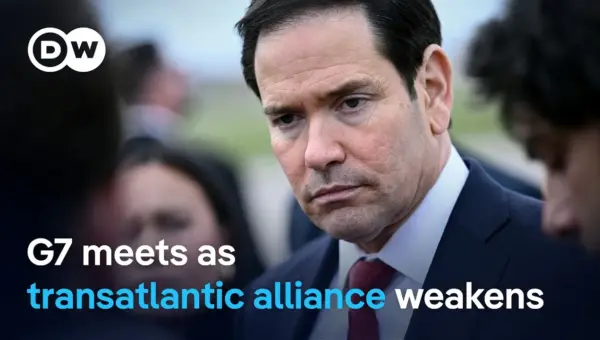
G7 Allies Clash Over Iran War Strategy, Urge Focus on Russia
G7 foreign ministers met in Paris, revealing deep divisions over the U.S. war with Iran. European allies urged the U.S. to pressure Russia, linking its actions to the conflict and fearing support for Ukraine will wane.
Iran Blocks China Ships, Exposing Beijing’s Weak Grip
Iran's recent decision to block Chinese ships at the Strait of Hormuz is exposing the limits of Beijing's influence in the Middle East. This action is causing delays and cancellations for Chinese manufacturers, turning a perceived geopolitical win into an economic strain.
Trump’s “Walk Away” Tactic Signals Tougher Stance on China
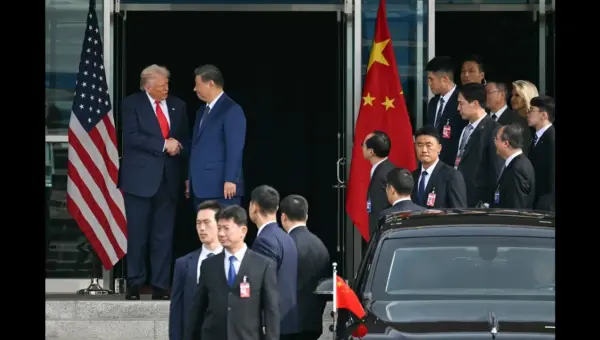
Retired Air Force Brigadier General David Stillwell believes President Trump's strategy of being willing to walk away from negotiations puts pressure on China. This tactic, combined with US global actions and strengthened alliances, signals a more assertive American foreign policy.