Trump’s NATO Meltdown Exposes Deep Rift on Global Stage
During a diplomatic meeting, Donald Trump's confrontational style clashed with Irish Prime Minister Micheál Martin's reasoned argument for immigration. Trump also launched into attacks on NATO allies regarding Iran strategy, drawing criticism for contradictory statements and undermining alliances.

Trump’s NATO Meltdown Exposes Deep Rift on Global Stage
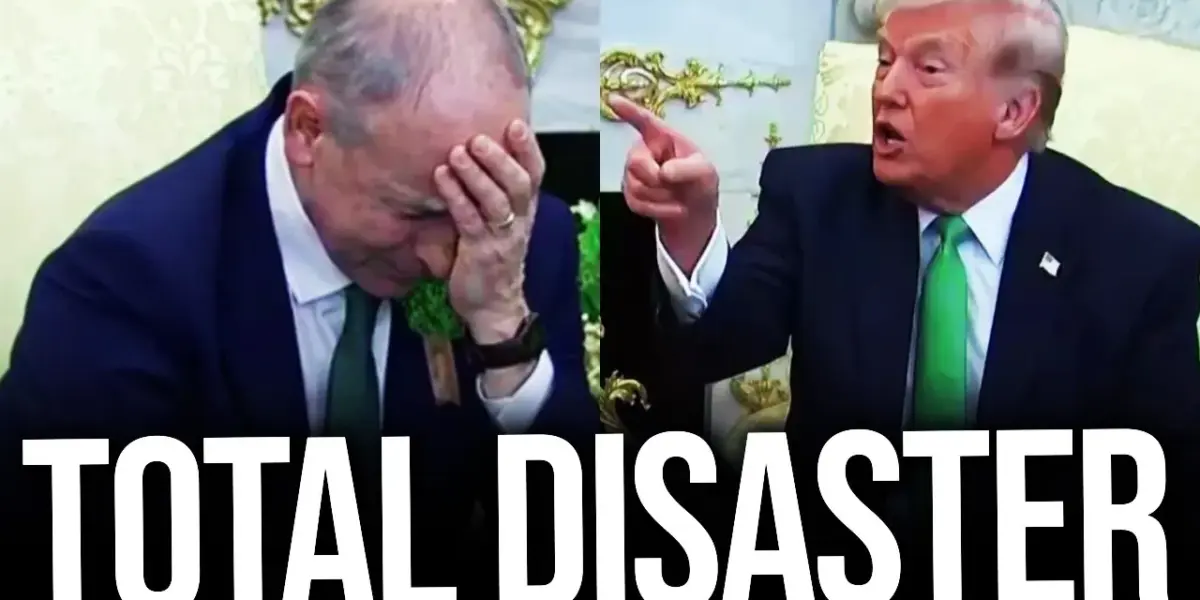
During a recent St. Patrick’s Day meeting, the usually controlled environment of diplomatic talks between Irish Prime Minister Micheál Martin and former U.S. President Donald Trump reportedly devolved into a display of aggressive rhetoric from Trump, particularly concerning international alliances and immigration.
A Meeting Gone Awry
The meeting, intended to cover trade, tariffs, and global security, quickly took a sharp turn. According to reports, Trump launched into his typical attacks on the media before the meeting even began. Moments later, he directed criticism at NATO allies, accusing them of not wanting to join what he described as a “suicide mission” to protect ships in the Strait of Hormuz.
The situation escalated when Trump was asked about progress in getting allies to assist U.S. tankers. His response, described as a “spew of lies, vomit, and vitriol,” claimed the U.S. didn’t need help and had already dismantled Iran’s military capabilities. This statement contradicted his earlier stance, where he had dismissed the need for allies in a conflict he claimed was already won. The speaker noted this as a pattern of making contradictory claims, leaving observers confused.
Contradictions and Concerns on Iran Strategy
Trump’s narrative presented a confusing picture of the threat posed by Iran. He asserted that Iran’s military was decimated, yet simultaneously implied a pressing need for allies to help protect shipping lanes from an ongoing threat. This inconsistency raised questions about the administration’s actual assessment of the situation and its strategy.
Furthermore, Trump’s claim that NATO allies were in agreement with his actions, but unwilling to help, was challenged. The analysis suggests that allies’ reluctance stems from a practical calculation of risk. Committing naval assets, personnel, and significant funds to a conflict they did not initiate and do not view as an existential threat is a substantial undertaking. Many allies’ intelligence assessments reportedly do not align with the U.S. claims of an imminent threat.
NATO’s Role and Historical Context
The transcript highlights the crucial role NATO has played historically, particularly in the aftermath of 9/11. It’s noted that NATO countries didn’t just offer statements; they deployed troops, and many nations suffered casualties alongside the U.S. in Afghanistan. Every member nation backed Article 5, the collective defense clause, demonstrating a strong commitment to mutual security. Trump’s repeated attacks on NATO and its members, especially the UK, are seen as undermining this foundation.
Trump’s comments about potentially withdrawing from NATO without congressional approval also sparked concern. The analysis stresses the importance of NATO as a defensive alliance that has helped maintain security in Europe and beyond. His dismissive attitude towards allies, coupled with his boasts about his own golf courses in Ireland, painted a picture of self-interest over collective security.
Immigration: A Tale of Two Perspectives
In stark contrast to the confrontational tone on foreign policy, the meeting offered a moment of reasoned discussion on immigration. Irish Prime Minister Micheál Martin presented a compelling case for immigration as a net benefit to society. He argued that while immigrants, like all people, use resources, they also contribute significantly by creating opportunities, filling labor needs, and driving economic growth.
Martin emphasized the importance of robust and fair rules for migration, but also highlighted the benefits of free mobility within the European Union and how Ireland’s population growth, fueled by attracting workers, has positively impacted its economy. He expressed a desire for legal pathways between the U.S. and Ireland, acknowledging that no one favors illegal migration but stressing the need for structured legal immigration.
Trump’s reaction to Martin’s articulate argument was described as being caught off guard, unable to offer a substantive counterpoint. This exchange underscored a key difference in perspective: Republicans, as noted, are often seen as viewing immigrants in a one-dimensional way, focusing only on what they might take, rather than their potential to create and contribute.
Resignation and Disagreement
Adding another layer to the unfolding events, a top counterterrorism official, Joe Kent, resigned from his position. Kent cited his inability to support the ongoing conflict with Iran, stating that Iran posed no imminent threat and that the war was initiated due to pressure from Israel and its lobby. This resignation from within his own administration, from someone considered a strong Trump supporter, further fueled questions about the justification for the conflict.
Trump’s response to Kent’s resignation was dismissive, labeling him as weak on security. This pattern of rejecting criticism and attacking those who disagree, even from within his own ranks, was a recurring theme.
Why This Matters
The events described reveal a significant disconnect between Donald Trump’s approach to foreign policy and that of traditional allies and even some within his own administration. His confrontational style, tendency towards contradictory statements, and dismissal of long-standing alliances like NATO raise serious concerns about U.S. global leadership and stability.
The contrast with Micheál Martin’s measured and evidence-based argument for immigration highlights a different vision for societal progress. It underscores the idea that immigrants are not just consumers of resources but also vital contributors to economic and social well-being. This difference in perspective has profound implications for how nations approach integration, labor markets, and overall growth.
Trends and Future Outlook
The discourse around immigration continues to be a polarized issue, with differing views on its economic and social impact. Trump’s rhetoric often frames immigrants as a burden, while figures like Martin present them as essential for growth. This divergence suggests that debates over immigration policy will remain a central theme in political discourse.
The challenges to NATO and the broader alliance structure also point to a potential shift in global alliances. Trump’s skepticism towards collective security agreements, coupled with the growing assertiveness of other global powers, could reshape international relations. The future may see a more fragmented global order, with nations reassessing their commitments and partnerships based on perceived national interests.
Ultimately, the events of this meeting serve as a microcosm of larger trends: a questioning of established international norms, a deep division on the value and management of immigration, and a leader whose communication style often creates more friction than consensus. The long-term consequences of these approaches for both domestic policy and international stability remain a critical area to watch.
Source: Trump goes ATTACK MODE when HE GETS CONFRONTED (YouTube)

Related Articles
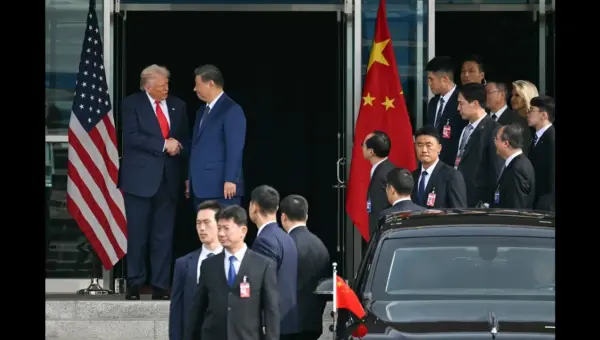
Trump’s “Walk Away” Tactic Signals Tougher Stance on China
Retired Air Force Brigadier General David Stillwell believes President Trump's strategy of being willing to walk away from negotiations puts pressure on China. This tactic, combined with US global actions and strengthened alliances, signals a more assertive American foreign policy.
Trump’s Name Everywhere: A ‘Stain’ on GOP Legacy?
Former President Donald Trump's efforts to brand national symbols, including a proposed signature on dollar bills, spark debate. Critics view this as an authoritarian attempt to embed his legacy, potentially staining the Republican Party's history and contrasting with democratic ideals of public ownership.

Trump’s War Talk Stuns Financial Crowd
Donald Trump's recent speech in Miami focused on his foreign policy, particularly his critical views on NATO and his vision for international relations. He declared the U.S. would no longer defend NATO allies, questioned the value of existing alliances, and suggested renaming the Strait of Hormuz. The speech also touched on his personal views of success, his allies, and his perceived role as a global peacemaker.