Russia’s Putin Escalates “Total War” Amid Internal Decay
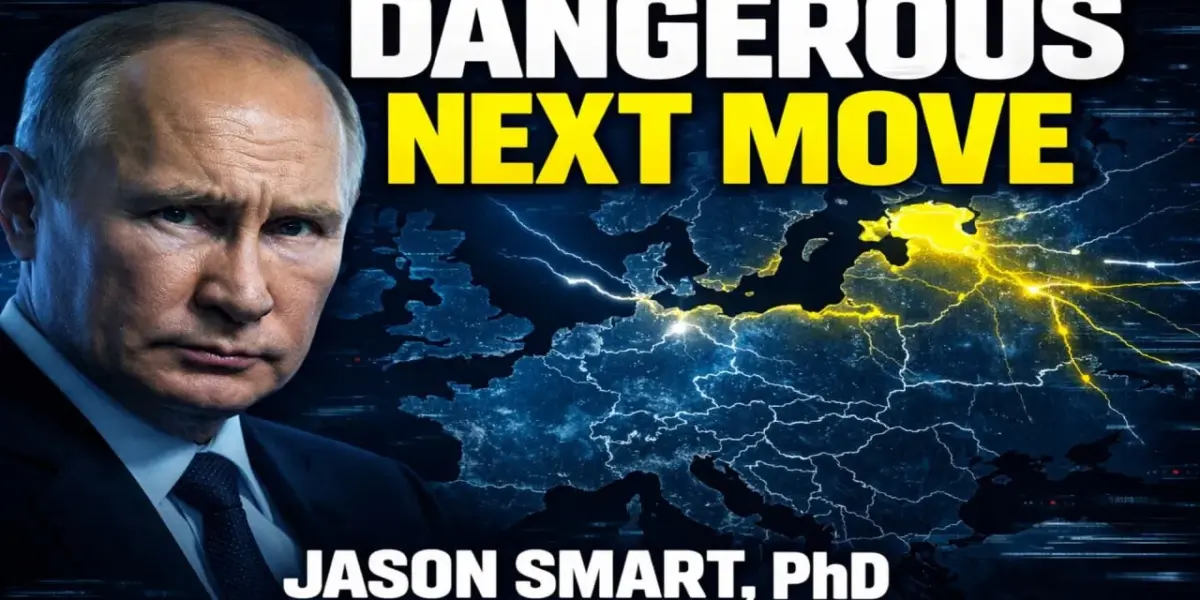
Russia's President Putin is reportedly escalating towards a "total war" strategy amidst internal decay and economic strain. Paranoia and purges within the Kremlin, combined with a doctrine of "escalate to de-escalate," suggest increasing provocations against Europe, potentially targeting Estonia. This dangerous approach risks wider conflict as internal weaknesses make the regime more unpredictable.

Russia’s Putin Escalates “Total War” Amid Internal Decay
The internal situation within Russia is deteriorating, marked by increasing paranoia from President Vladimir Putin and a ruthless consolidation of power by security services. This internal strife, coupled with a collapsing economy and an unwinnable war in Ukraine, is pushing the Kremlin towards more dangerous and potentially destabilizing actions, including a strategy of “escalate to de-escalate.” This approach suggests a willingness to provoke larger conflicts to force de-escalation, potentially targeting European nations like Estonia.
Internal Purges and Shrinking Inner Circle
Reports indicate that Vladimir Putin’s fear of internal threats has led to a purge of his inner circle, particularly targeting the Shyu network. Hardline security services are reportedly seizing greater control, shrinking Putin’s trusted advisors to a small, frightened group. This concentrated power, however, leaves this inner circle ill-equipped to address Russia’s severe economic problems or the strategic quagmire in Ukraine. Their reliance on individuals known for violence and ruthlessness suggests that any solutions sought will be far from diplomatic.
Economic Strain and Shifting Narratives
The Russian regime is facing significant financial strain, struggling to fund its ongoing military operations. While the Kremlin claims to prioritize its inner circle’s loyalty through corruption, the economic reality is impacting its ability to sustain the war effort. Furthermore, the government’s attempts to control the narrative are becoming less effective. An example cited is the claim of over 250 drones targeting Moscow, with the Ministry of Defense stating 158 were shot down. However, the lack of visible evidence and the concurrent internet restrictions in Moscow have led the population to question official statements, creating a window of distrust that could be exploited.
“Escalate to De-escalate” Strategy and European Provocations
Faced with a lack of viable options in Ukraine, Putin appears to be embracing a strategy of “escalate to de-escalate.” This Soviet-era doctrine involves initiating an over-the-top action to frighten adversaries into backing down. Recent developments suggest this strategy may be unfolding with provocations against European nations. Russian-backed websites have targeted Estonia, specifically the border city of Narva, which has a majority Russian-speaking population. While these residents are Estonian citizens, the narrative of needing liberation is being pushed, mirroring pretexts used in past conflicts.
Historical Precedents and Cyber Warfare
This potential aggression towards Estonia is not unprecedented. Russia’s conflict with Estonia began over two decades ago with a massive cyberattack, a tactic that has become a hallmark of modern warfare. Estonia, despite its smaller size, successfully weathered that initial onslaught and has since become a leader in high-tech innovation. The current situation echoes earlier Russian actions, such as the pretext of taking down a Soviet statue in 2014, which was used to justify aggression against Ukraine. Similar incidents, including arson in Lithuania and attempted bombings in Britain and Poland, along with assassinations in the UK and Germany, highlight a pattern of Russian assertiveness against Western nations.
The “Weather Balloon” Tactic and Provoking the West
Russia is also employing tactics like flying balloons and drones over neighboring countries, including Lithuania and those bordering Ukraine. These actions are seen as attempts to test Western resolve and demonstrate the ability to provoke without facing significant retaliation. The Kremlin appears to believe that the West is too fearful to respond effectively, emboldening Putin’s actions. This strategy aims to project an image of strength and control, even as internal weaknesses mount.
Strategic Implications
The current trajectory suggests a dangerous phase in international relations. Putin’s “total war” narrative, coupled with the “escalate to de-escalate” doctrine, poses a significant risk of wider conflict. The internal decay within Russia, while weakening its immediate capacity, also makes its leadership more unpredictable. By seeking to shift the West’s focus away from Ukraine, potentially towards new fronts like Estonia, Russia hopes to gain leverage. However, such actions could unite NATO, which was originally formed to counter Soviet influence. The perception of division within NATO, particularly concerning the allocation of resources to conflicts like the one in Iran, is likely seen by Moscow as an opportunity to exploit.
What This Means on the Ground
For ordinary Russians, the increasing paranoia and the shift towards a “total war” footing could mean further erosion of civil liberties and a prolonged period of economic hardship. For European nations, particularly those bordering Russia, the threat of cyberattacks, disinformation campaigns, and even conventional provocations is heightened. The potential for miscalculation is significant, as an attack on a NATO member like Estonia could trigger a wider confrontation. The Kremlin’s belief that it is engaged in a global conflict frames these provocations not as major escalations, but as calculated moves within a larger struggle. Ultimately, Putin’s primary objective remains his own power, and any action that could rally domestic support, even at the cost of international stability, is seen as a viable option.
Conclusion
The Putin regime is characterized by internal weakness, infighting, and a dangerous lack of strategic direction. This precarious position, however, makes its actions increasingly unpredictable and potentially escalatory. The current internal power struggles and the pursuit of radical solutions suggest that the end of the Putin regime may be drawing closer, but the path to that end could be fraught with significant international risk.
Source: Putin's Fear Has Gone Too Far (YouTube)

Related Articles

G7 Allies Clash Over Iran War Strategy, Urge Focus on Russia
G7 foreign ministers met in Paris, revealing deep divisions over the U.S. war with Iran. European allies urged the U.S. to pressure Russia, linking its actions to the conflict and fearing support for Ukraine will wane.
Ukraine’s New Strategy Cripples Russian Oil Exports
Ukraine's new multi-layered strategy is rapidly disabling Russia's oil export capabilities. By attacking loading facilities and working with allies to intercept the "shadow fleet," Ukraine is significantly reducing Russia's oil revenues, even amidst rising global energy prices.

Trump’s War Talk Stuns Financial Crowd
Donald Trump's recent speech in Miami focused on his foreign policy, particularly his critical views on NATO and his vision for international relations. He declared the U.S. would no longer defend NATO allies, questioned the value of existing alliances, and suggested renaming the Strait of Hormuz. The speech also touched on his personal views of success, his allies, and his perceived role as a global peacemaker.