Nvidia Unveils 5X Performance Boost, New AI Supercomputer
Nvidia unveiled its Vera Rubin supercomputer, promising a 40 million times increase in AI compute power over the next decade. The new system offers 5x revenue generation potential and introduces advanced liquid cooling. Nvidia also launched Open Claw, an open-source operating system for autonomous AI agents, aiming to revolutionize AI development.

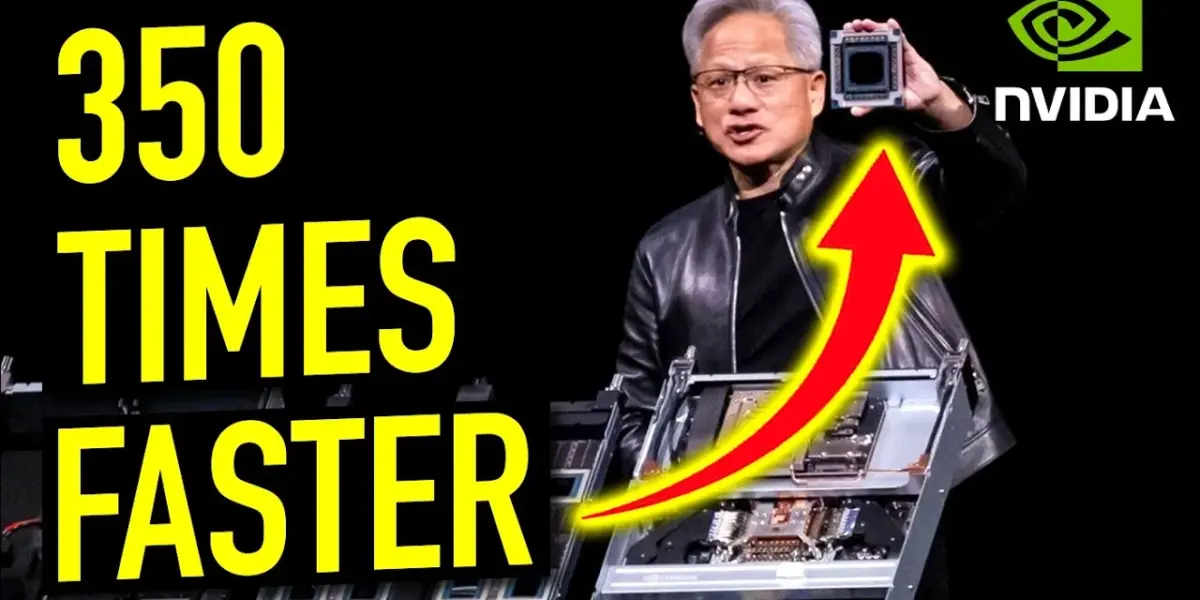
Nvidia Launches Vera Rubin Supercomputer, Boosting AI Performance 5X
Nvidia has unveiled its new Vera Rubin platform, a powerful AI supercomputer designed to dramatically increase computing power for artificial intelligence. This system features seven chips and five rack-scale computers, promising a 40 million times increase in compute power over the next decade. The company also announced a new CPU business, expecting it to become a multi-billion dollar venture.
Vera Rubin System: Faster, Cooler, More Efficient
The Vera Rubin system represents a significant leap in AI infrastructure. It is 100% liquid-cooled, eliminating the need for traditional data center cooling systems. This hot water cooling system, operating at 45 degrees Celsius, significantly reduces energy costs. Installation time has also been slashed; what once took two days now takes just two hours, speeding up manufacturing and deployment.
A key innovation is Nvidia’s sixth-generation NVLink switching system, called NVLink. This proprietary technology is not Ethernet or InfiniBand but a high-speed interconnect designed specifically for AI workloads. The company highlighted its advanced co-packaged optics technology, which integrates optics directly onto the chip. This allows for faster conversion of electrical signals to light, directly connecting to the silicon for improved performance.
Grace Blackwell and Vera Rubin: A Major Performance Leap
Nvidia showcased the significant performance gains with its Grace Blackwell platform compared to its predecessor, Hopper. For the most valuable AI services, Grace Blackwell offers a 35 times increase in throughput. The new Vera Rubin system further enhances this, providing a 10x increase in throughput at the highest performance tiers. Across all service tiers, Vera Rubin boosts throughput, allowing data centers to generate up to five times more revenue with the same power and infrastructure.
The company explained that optimizing for high throughput (processing many tasks at once) and low latency (responding very quickly) are often competing goals. However, the integration of Groq’s inference technology with Vera Rubin aims to achieve both. For workloads requiring extreme throughput, Vera Rubin is ideal. For tasks needing very high speed and low latency, like coding or complex engineering simulations, adding Groq’s technology can boost performance by 35 times in the most valuable segments.
Future Roadmaps and Expanding Ecosystem
Nvidia outlined its future product roadmap, including the upcoming Fineman platform, which will feature new GPUs and a new LPU (likely referring to a specialized AI processing unit). The company is committed to both copper and optical interconnects, offering solutions like NVLink 144 with Kyber and NVLink 576 with optical scaling. This dual approach ensures flexibility and scalability for its growing customer base.
Beyond hardware, Nvidia is focusing on software and ecosystem development. The Omniverse platform allows virtual design and simulation of AI factories, enabling collaboration among partners. They are also pushing the boundaries into space, with plans for data centers in orbit using a specialized version of the Vera Rubin system.
Open Claw: The Operating System for Agentic AI
A major software announcement was the introduction of Open Claw, described as the most popular open-source project in history. Open Claw acts as an operating system for agentic AI systems – AI that can act autonomously to perform tasks. It manages resources, accesses tools, file systems, and other large language models. It can decompose complex prompts into steps, manage scheduling, and communicate through various modalities.
Nvidia has partnered to create an enterprise-ready version called Nvidia Open Claw Reference, designed for security and privacy. This initiative aims to enable companies to build secure, custom AI agents. Nvidia also highlighted its advancements in AI models across various domains, from robotics to autonomous vehicles and digital biology, emphasizing their commitment to leading AI research and development.
Market Impact
Nvidia’s latest announcements signal a significant acceleration in AI hardware capabilities. The Vera Rubin system and the performance gains from Grace Blackwell suggest a substantial increase in the efficiency and power available for AI training and inference. The expansion into CPUs and the focus on integrated hardware and software solutions position Nvidia to capture a larger share of the AI infrastructure market. The introduction of Open Claw as a foundational operating system for autonomous AI agents could also drive widespread adoption of AI across industries, creating new markets and demanding more advanced computing resources.
The emphasis on liquid cooling and efficient energy use addresses growing concerns about the environmental impact and operational costs of large-scale data centers. The company’s continued innovation in interconnect technologies like NVLink is crucial for scaling AI systems to handle increasingly complex models and larger datasets. Investors will be watching how quickly these new platforms are adopted and how they impact the performance and cost-effectiveness of AI deployments across various sectors.
Source: NVIDIA's HUGE AI Chip Breakthroughs Change Everything (Supercut) (YouTube)

Related Articles

Nvidia’s New Chips Fuel AI Agent Boom, Eye $10 Trillion
Nvidia's new Vera Rubin AI platform, featuring specialized chips like the Grok LPU, is poised to revolutionize AI processing for autonomous agents. This innovation is expected to drive massive data center spending and solidify Nvidia's position as a potential $10 trillion company.


Nvidia’s AI Upscaling: Game Changer or Beauty Filter?
Nvidia's AI-powered DLSS technology boosts game performance but faces criticism for altering character appearances. Gamers debate whether the "yassification" of digital faces respects artistic vision.


NVIDIA DLSS 5 Promises Stunning Visuals
NVIDIA's DLSS 5 technology promises a significant leap in gaming visuals and performance. By leveraging advanced AI, it aims to deliver stunningly realistic graphics and smoother gameplay, making high-fidelity gaming more accessible. Gamers and PC enthusiasts should watch this space closely.