Trump Seeks Allies as Iran War Sparks Global Oil Crisis
The ongoing conflict in the Middle East has sent oil prices soaring past $100 a barrel, with the vital Strait of Hormuz remaining closed. President Trump is now seeking international assistance to reopen the shipping lane, a stark change from his earlier claims of victory. Allies have responded with mixed reactions, highlighting the complex geopolitical and economic challenges ahead.

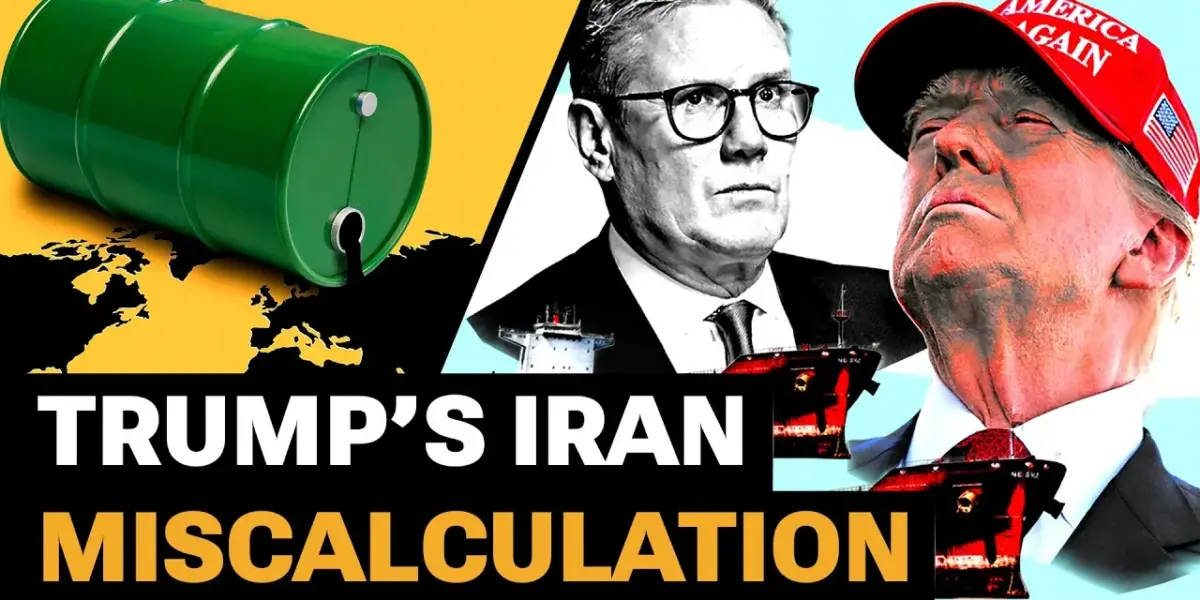
Trump Faces Unforeseen Challenges in Iran Conflict
In the third week of the Iran war, the global economy is feeling the strain. Oil prices have surged past $100 a barrel. The Strait of Hormuz, a vital shipping lane, remains closed to the United States and its allies. This conflict is causing significant economic worry in the US. Some households using heating oil may need immediate government support.
The world is facing a potential oil crisis. This comes as a shock to Donald Trump. Just a week ago, he declared he didn’t need help from allies. He claimed he had already won the war. Now, his stance has changed.
“We are talking to other countries about working with us. The policing will be straightened and I think we’re getting a good response if we do.”
Trump is asking for help to reopen the Strait of Hormuz. He wants oil supplies to move again. However, the response has been mixed. Spain, Japan, and Australia have refused to get involved. In the UK, leaders are weighing their options amid soaring fuel prices. They recognize the need to reopen the Strait of Hormuz for market stability. This is not a simple task. They are working with allies to create a collective plan.
Uncertain Objectives and Shifting Timelines
The war’s objectives have been unclear. The White House timeline for the conflict has also shifted. Initially, Trump suggested the war would last only a week. Later, he spoke of an open-ended conflict until all objectives were met.
Combat operations were stated to be in full force. The goal was to achieve strong objectives. However, these objectives were not fully defined. They ranged from regime change to severing links with proxies. Some believed Iran’s nuclear capabilities were already destroyed.
The projected timeline then shifted to four to five weeks. This timeline itself has fluctuated. Sometimes, the end was tied to unconditional surrender. Other times, it was predicted to end very soon.
Media Scrutiny and Public Concern
President Trump has expressed displeasure with US media coverage. He has threatened to revoke licenses of broadcasters. This is happening as major media changes occur. The Trump administration used a merger approval as leverage to influence coverage.
Trump is concerned about what the American public hears. He is also worried about their feelings regarding rising gas prices. Understanding the Strait of Hormuz is key to grasping the oil price surge.
The Critical Strait of Hormuz
The Strait of Hormuz is a narrow passage. It is only 21 miles wide. It separates Oman and Iran. This strait is the exit from the Persian Gulf. About 20% of the world’s oil and gas comes from this region.
Countries like Qatar, UAE, Bahrain, Kuwait, Saudi Arabia, and Iraq rely on this route. They must ship oil and gas through the Strait of Hormuz to reach the global market. Last month, around 150 ships used the strait daily. Now, that number is under 10.
Ships face threats from Iranian drones and missiles. While these may not sink large vessels, they cause damage. This worries insurers. They are less likely to insure cargo vessels. This has effectively halted oil and gas supply from the Persian Gulf.
Threats and Potential Solutions
The Pentagon considers anti-ship missiles and drones the main threats. Commercial vessels have been hit. Half were reportedly struck by missiles, the rest by drones. Mines are also a concern. Iran possesses a large stash of mines. The US is worried that even one mine could close the shipping lanes.
To reopen the strait, options are limited. Trump has appealed to NATO allies and even China. He proposed sending warships in convoys. For example, a UK Type 45 destroyer could protect commercial tankers.
However, this would be extremely expensive. Many countries have refused to get involved. They see it as Trump’s war. Trump argues that all nations are affected by oil prices.
Military Options and Their Risks
Sending warships to escort tankers makes the warships targets. This draws the involved countries deeper into the conflict. The Royal Navy’s current strength is a concern. It would take time to deploy a ship. There is no permanently deployed ship in the region.
The narrowness of the Strait of Hormuz makes any clearing operation a massive target. Securing the coastline of Iran to prevent missile launches would involve ground troops. This would create a much larger and messier war.
Completely stopping attacks would require occupying Iran. Iran produces cheap drones with long ranges. These can hit the strait from anywhere in the country. Occupying a country of 92 million people is a huge undertaking.
Diplomatic Maneuvers and Alternative Routes
There is no easy military solution. Some tankers are getting through. India recently negotiated passage with Iran. Neutral countries that appeal to Iran seem to have some success. However, ships still risk getting caught in crossfire.
The US has attacked Kharg Island. This island is a major hub for Iran’s oil and natural gas exports. Iran relies on these sales to fund its operations. The economy is already struggling.
The US strategy might be to cut off Iran’s oil revenue. This aims to force Iran to reopen the Strait of Hormuz. However, Iran may not trust US negotiators. Past negotiations failed. The US has not offered Iran a clear way to deescalate.
US Marine Deployment and Political Ramifications
The deployment of up to 5,000 US Marines carries risks. Landing an expeditionary force on an island is difficult. Drones and missiles in the area make them targets.
The war is currently unpopular in the US. Its full impact on public opinion is yet to be seen. Rising inflation and cost of living pressures could hurt Trump politically. Casualties would further compound this problem.
Escalation Risks and NATO’s Role
The conflict could escalate. The Houthi movement in Yemen controls the Bab el-Mandeb Strait. This is another crucial choke point connecting the Red Sea to the Suez Canal.
If the Houthis attack tankers, it could block the Red Sea route. This would worsen the situation. The US had previously agreed to a peace deal with the Houthis. However, the Houthis maintained their ability to attack shipping.
UK’s Stance and Transatlantic Relations
Initially, the UK declined to allow US planes to use its bases for offensive operations against Iran. Legal advice suggested this would be illegal under international law.
Later, permission was granted for bases to be used. This was framed as a defensive operation. Iran was firing drones and missiles at British allies. The UK has offered mine-hunting drones and anti-drone weapons. However, it has stopped short of sending warships.
Trump has criticized the UK’s reluctance to get more involved. He has made personal insults. The UK’s stance has shifted over time. This reflects a balancing act between supporting the US and its own legal and military constraints.
Global Allies’ Responses and NATO’s Future
Germany has stated it will not get involved. Japan and Australia have also refused. France has suggested potential involvement only after the fighting ends.
NATO leaders face a difficult diplomatic moment. Trump has threatened allies who do not assist. Despite refusals, it is unlikely Trump would withdraw the US from NATO over this issue. The situation highlights a complex dynamic within the alliance.
Long-Term Strategy and Political Calculations
The US is running low on interceptor missiles. The war’s duration is uncertain.
From a long-term perspective, the US is in a strong position. Its shale revolution makes it the largest oil and gas producer. This stability contrasts with instability in the Middle East and Russia. This could allow the US to gain a larger share of the world market.
However, the political challenge remains. Trump promised an end to prolonged wars. The impact on US voters, especially with rising costs, is significant.
Trump’s focus may be shifting towards his legacy. This could mean less concern for immediate voter sentiment. The upcoming midterms will be a key test.
Source: Did Trump Just Lose His Greatest Political Leverage? (YouTube)

Related Articles
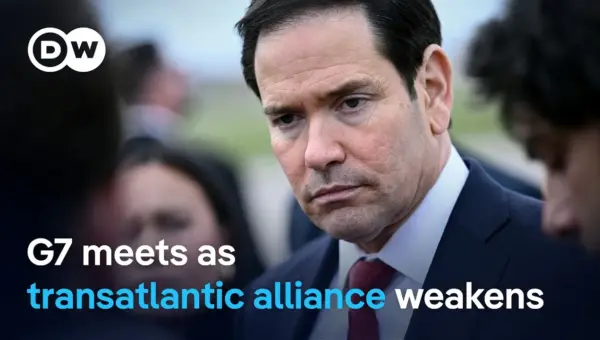
G7 Allies Clash Over Iran War Strategy, Urge Focus on Russia
G7 foreign ministers met in Paris, revealing deep divisions over the U.S. war with Iran. European allies urged the U.S. to pressure Russia, linking its actions to the conflict and fearing support for Ukraine will wane.
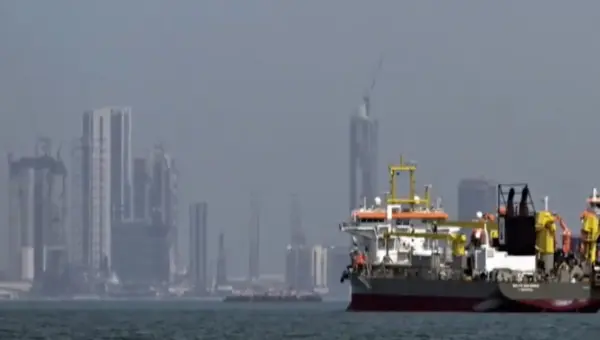
Iran Blocks China Ships, Exposing Beijing’s Weak Grip
Iran's recent decision to block Chinese ships at the Strait of Hormuz is exposing the limits of Beijing's influence in the Middle East. This action is causing delays and cancellations for Chinese manufacturers, turning a perceived geopolitical win into an economic strain.
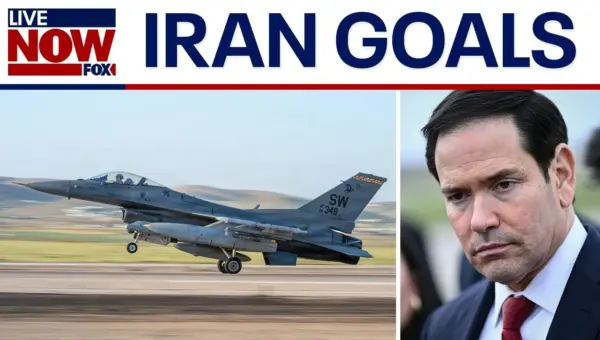
Rubio: US Can Achieve Iran War Goals Without Troops
Senator Marco Rubio outlined a strategy to counter Iran without deploying U.S. ground troops, focusing on weakening the regime and enhancing maritime security. He also criticized Cuba's economic system and expressed concerns about West Bank violence.