Colbert’s Talarico Interview Goes Viral: The Streisand Effect in Action
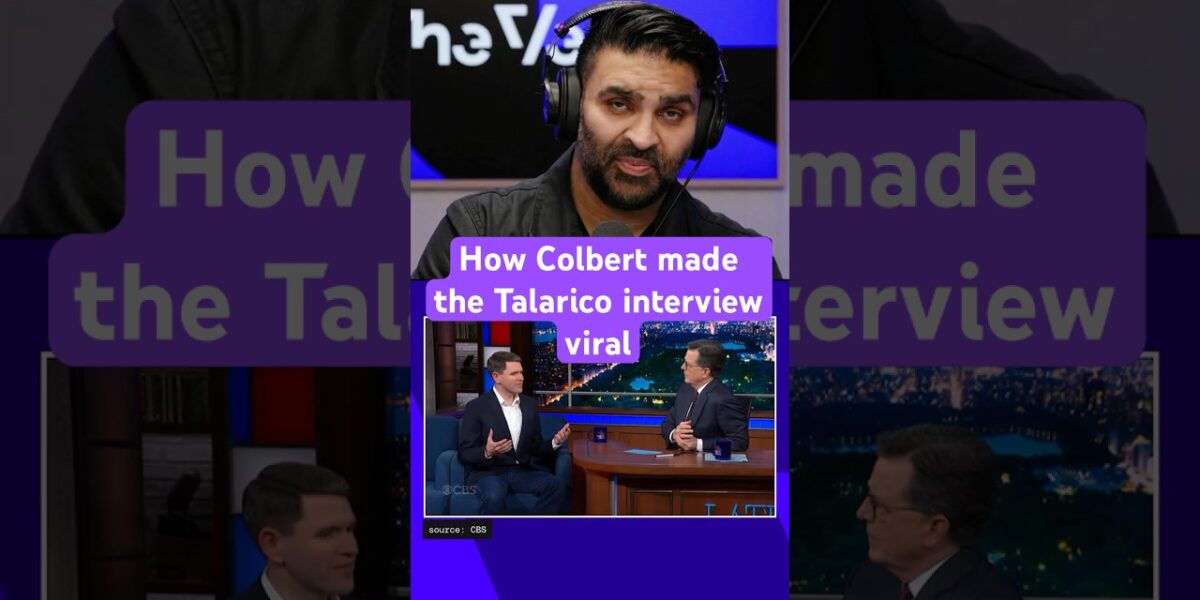
Stephen Colbert's interview with James Talarico unexpectedly went viral due to the network's decision to initially withhold the footage. This incident perfectly demonstrates the power of the Streisand Effect in the digital age.

Colbert’s Talarico Interview Goes Viral: The Streisand Effect in Action
In the ever-evolving landscape of media and public discourse, a recent interview segment featuring Stephen Colbert and Texas Representative James Talarico has become a masterclass in viral marketing, albeit an unintentional one. The incident, where the network seemingly attempted to suppress the footage, only served to amplify its reach, perfectly illustrating the power of the Streisand Effect.
The Unintended Amplification
The core of the story lies in a seemingly simple interview that, for reasons yet fully explained, was reportedly held back from public release by CBS. This decision, however, proved to be the very catalyst that propelled the segment into widespread online discussion. As the transcript notes, “In the history of free speech controversies, saying you can’t watch something is the best way to get people to watch it.” This age-old adage played out in real-time, as the very act of withholding the content ignited curiosity and a desire to see what all the fuss was about.
The Streisand Effect: A Digital Age Phenomenon
Our tech journalist colleagues have aptly named this phenomenon the “Streisand Effect,” a term coined after Barbra Streisand’s unsuccessful attempt to remove photographs of her Malibu home from the internet. The more she tried to suppress the information, the more attention it garnered, leading to its widespread dissemination. This principle was clearly at play with the Colbert-Talarico interview. The producers at ‘The Late Show with Stephen Colbert,’ along with CBS, likely understood the power of their platform, but the decision to preemptively hold the footage became a deliberate, or at least strategically beneficial, move.
The transcript highlights the peculiar nature of the situation: “All of that that we saw sat in a can for several hours. Like everyone knew what would happen here.” This implies a period of anticipation and, perhaps, internal deliberation within the network. The fact that the content was recorded and ready for viewing, yet deliberately withheld, created a vacuum that the internet, true to its nature, was eager to fill. The phrase “Coar said CBS doesn’t want you to watch this. Everyone watched it” succinctly summarizes the outcome.
Implications for Media and Regulation
This incident raises intriguing questions about media strategy, content control, and the efficacy of censorship in the digital age. In an era where information travels at lightning speed, attempts to suppress content often backfire spectacularly. The irony is not lost that this occurred in the context of discussions that might touch upon free speech and regulation. The mention of “Brennan Carr” and his potential attempts to “regulate YouTube” suggests a broader conversation about content moderation and the challenges faced by regulatory bodies in controlling online narratives.
The pre-taped nature of ‘The Late Show’ meant that the interview sat “in a can for several hours,” a significant period in the fast-paced world of online news. This delay, coupled with the subsequent decision to withhold, created a perfect storm for virality. It’s a scenario that would likely not have unfolded the same way with a live broadcast, where immediate reactions and dissemination would have been harder to control.
Who Should Care and Why?
This story is of particular interest to several groups:
- Media Professionals and Marketers: It serves as a potent case study in the unintended consequences of content suppression and the power of the Streisand Effect. Understanding these dynamics is crucial for crafting effective media strategies.
- Digital Rights Advocates and Free Speech Enthusiasts: The incident underscores the challenges of censorship and the resilience of information sharing in the digital age. It highlights how attempts to control narratives can often lead to the opposite outcome.
- General Online Audiences: For anyone who consumes content online, this is a fascinating look at how viral trends are born and how seemingly minor decisions can have significant ripple effects across the internet.
- Tech and Policy Analysts: The mention of YouTube regulation and content moderation points to ongoing debates about the role of platforms in shaping public discourse and the difficulties in implementing effective oversight.
Conclusion: A Viral Masterclass
The Stephen Colbert interview with James Talarico, amplified by the network’s apparent attempt to withhold it, has become a textbook example of the Streisand Effect. It’s a reminder that in the digital realm, transparency and a deep understanding of audience behavior are often more effective than attempts at suppression. As the internet continues to evolve, stories like this will undoubtedly shape how content is managed, consumed, and disseminated, proving once again that the best way to make something go viral is often to try and stop it.
Source: Here's how Stephen Colbert made his interview with James Talarico viral. #Vergecast (YouTube)

Related Articles


Trump’s UFC Detour: A Political Spectacle?
President Donald Trump's recent trip to a UFC event in Miami highlights how politicians strategically use popular culture for political gain. This move mirrors historical practices of leaders appearing at public gatherings to connect with voters and project an image. It signals a trend of engaging audiences through unconventional, high-visibility events.

Ro Khanna Defends Hasan Piker Show Appearances: ‘We Must Engage’
Representative Ro Khanna defends his appearances on Hasan Piker's show, arguing that engaging with diverse audiences is vital for political discourse. Despite criticism over Piker's past remarks, Khanna believes politicians must meet audiences where they are and push back against harmful rhetoric directly.


China Shifts Voice: From Aggression to Subtle Influence
The recent viral moments of a deceased Chinese influencer and a rising Western commentator suggest a shift in China's global messaging. Beijing may be moving from aggressive 'wolf warrior' tactics to more subtle, globally appealing voices. This change could significantly impact international perceptions and China's influence abroad.