UK Naval Limits Hamper Hormuz Defense, Ex-FM Hague Warns
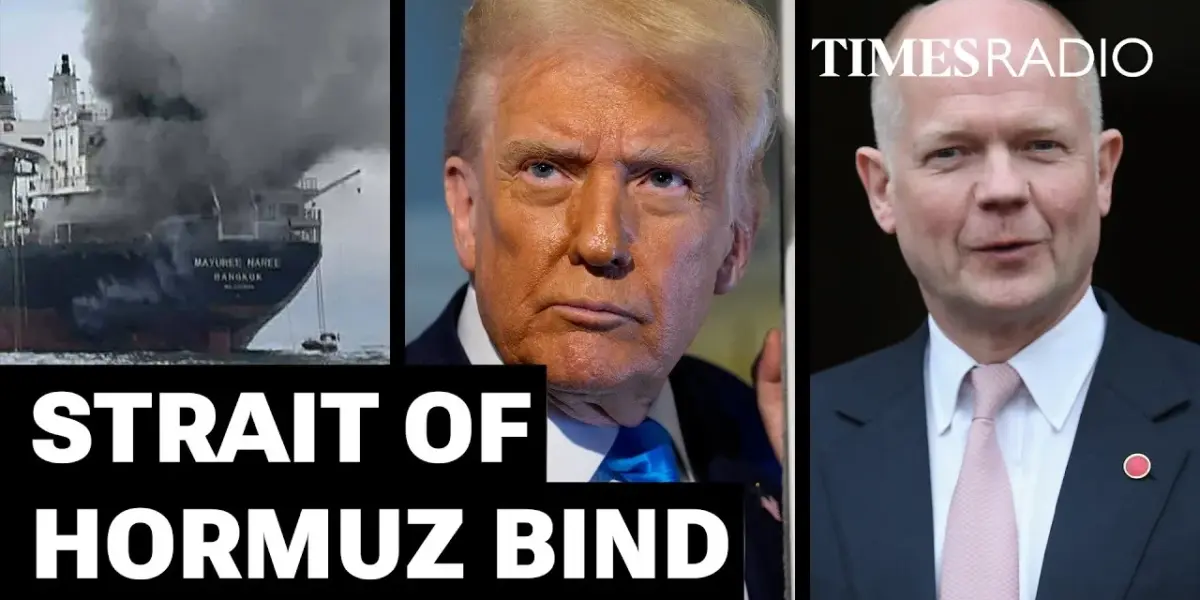
Former UK Foreign Secretary William Hague has revealed the UK's "embarrassing truth": a lack of naval assets significantly limits its ability to defend the vital Strait of Hormuz. He also criticized the US strategy under President Trump for lacking a clear plan and warned against the potential for a "rockier period" in UK-US relations.

UK Naval Limits Hamper Hormuz Defense, Ex-FM Hague Warns
Former Foreign Secretary William Hague has voiced significant concerns regarding the United Kingdom’s capacity to effectively defend the strategic Strait of Hormuz, citing a critical lack of naval assets and questioning the strategic rationale behind potential military involvement. The comments, made in the context of escalating tensions in the Persian Gulf and a broader re-evaluation of UK-US relations under President Donald Trump, highlight an ’embarrassing truth’ about Britain’s diminished military capabilities.
‘Embarrassing Truth’ of Limited Naval Power
Hague articulated that while Britain may wish to assist in securing the Strait of Hormuz, a vital chokepoint for global oil supplies, the reality is that the UK possesses insufficient naval assets to make a meaningful difference. “The embarrassing truth about our situation is whether or not we want to help in the Strait of Hormuz, we actually haven’t got very much that we can send there anyway,” Hague stated. He recalled that in his time at the Foreign Office, the UK maintained mine sweepers in Bahrain, providing a tangible capability to assist in opening the strait. However, these assets have since been reduced.
He further questioned the efficacy of traditional naval power in a world increasingly dominated by drones, suggesting that even a larger fleet might not be enough to guarantee passage through the strait.
Shifting Transatlantic Relations and ‘Trump Arrangement Syndrome’
The discussion also delved into the evolving relationship between the UK and the United States, particularly under President Trump. Hague described a period where global powers, including Britain, adopted a policy of appeasing Trump, a phenomenon he termed ‘Trump arrangement syndrome.’ This involved interpreting his actions and statements in a positive light, regardless of their actual implications.
Hague indicated that trust in the US administration has eroded, particularly following the incident where President Trump reportedly considered using force against Greenland, a territory of a NATO ally. “There was a real loss of trust around Greenland,” he observed, even though Trump eventually backed down. The current situation, where allies are being asked to participate in actions they deem questionable or beyond their capability, has brought this dynamic to a head.
“Allies have still tried to please the president, but with this with the war in Iran have finally got to a point where they’re being asked to do something that they don’t think is right or that they can’t do much about,” Hague explained. He cautioned against promising what cannot be delivered or supporting actions that are not agreed upon, emphasizing the need for a more realistic approach to international commitments.
Critique of US Strategy and Lack of a Coherent Plan
A central theme of Hague’s analysis is the perceived lack of a clear plan or objective from the US regarding the escalation of tensions with Iran. He suggested that President Trump entered into the current conflict without fully considering the implications for the Strait of Hormuz. “Trump has entered this war without knowing what he would do about the or without thinking very much about this problem of the Strait of Hormuz,” Hague remarked.
He posited that if the strait remains closed for an extended period, and other international crises subside, there would be a strong case for capable nations to act collectively. “Britain ought to do that,” he stated, but only if a well-defined plan involving a US-led force and other participating countries is in place. Currently, there is no indication of such a plan.
UK Defense Funding and Industrial Strategy
The conversation also touched upon domestic policy, specifically the need for clarity on defense spending and its link to Britain’s industrial strategy. Hague expressed concern that decisions regarding defense funding might be postponed due to political considerations, potentially to the detriment of national security. He stressed the direct correlation between investment in defense and economic growth, job creation, and the development of key industries.
“This is central to Britain’s industrial strategy, and there’s a clear need for it now more than ever, and I just don’t understand the hold up,” he urged, highlighting the potential for political expediency to overshadow vital security and economic planning.
Israeli Actions and Netanyahu’s Aims
The discussion then shifted to recent developments in the Middle East, including reports of the Israeli Defense Force (IDF) eliminating a militia commander of an Iranian unit. Hague analyzed Israeli Prime Minister Benjamin Netanyahu’s objectives, suggesting they extend beyond simply destroying missiles threatening Israel. “His aim is to destroy all the missiles that have threatened Israel. That’s not a surprising aim,” Hague said.
However, he elaborated that Netanyahu’s broader goal appears to be the downfall of the Iranian regime and its associated ‘axis of resistance,’ including groups like Hezbollah and Hamas. “He sees this as his chance to do that and for him it’s worth taking the risk,” Hague noted, acknowledging the potential for a chaotic outcome rather than a helpful regime change.
Hague cautioned that while Netanyahu might perceive the risks as worthwhile, the US and the international community face significant economic and geopolitical risks. The concern is that such actions could inadvertently strengthen the Iranian regime or even lead to it developing nuclear weapons in secret. “This could be seen as a historic mistake in a few years’ time,” he warned.
Effectiveness of Targeted Strikes in Iran
Addressing the effectiveness of eliminating individual leaders within Iran’s security apparatus, Hague expressed skepticism. He agreed with the assessment that Iran operates as a ‘dictatorship of institutions, not of individuals.’ While acknowledging that those killed may be responsible for terrible acts of repression, he pointed out the vast number of personnel within paramilitary forces like the Basij.
“There are hundreds of thousands of people in that paramilitary force and they will have a new commander, and their ideology as well as their corruption and network is sufficiently strong that they will easily produce a new leader,” Hague explained. He drew parallels with Hezbollah, where despite significant Israeli strikes and the elimination of leadership, the organization has continued to operate and even rebuild its forces.
“This in itself is not going to solve the problem. It is not going to they are not going to bring down the regime through air strikes,” Hague concluded, emphasizing that such tactics alone are insufficient to dismantle the existing power structure in Iran.
Looking Ahead
The coming weeks will be crucial in observing whether a coherent international plan emerges for securing the Strait of Hormuz and how the UK navigates its defense commitments amidst evolving geopolitical realities. Furthermore, the long-term implications of current Israeli actions in the region and the potential for unintended consequences in Iran will require close monitoring. The debate over adequate defense spending and its integration into national industrial strategy is also likely to intensify, particularly as domestic political pressures mount.
Source: UK’s ‘Embarrassing Truth’: We Can’t Do Much To Defend Strait Of Hormuz | William Hague (YouTube)

Related Articles

U.S. Iran Tensions Rise Amid Shifting Alliances
Rising tensions between the U.S. and Iran are creating a volatile geopolitical situation. With conflicting signals on de-escalation and potential shifts in alliances like NATO and U.S.-Israel relations, the path forward remains uncertain. The global economy and regional stability hang in the balance.

Trump Halts Iran Strikes Amid Stalled Diplomacy
President Trump announced a pause on planned strikes against Iran, citing productive talks, though Iran denies negotiations occurred. Reports also suggest a potential U.S. ground operation on Iran's Hark Island. The situation raises concerns about international support for Ukraine and potential shifts in U.S. foreign policy.

Trump Delays Iran Strike Deadline Amidst Shifting Diplomacy
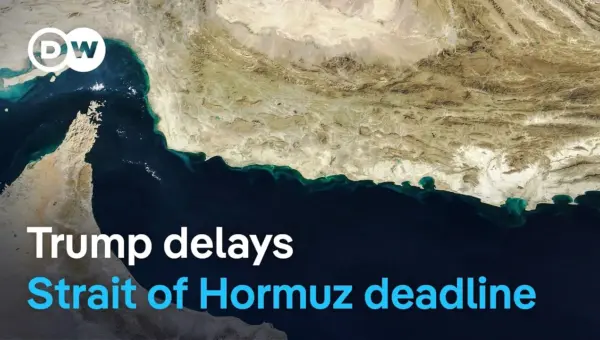
President Donald Trump has extended his deadline for potential strikes on Iranian energy plants to April 6th, amid reports of U.S.-Iran diplomatic talks mediated by Pakistan. This move comes as Israel continues its strikes on Iran and the U.S. deploys additional military assets to the region. Analysts point to mixed signals, economic pressures, and strategic miscalculations as key factors shaping the evolving situation.