US Enters Late-Stage Debt Cycle: Geopolitical Tensions Fuel Market Shifts
The U.S. economy is entering the late stages of a long-term debt cycle, marked by high national debt, internal conflicts, and rising global rivals. Geopolitical tensions and potential policy shifts are fueling market uncertainty and creating new investment considerations.

US Enters Late-Stage Debt Cycle Amid Geopolitical Tensions and Economic Shifts
The United States economy is exhibiting characteristics of the late stages of a long-term debt cycle, a phenomenon historically associated with significant economic and geopolitical shifts. This assessment, drawing on the work of financial theorist Ray Dalio, suggests a period of increased financial strain, internal division, and potential changes in global economic power.
Ray Dalio, founder of the world’s largest hedge fund, has extensively studied historical economic cycles, identifying recurring patterns in the rise and fall of economies and empires. His research indicates that economies often enter a ‘debt death spiral’ in the final phase of a long-term debt cycle. This occurs when entities, including governments, must borrow money simply to service existing debt, a situation that can accelerate and erode confidence in the debt itself.
The Long-Term Debt Cycle Explained
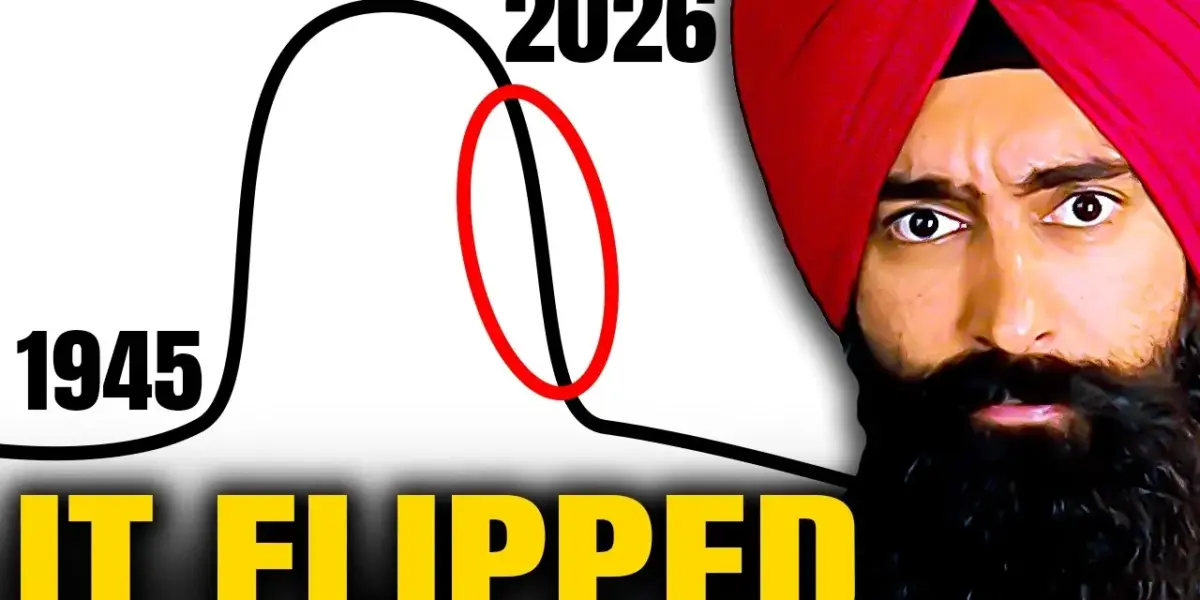
Dalio’s model outlines a multi-phase cycle that typically begins with a rising economy becoming a global superpower. Following World War II, the United States dollar emerged as the world’s reserve currency, a status established around 1944-1945. In the initial phase, strategic borrowing fuels economic growth and productivity, with debt being used to generate income and wealth. This is followed by a ‘bubble point’ where borrowing continues, even if less strategically, leading to an economy that becomes overly reliant on debt. The cycle culminates in a phase characterized by declining productivity and escalating debt, where the currency’s value may decrease due to increased money printing, while the cost of living rises, necessitating further borrowing to sustain the economy and employment.
According to Dalio, this late stage of the debt cycle is often accompanied by rising internal conflicts, the emergence of rival powers, currency debasement, and the potential for external wars. These factors can collectively weaken an empire and potentially lead to a shift in global economic dominance.
Key Indicators of the Late-Stage Debt Cycle
Dalio identifies five key indicators signaling an economy’s entry into these late stages:
- High Government Debt: The United States currently faces a substantial national debt, exceeding $38 trillion. In 2025, interest payments on this debt reportedly surpassed the entire military budget, underscoring the scale of the fiscal challenge.
- Rising Internal Conflicts: Increased political polarization and societal divisions within the U.S. are seen as weakening the nation’s cohesion and ability to act collectively.
- Rising Rival Powers: Foreign nations, particularly China, are actively working to strengthen their economies and currencies to challenge U.S. global standing. China’s efforts to acquire physical gold are cited as a move to bolster its currency against the dollar.
- Currency Debasement: The U.S. dollar, not backed by a physical commodity like gold, can lose value as more currency is printed. In 2025, the dollar reportedly depreciated by approximately 10%, marking one of its worst years in a decade. This debasement can impact purchasing power for those holding dollars domestically.
- External War: Geopolitical conflicts, such as the ongoing tensions in the Middle East, can serve as catalysts. These wars can either be initiated by external powers sensing weakness or by the dominant power seeking to rally domestic support and stimulate the economy through increased spending. However, financing prolonged conflicts becomes increasingly difficult in this stage of the debt cycle.
President Trump’s Economic Policies and Their Impact
The article highlights specific policy actions and proposals associated with former President Donald Trump that align with or potentially influence this economic trajectory. These include:
- Tariffs: The implementation of tariffs was aimed not only at generating tax revenue but also at reshaping international trade dynamics. By reducing trade with countries like China, the U.S. sought to incentivize businesses to return domestically and potentially slow the growth of rival economies.
- Weaker Dollar Policy: A stated desire for a weaker dollar aims to make U.S. exports more competitive globally. While this could boost sales for American companies, it also means that U.S. consumers and savers would experience reduced purchasing power domestically, especially if incomes do not keep pace with inflation. The year 2025 saw a significant decline in the dollar’s value, aligning with this objective.
- Federal Reserve Policy: Discussions around potential changes at the Federal Reserve, including the appointment of individuals favoring lower interest rates, are noted. Lower interest rates can stimulate borrowing and spending, potentially exacerbating inflation, particularly when combined with other inflationary pressures. The appointment of Kevin Worsh, who is expected to be receptive to lower interest rates, is mentioned, with his tenure set to begin in May.
The Role of Middle East Conflict
The ongoing conflict in the Middle East has introduced a significant variable. Soaring oil prices directly impact transportation and production costs, potentially worsening inflation. This development complicates efforts to lower interest rates, as it adds another layer of inflationary pressure to the economy.
Market Impact and Investor Considerations
Historically, periods of economic stress and currency devaluation have presented both challenges and opportunities for investors. The article draws parallels to the early 1970s, when the U.S. dollar was de-linked from the gold standard, leading to a boom in gold prices while the stock market faced headwinds.
Several potential investment avenues are discussed, contingent on future economic developments:
- Gold: Historically, gold has performed well during times of concern over currency devaluation and economic uncertainty. Investors seeking protection against a weakening dollar might consider gold or gold-backed ETFs.
- Energy: Geopolitical conflicts in the Middle East have historically driven up oil and energy prices, benefiting energy companies. Prolonged conflicts could sustain these higher prices, making energy stocks and ETFs an area of interest.
- Defense: An extended period of conflict typically leads to increased government spending on military equipment and services, potentially boosting defense contractors and related ETFs.
- U.S. Industrials: If tariffs and reshoring initiatives successfully bring manufacturing back to the U.S., industrial companies involved in domestic production could benefit from reduced supply chain risks and avoidance of tariffs.
- Real Estate and Dividend Stocks: For a more defensive approach, investing in physical real estate or dividend-paying stocks (via ETFs like SCHD) can provide stable income, regardless of broader market volatility. The strategy of ‘Always Be Buying’ (ABB) is recommended for consistent investment through market ups and downs.
The article emphasizes that while history does not repeat exactly, it often rhymes. Investors are encouraged to think like investors, understand economic trends, and conduct their own due diligence, as market conditions and investment outcomes are inherently uncertain.
“Now, in the private markets, credit markets, we just talk about a debt uh death spiral. And a debt death spiral is that part of the cycle when you when the uh debtor needs to borrow money in order to pay debt service and it accelerates and then everybody sees that and they don’t want to hold the debt. That’s where we’re approaching.”
The overarching theme is that the U.S. economy is navigating a complex phase characterized by high debt, geopolitical instability, and potential shifts in the global financial order. Understanding these dynamics is crucial for investors seeking to adapt and identify opportunities in a changing economic landscape.
Source: Trump Just Changed The Rules Of Money — Most People Aren't Ready (YouTube)

Related Articles
Trump’s “Walk Away” Tactic Signals Tougher Stance on China
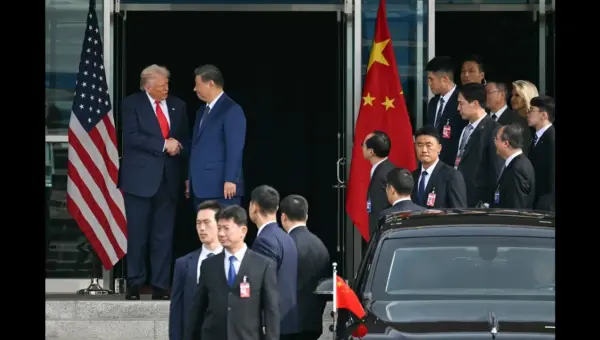
Retired Air Force Brigadier General David Stillwell believes President Trump's strategy of being willing to walk away from negotiations puts pressure on China. This tactic, combined with US global actions and strengthened alliances, signals a more assertive American foreign policy.

China Fights Back: Tariffs Loom Ahead of Trump Visit
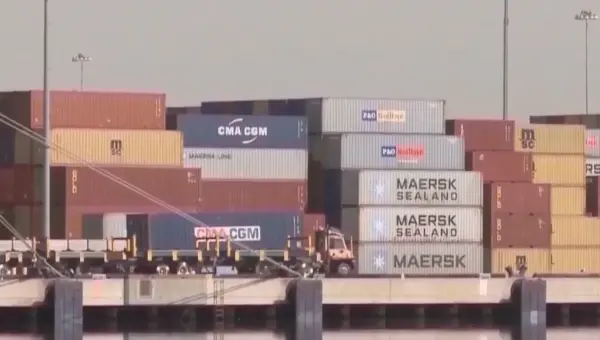
China is retaliating against US trade investigations that could lead to higher tariffs. This escalating trade tension occurs just before a planned visit by President Trump. The dispute involves accusations of unfair practices and impacts global supply chains.


Israelis Forge Resilience Amidst Constant Bomb Shelter Drills
Life in Israel is a blend of resilience and constant vigilance, with many families adapting to frequent bomb shelter drills and even sleeping in makeshift shelters. Despite ongoing missile attacks, Israelis strive to maintain normalcy, though businesses face disruption and emotional fatigue is a growing concern.