Green Mining Boom Pollutes Southeast Asian Rivers, DW Reports
A surge in demand for critical minerals is fueling an unregulated mining boom across Southeast Asia, leading to severe river contamination and ecological damage. Indigenous communities in Laos and Cambodia are facing the brunt of this environmental crisis, with vital waterways polluted by toxic chemicals from unregulated mining operations.

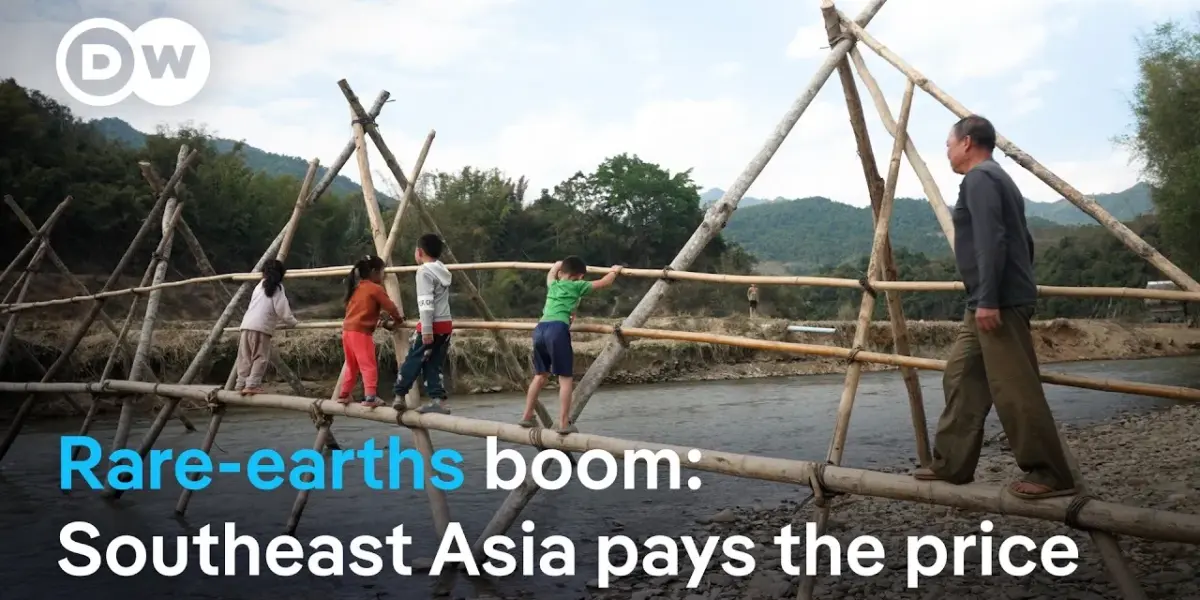
Unregulated Mines Threaten Indigenous Communities and Waterways
A surge in demand for critical minerals, essential for everything from smartphones to electric vehicles, is fueling an unregulated mining boom across Southeast Asia. While proponents tout the ‘green’ aspect of these minerals, DW News reports that the environmental cost is devastating, with indigenous communities in Laos and Cambodia bearing the brunt of river contamination and ecological damage.
Laos: A Legal Gray Zone for Mining
In the mountainous regions of northern Laos, traditional ways of life are being upended by pollution emanating from upstream mines. Villagers in one affected province, who spoke on condition of anonymity, have been cut off from their primary water source. They attribute the contamination to the Laos China Rare Mineral Development Company North to Limited, a mining operation reportedly operating in a legal gray zone due to insufficient government oversight.
Mining operations in Laos often proceed with only exploration permits, or with extraction permits granted only at a local, not national, level. While the Laotian government has initiated measures like fines to curb unregulated mining, a lack of resources hinders effective, large-scale enforcement. “If we had this deposit in Europe, these types of deposits in Europe, there would be no way that we could mine them,” stated an expert, highlighting the stringent environmental regulations absent in the region.
The affected villagers organized a social media campaign, which drew the attention of officials. Subsequent water analysis revealed alarming levels of cyanide, zinc, copper, and iron, alongside highly acidic conditions. A local resident, identified as But Vong, expressed a loss of trust in the water’s safety, now sourcing water for his crops from a distant mountain spring.
Access to the mining site itself proved difficult due to heavy security, with DW journalists unable to reach the mine directly. However, the scale of operations was evident from nearby roads. Photos taken near a similar site revealed signage in both Laotian and Mandarin, suggesting foreign ownership. The Stimson Center report indicates that mining companies in the Mekong Basin likely originate from neighboring countries such as Thailand, Vietnam, and China, leveraging Laos’s porous borders.
Cambodia: Gold Mining Threatens Sacred Rivers
Further south, in Cambodia, the village of Siang, located near the Laotian border, faces similar challenges. Residents, including families with young children, live without running water or electricity, relying directly on the river for their daily needs. They have observed a significant decline in water quality in recent years, a change they link to mining activities upstream.
In Ratanakiri province, home to the indigenous Brow people, a gold mine operating upstream in a national park has impacted a tributary of the Se Kong river. Despite the river’s spiritual significance to the community, regional media reports suggest that mining exploration licenses were granted to a company, Global Green, allegedly linked to a government tycoon. It remains unclear if the company received authorization for gold extraction.
Community activists, speaking anonymously, shared their concerns. In January 2026, a group of indigenous leaders and activists attempted to verify assurances from authorities that mining activities had ceased. Their efforts were met with resistance, underscoring the challenges in holding mining operations accountable.
Broader Implications and Future Concerns
The river systems of Southeast Asia are critical ecosystems, supporting immense biodiversity and sustaining communities reliant on them for survival. The unchecked expansion of mining operations poses a significant threat to these vital waterways and the traditional lifestyles they support.
An expert explained the typical leaching process used in rare earth element extraction, where chemical solutions are pumped into the ground to dissolve desired minerals. The resulting wastewater, often rich in ammonia, ammonium sulfide, or sulfate, is frequently discharged into nearby streams without adequate treatment, leading to substantial environmental damage. “The water they don’t need, they probably put in some stream, let it carry it away. As far as I would assume, there’s no effort to… collect the water and treat it in some way that’s not environmentally harmful anymore,” the expert noted.
The current situation raises serious questions about the sustainability of the ‘green’ mining narrative. As the global demand for minerals intensifies, the environmental and social costs in regions with lax regulations are becoming increasingly apparent. The long-term viability of communities dependent on these rivers is uncertain if mining activities continue without stringent oversight and accountability.
Looking Ahead
The ongoing investigation into the environmental impact of unregulated mining in Southeast Asia highlights an urgent need for stronger governance, international cooperation, and corporate responsibility. Future developments will likely focus on increased monitoring of mining activities, the enforcement of environmental laws, and the potential for impacted communities to seek redress. The global transition to cleaner energy technologies hinges on the responsible sourcing of critical minerals, a challenge that Southeast Asia’s vital river systems are currently struggling to meet.
Source: How the 'green' mining boom is contaminating indigenous rivers in Southeast Asia | DW News (YouTube)

Related Articles


China Courts Vietnam: Is a Secret Southern Stronghold Brewing?
Three top Chinese ministers recently visited Vietnam, a move far beyond routine diplomacy. The inclusion of the Public Security Minister in a '3+3' strategic dialogue suggests China's focus is on security and internal stability, not just economics. This visit may signal Beijing's efforts to secure a strategic fallback position in southern China, bordering Vietnam, amid growing international pressure.


AI’s Environmental Cost: Do We Really Care?
New insights suggest consumers may not be as concerned about AI's environmental impact as the media portrays. Convenience often outweighs ecological worries, influencing how people adopt new technologies. Tech companies should focus on benefits over energy debates.


US and Japan Forge Alliance to Control Critical Mineral Flow
The United States and Japan are strengthening their partnership to ensure a steady supply of critical minerals. This plan includes setting minimum prices and improving mining standards. It aims to boost production and diversify sources, making supply chains more resilient.