UK Crumbles? Independence Movements Gain Unforeseen Traction
The United Kingdom faces a growing challenge from independence movements in Scotland, Wales, and Northern Ireland. With pro-independence parties gaining traction and legal pathways to separation, the centuries-old union is under increasing pressure, a reality largely unknown to many outside the UK.

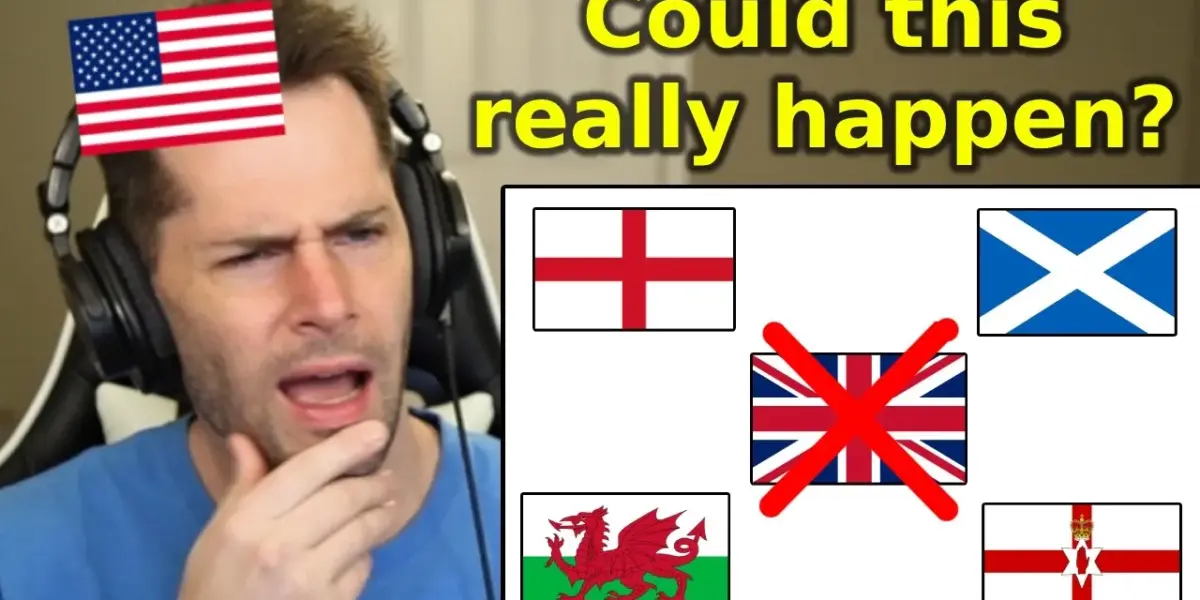
UK Crumbles? Independence Movements Gain Unforeseen Traction
The notion of the United Kingdom fracturing, once a fringe political discussion, is steadily gaining momentum, presenting a complex challenge to its centuries-old union. Recent political shifts and the burgeoning popularity of pro-independence parties across Scotland, Wales, and Northern Ireland suggest a potential seismic realignment of the British Isles. For many outside the UK, particularly in the United States, this possibility remains largely unknown, a testament to the insular nature of global political discourse.
Scotland: A Referendum on the Horizon?
Scotland stands as a prominent focal point in this unfolding narrative. The Scottish National Party (SNP), a staunch advocate for independence, is poised for its fifth consecutive electoral victory in the upcoming May elections. Historically, an outright majority for the SNP in 2011 paved the way for the first independence referendum. Now, with a similar mandate potentially on the cards, the SNP intends to leverage this as a clear signal to demand a second referendum. This is not merely symbolic; it represents a direct challenge to the UK government’s stance, which, as articulated by Labour’s Chancellor Rachel Reeves, views the 2014 referendum as a “once-in-a-generation” decision, precluding the need for another vote soon.
However, the SNP’s leadership, particularly John Swinney, claims to possess a “secret plan” to navigate Westminster’s opposition, hinting at a strategic approach beyond simply lobbying for a referendum. The Supreme Court’s 2022 ruling, which stated that a referendum requires the approval of the UK Parliament, underscores the significant hurdle the SNP faces. Yet, the persistent electoral success of pro-independence parties, even if not always securing an outright majority, signals a significant portion of the Scottish electorate’s dissatisfaction with the status quo.
Northern Ireland: A Legal Pathway to Unity
Northern Ireland presents a unique case, with a legally enshrined pathway towards a potential unification with the Republic of Ireland. The 1998 Good Friday Agreement provides for a border poll (referendum) on self-determination, to be called if it appears likely that a majority of the people in Northern Ireland would vote to leave the UK and form a united Ireland. While the current election cycle does not include Northern Ireland, Sinn Féin, a nationalist party seeking reunification, has been the largest party in the Northern Ireland Assembly since 2022 and holds the First Minister role since 2024. This signifies a symbolic shift, even if the unionist vote share has declined significantly, falling from over 50% to around 40%.
Demographic shifts are also playing a crucial role. The 2021 census revealed that Catholics now outnumber Protestants for the first time, and there is a rising identification with being solely Irish, while sole British identification is falling. While support for Irish unity has grown modestly, it remains reliably behind in the polls, and the rise of the non-sectarian Alliance Party suggests a growing segment of the population is not ideologically tied to either unionist or nationalist camps. Despite these factors, Sinn Féin’s call for a referendum by 2030 appears optimistic rather than imminent, though the long-term trend indicates a weakening of unionist dominance.
Wales: Independence on the Distant Horizon
In Wales, the push for independence, while present, is less developed. Plaid Cymru, the Welsh nationalist party, is vying for a leading position in the Senedd (Welsh Parliament) in the upcoming May elections. While a Plaid Cymru-led government would be a historic first, the party’s leader has explicitly ruled out seeking an independence referendum during their first term. Support for Welsh independence, while significant, rarely exceeds 40% in polls, suggesting that while a substantial minority desires separation, it has not yet reached a tipping point for a full-fledged independence movement.
Why This Matters
The potential dissolution of the United Kingdom, a geopolitical entity that has shaped global history for centuries, is a matter of profound significance. For Americans, who often view the UK through a lens of historical alliance and cultural proximity, the internal dynamics of its union are frequently overlooked. The rise of these independence movements challenges the perception of a stable, unified Britain and highlights the complex interplay of national identity, regional aspirations, and political will. The implications extend beyond the UK’s borders, potentially impacting international relations, economic stability, and the very definition of statehood in the 21st century.
Implications, Trends, and Future Outlook
The current landscape suggests that while an immediate breakup of the UK is unlikely, the long-term trend points towards a crisis of confidence in the union. If each of the devolved nations were to be led by pro-independence parties, it would undoubtedly signal a significant challenge to the central government in Westminster. This could force a re-evaluation of the union’s structure, power-sharing arrangements, and the very concept of British identity. The future outlook hinges on several factors: the electoral success of independence-leaning parties, the ability of these movements to translate popular support into concrete political action, and the response of the UK government to growing nationalist sentiments.
Historical Context and Background
The Act of Union in 1707 formally created the Kingdom of Great Britain, uniting England and Scotland. The United Kingdom of Great Britain and Ireland was formed in 1801, with Ireland gaining independence in 1922, leaving the current United Kingdom of Great Britain and Northern Ireland. These unions were often driven by political and economic imperatives, but they have always coexisted with distinct national identities and aspirations. The devolution of power to Scotland, Wales, and Northern Ireland in the late 20th century, while intended to strengthen the union, inadvertently provided platforms for regional parties to advocate for greater autonomy or full independence.
The lingering legacy of the Troubles in Northern Ireland and the historical relationship between Scotland and England have always fueled separatist sentiments. Brexit has also acted as a catalyst, with Scotland and Northern Ireland voting overwhelmingly to remain in the European Union, creating a new point of contention with the pro-Brexit stance of the UK government.
Conclusion
The possibility of the United Kingdom breaking up is no longer a distant hypothetical. The growing strength of independence movements in Scotland and Northern Ireland, coupled with nascent aspirations in Wales, indicates a profound and evolving political reality. While the immediate future may see the union endure, the underlying currents of regional identity and self-determination are undeniable. For observers, particularly in the United States, this unfolding situation serves as a stark reminder that even the most established political structures are subject to change, driven by the will of their people.
Source: American Reacts to Why the United Kingdom Could Break Up (YouTube)

Related Articles


Trump’s ‘Game Show’ Diplomacy Sparks Mideast Chaos
Analysts are likening Donald Trump's "game show" approach to foreign policy to a natural disaster, arguing his unpredictable tactics have already caused significant damage to global markets and stability. The discussion highlights Iran's strategic advantage and raises concerns about "drift" in British politics regarding finances, energy, and national security.


UK’s Starmer Risks US Ties, Courts Iran Threat
British Prime Minister Keir Starmer's stance on Iran is creating a rift with the U.S., raising concerns about national security and appeasing specific groups. The former PM warns of escalating anti-Semitism and calls for stronger conservative leadership, while reflecting on the monarchy and the challenges facing Prince Harry and Meghan Markle.


Ed Miliband’s Quiet Influence: Is He Labour’s Real Power Broker?
Ed Miliband's enduring political influence is being debated, with some suggesting his ideas are shaping the current Labour government. While he has faced past electoral defeats, his long-term vision for the country continues to be a significant factor in British politics, though questions remain about his personal ambition for the top job.