Trump Pressures UK to Join Iran Conflict, Sparks War Fears
President Trump has launched scathing criticism against the UK for refusing to join a potential military operation in the Strait of Hormuz. Former U.S. Embassy official Michael Martins suggests Trump is employing pressure tactics to secure British support in a volatile geopolitical standoff.

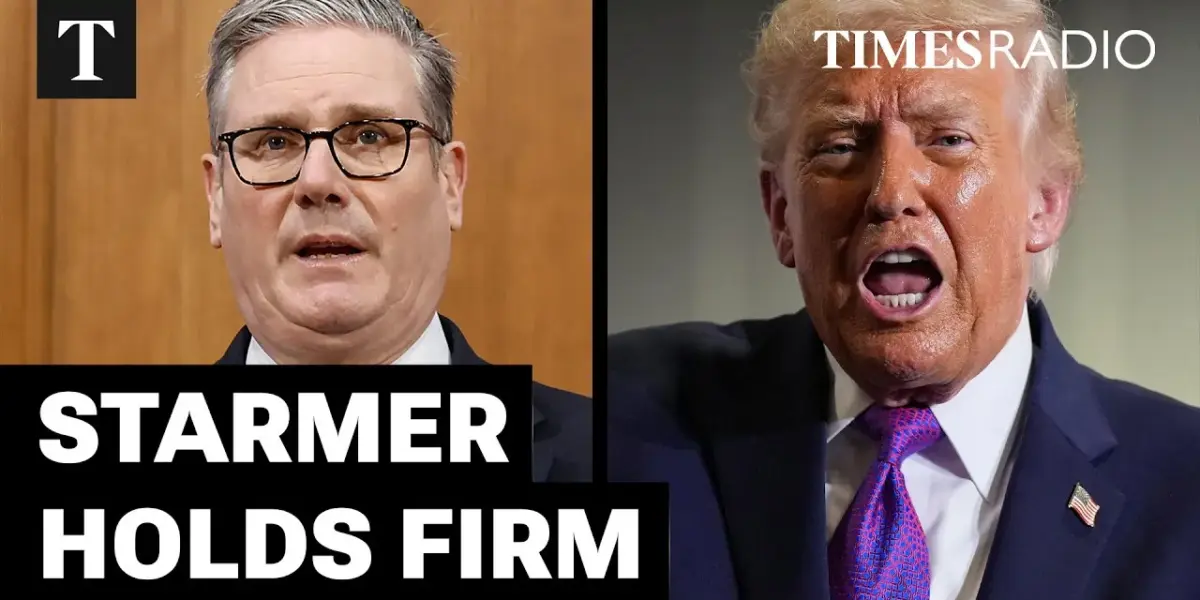
Trump Demands UK Support in Iran Standoff, Cites ‘Oldest Ally’ Status
President Donald Trump has sharply criticized the United Kingdom’s reluctance to join a potential military operation against Iran, specifically regarding the security of the Strait of Hormuz. Trump expressed surprise and anger at Prime Minister Keir Starmer’s stance, stating that Britain’s refusal to commit naval assets was unacceptable given the long-standing alliance between the two nations and U.S. contributions to NATO. The U.S. President made these remarks at an event at the Trump Kennedy Center in New York and later reiterated his criticisms at the White House, indicating a significant rift in diplomatic expectations between the two allies.
Starmer Cites National Interest, Avoids Escalation
Prime Minister Keir Starmer, however, has maintained that Britain’s priority remains its national interest and has explicitly stated that the UK will not be ‘dragged into a wider war.’ While acknowledging the importance of keeping international waters open, Starmer’s government has emphasized a cautious approach, focusing on protecting British citizens in the region and taking necessary defensive actions without committing to offensive operations against Iran. This position, while prioritizing de-escalation, has drawn direct fire from President Trump.
Expert Analysis: Trump’s ‘Pressure Tactic’ Playbook
Michael Martins, a former political and economic specialist at the U.S. Embassy in the UK during Trump’s first term, described the President’s actions as a ‘pretty standard playbook’ of pressure tactics. Martins suggested that Trump’s objective is to compel the UK to share the burden of securing the Strait of Hormuz, which is crucial for global energy exports, particularly to China. This strategic chokepoint’s security is seen as a primary U.S. concern in the region.
“I think President Trump is following a pretty standard playbook of his where it’s in many ways a pressure tactic campaign where he’s essentially as Keir Starmer has said he’s trying to draw the UK into this conflict and to help the U.S. secure the Strait of Hormuz.”
Michael Martins, former political and economic specialist at the U.S. Embassy in the UK
Potential Escalation Tactics and European Response
Martins elaborated on the potential seriousness of Trump’s stance, outlining several avenues through which the U.S. President could escalate pressure. These include invoking export controls on military supplies destined for Ukraine, thereby impacting European nations that rely on U.S. materials, or even redeploying U.S. military forces away from Europe. He noted that European nations, like the UK, are increasingly adopting a collective approach to such demands, similar to their response regarding the annexation of Greenland. However, Martins highlighted that the current situation is more volatile due to the direct strike on Iranian leadership and the ensuing geopolitical instability.
The challenge for European leaders, including Starmer, is to find a way to de-escalate the situation with President Trump, who is perceived as seeking to ‘save face’ after a prolonged standoff that could be viewed as a U.S. setback. The urgency is amplified by the fact that Iran has threatened to disrupt shipping through the Strait of Hormuz, a move that could have severe global economic repercussions.
NATO’s Role and Congressional Influence
While President Trump has invoked NATO in his rhetoric, Martins clarified that the alliance is not directly involved in this specific operation. The former diplomat also addressed the possibility of Trump carrying out threats to end U.S. military support for Ukraine. Martins suggested that while Trump would likely issue such threats, there might be considerable opposition within the U.S. Congress to withdrawing American forces from Europe or significantly reducing support for Ukraine, indicating a potential check on the President’s unilateral actions.
Navigating the ‘Gray Zone’ for UK-US Relations
Regarding how the UK should respond to Trump’s outspoken threats, Martins suggested a multi-pronged approach. He pointed to the U.S. Ambassador’s remarks on North Sea energy production, which contrast with the UK’s energy secretary’s policies, as an example of potential leverage. The UK, as an energy importer, could face price increases if supply is constrained, a scenario Trump might exploit. Internationally, while the U.S. possesses drone-hunting ships, they are located in Malaysia. The UK has indicated a willingness to deploy autonomous maritime drones, but many are currently allocated for Ukraine.
Martins concluded that the UK must demonstrate sensitivity to the situation and find a ‘gray zone’ or ‘landing area’ that appeases Trump’s desire for international support without compromising Starmer’s definition of the national interest. This delicate balancing act is crucial for maintaining the vital UK-U.S. relationship.
Behind the Scenes: The Urgency of the Strike
Addressing the lack of apparent behind-the-scenes groundwork for Trump’s request, Martins explained that the decision to strike Iranian leadership was likely a rapidly unfolding event. In such high-stakes, second-by-second situations, rallying allies beforehand is often impractical due to the risk of information leaks. The U.S. perceived an opportunity to neutralize key figures, with the expectation that Iran would retaliate by threatening the Strait of Hormuz. The hope was that this would galvanize European allies to join the effort to secure the vital waterway, given its global economic significance.
Source: Trump Is Trying To Pull The UK Into War | Michael Martins (YouTube)

Related Articles

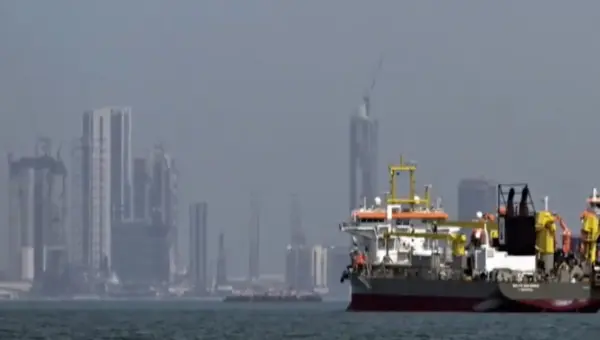
Iran Blocks China Ships, Exposing Beijing’s Weak Grip
Iran's recent decision to block Chinese ships at the Strait of Hormuz is exposing the limits of Beijing's influence in the Middle East. This action is causing delays and cancellations for Chinese manufacturers, turning a perceived geopolitical win into an economic strain.
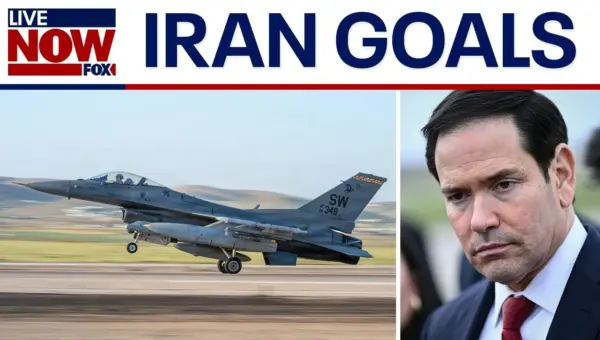
Rubio: US Can Achieve Iran War Goals Without Troops
Senator Marco Rubio outlined a strategy to counter Iran without deploying U.S. ground troops, focusing on weakening the regime and enhancing maritime security. He also criticized Cuba's economic system and expressed concerns about West Bank violence.


Israel Escalates Iran Strikes, Warns of Wider War
Israel has launched significant strikes inside Iran following continued missile fire, warning of further escalation. The conflict risks wider regional instability and economic disruption, especially concerning the Strait of Hormuz.