Nvidia Unveils Nemo Claw, Reshaping Enterprise AI Agents
Nvidia has launched Nemo Claw, an enterprise-focused platform for AI agents, building on the Open Claw open-source project. The platform aims to provide secure, scalable AI task automation for businesses, alongside advancements in graphics technology and physical AI.

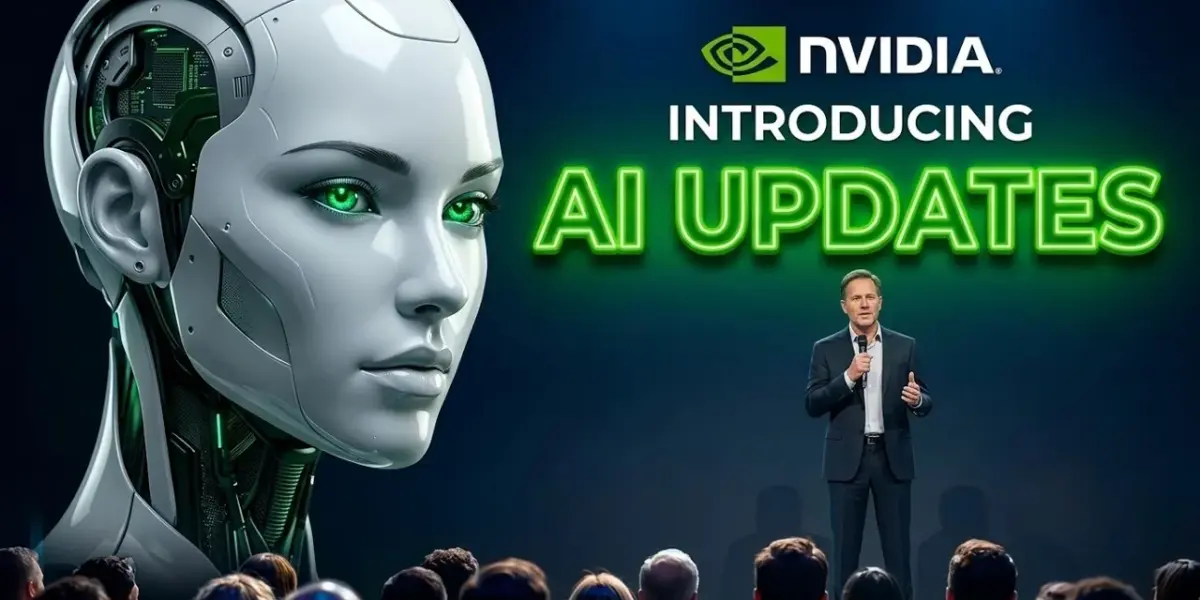
Nvidia Unveils Nemo Claw, Reshaping Enterprise AI Agents
Nvidia CEO Jensen Huang has officially launched Nemo Claw, a significant new platform aimed at empowering enterprise AI agents. This move comes in the wake of the rapid rise and subsequent acquisition of the open-source project Open Claw by OpenAI, which had raised concerns among businesses about the future of enterprise AI deployment. Nvidia has stepped in to fill this perceived void, offering a secure and adaptable solution for companies looking to leverage AI agents for task automation.
Understanding the Open Claw Phenomenon
The excitement around Open Claw, described as the most popular open-source project in history, stems from its ability to allow AI to run directly on a user’s machine, performing a wide range of tasks. Its rapid adoption, surpassing Linux’s historical growth, underscores its disruptive potential. Essentially, Open Claw provides the foundational operating system for what are being termed “agent computers” or “personal agents.” This system is capable of managing resources, accessing tools and file systems, interacting with large language models (LLMs), scheduling tasks, decomposing complex prompts into step-by-step actions, spawning sub-agents, and handling input/output across various modalities, including voice and even gestures.
The analogy drawn is that just as Windows enabled the personal computer revolution and HTTP/HTML fueled the internet, Open Claw is poised to enable the era of personal AI agents. This has led to a critical strategic question for every company: “What’s your Open Claw strategy?”
Nvidia’s Nemo Claw: Enterprise-Ready AI Agents
Nvidia’s Nemo Claw is presented as an enterprise-ready version of Open Claw, built with security, privacy, and scalability in mind. Key features include:
- Built-in Security and Privacy: Designed to meet enterprise-grade requirements for data protection.
- Hardware Agnosticism: The platform can operate regardless of whether a company’s infrastructure is based on Nvidia chips, promoting wider adoption.
- Enterprise IT Integration: Nemo Claw aims to transform traditional enterprise IT by enabling AI agents to execute tasks, manage workflows, and interact with existing systems of record.
- Open Shell Integration: Incorporates “Open Shell,” a component that enhances security and allows integration with existing enterprise policy engines, acting as a guardrail for AI agent actions.
- Custom Model Support: Facilitates the use of custom AI models, including Nvidia’s own advanced models like Neotron 3, allowing companies to fine-tune and post-train them for domain-specific intelligence.
Nvidia’s commitment to advancing AI models is highlighted through its “open model initiative.” The company is continuously developing and improving its models, such as Neotron, Cosmos, and Groot, aiming to keep them at the forefront of leaderboards across various domains like reasoning, robotics, and self-driving cars. Nemo Claw aims to leverage these advanced models, offering a powerful foundation for enterprises.
Nvidia’s Broader AI Ecosystem Push
Beyond Nemo Claw, Nvidia announced several other significant updates:
DLSS 5: A Generative AI Approach to Graphics
Nvidia also introduced DLSS 5, a new iteration of its Deep Learning Super Sampling technology. While some have labeled it an “AI slop filter,” Huang describes it as a fusion of controllable 3D graphics with generative AI. DLSS 5 applies generative AI to specific game elements to enhance graphics, potentially rendering details that would otherwise be too computationally expensive. This technology could have profound implications for upscaling older games to modern visual standards and represents a new paradigm in game graphics enhancement, blending structured data with probabilistic AI for realistic and controllable visual output.
Physical AI and Robotics Advancements
The “age of physical AI and robotics” is also a key focus for Nvidia. The company is developing AI systems for autonomous vehicles and robots that possess reasoning capabilities. Technologies like NVIDIA Alpamo provide vehicles with the ability to narrate their actions and explain their decisions. For robotics, Nvidia is addressing the challenge of real-world unpredictability by leveraging AI-generated data through simulation. Tools like:
- Isaac Lab: An open-source platform for robot training and evaluation in simulation.
- Newton: For extensible, GPU-accelerated physics simulation.
- Cosmos World Models: For neural simulation.
- Groot: Open robotics foundation models for robot reasoning and action generation.
These tools are designed to help developers close the “physical AI data gap” by generating synthetic data and training policies at scale. Companies like Paratas AI, Skilled AI, Humanoid, Hexagon Robotics, Foxconn, Noble Machines, and Disney Research are already utilizing these Nvidia platforms to accelerate robot development and training.
Why This Matters
Nvidia’s announcements, particularly the launch of Nemo Claw, signal a significant shift towards agent-based computing within enterprises. By providing a secure, adaptable, and enterprise-ready platform built on the momentum of Open Claw, Nvidia is positioning itself as a key enabler of AI-driven automation for businesses. The emphasis on security, privacy, and hardware agnosticism addresses critical enterprise concerns, potentially accelerating the adoption of AI agents across industries. Furthermore, the advancements in DLSS 5 and physical AI demonstrate Nvidia’s continued commitment to pushing the boundaries of AI across diverse fields, from gaming to robotics and autonomous systems.
Source: Nvidia Just Dropped NemoClaw And Other Huge AI Updates (YouTube)

Related Articles


Claude Co-work Unlocks AI Agents with New Projects Feature
Claude Co-work has launched a new 'Projects' feature, simplifying the use of advanced AI agents. This system allows users to organize tasks and contexts into separate project folders, enhancing AI interactions and personalizing outputs like news briefings. A Claude Plus subscription is required, with referral codes offering free trial periods.

AI Agents Need a Better Way to Talk to Us
The next big opportunity for startups lies in creating the ideal interface for managing multiple AI agents. Current methods are clunky, but new tools are emerging. The right system could unlock powerful AI collaborations for complex tasks.

Nvidia’s New Chips Fuel AI Agent Boom, Eye $10 Trillion
Nvidia's new Vera Rubin AI platform, featuring specialized chips like the Grok LPU, is poised to revolutionize AI processing for autonomous agents. This innovation is expected to drive massive data center spending and solidify Nvidia's position as a potential $10 trillion company.