Oil Prices Brace for Impact as Geopolitical Tensions Simmer
Geopolitical tensions in the Middle East are putting pressure on diesel prices, while voters show support for stability efforts. International cooperation on securing the Strait of Hormuz appears limited, raising concerns for global oil markets. Meanwhile, legislative debates highlight deep political divisions.

Global Oil Markets Face Uncertainty Amid Middle East Tensions and Shifting Alliances
Global oil prices are under scrutiny as geopolitical instability in the Middle East continues to ripple through energy markets. While the national average for regular unleaded gasoline remains significantly below its all-time high, diesel prices are experiencing greater pressure, impacting businesses and transportation sectors. Experts suggest a direct link between the conflict in the Middle East and pump prices at home, with potential implications for future oil futures.
Voters Align with Trump on Stability Efforts
According to Florida Congressman and Gubernatorial Candidate Byron Donalds, American voters are showing strong support for former President Trump’s initiatives aimed at restoring stability in the Middle East and the broader world order. A key focus of this support is the stance against the Iranian regime’s pursuit of nuclear weapons, a position widely seen as clear and necessary by the public. The ongoing situation in the Strait of Hormuz, a critical chokepoint for global oil transit, is a particular concern.
“The American people are firmly behind that position and behind President Trump. When it comes to the Strait of Hormuz, many, I mean, yes, nobody wants to see gas prices go up. And I think what the President was talking about in particular today with potentially some other countries coming in to help stabilize the Strait of Hormuz, that will go a long way to actually seeing oil futures actually decrease over the next week or so which then is something will kind of get flushed out in the in the wash when it comes to diesel in particular.”
International Cooperation Lags on Strait of Hormuz Security
Despite the critical importance of securing the Strait of Hormuz for global commerce, international cooperation appears to be faltering. Nations such as France, the U.K., Japan, Australia, and Germany have shown reluctance to actively participate in efforts to stabilize the region. Congressman Donalds expressed disappointment with this response, urging these leaders to recognize their responsibility in protecting vital shipping lanes, a role historically undertaken by the United States Navy.
“These are nations who have for decades relied on the beneficence of America, and they have a duty to at a minimum make sure Strait of Hormuz is protected for global commerce,” Donalds stated. He emphasized that ensuring the free flow of oil benefits these nations as much as it does the United States. The congressman also pointed to reports suggesting a degradation of Iran’s military capabilities, which could potentially lead to a de-escalation of the conflict and a subsequent positive impact on global oil prices.
Save America Act and Political Divisions Emerge
Beyond energy market concerns, the political landscape is also shaped by legislative debates, including the upcoming Senate debate on the Save America Act. Proposed amendments, such as banning gender transition procedures for minors and barring biological males from women’s sports, are highlighted as common-sense measures supported by a broad segment of the American populace. Former President Trump has expressed confidence that these issues resonate with voters and could pose challenges for the Democratic party.
However, Congressman Donalds anticipates significant political hurdles. He predicts that a segment of Senate Republicans may prioritize procedural matters over legislative action, while Democrats are expected to oppose measures such as voter ID and protections for minors and women’s sports. This divide, he argues, demonstrates a disconnect between Democratic leadership and the prevailing will of the American people, regardless of political affiliation or socioeconomic status.
Market Impact and What Investors Should Know
- Oil Price Volatility: Geopolitical events in the Middle East, particularly concerning the Strait of Hormuz, can lead to significant fluctuations in crude oil and refined product prices. Investors should monitor developments in the region closely.
- Diesel Market Sensitivity: The transcript highlights that diesel prices are particularly sensitive to disruptions, impacting the logistics and transportation sectors. This can have a cascading effect on business costs and consumer prices.
- Global Economic Interdependence: The reliance of numerous countries on the Strait of Hormuz for oil transit underscores the interconnectedness of the global economy. Failure to ensure stable shipping lanes can have widespread economic consequences.
- Political Influence on Markets: Legislative debates and political rhetoric, as seen with the Save America Act, can influence market sentiment and create sector-specific pressures, though direct market impact from these particular legislative points is less immediate than from energy security issues.
The current geopolitical climate presents a complex backdrop for energy markets. While immediate relief at the pump may depend on de-escalation in the Middle East and successful international cooperation, the underlying pressures on diesel fuel and the broader energy supply chain remain a key consideration for businesses and investors alike. The political discourse surrounding these issues adds another layer of uncertainty, potentially influencing policy decisions that could affect energy markets in the longer term.
Source: Americans stand with Trump on this position, GOP lawmaker says (YouTube)

Related Articles

Stocks Ignore War Risks, Focus on “Taco Moments”
Stock markets appear to be overlooking the severe supply chain risks stemming from the Iran conflict, focusing instead on potential diplomatic de-escalations. While the S&P 500 shows resilience, bond and commodity markets signal deep concern over disruptions to critical resources like LNG, helium, and fertilizers.

US Strikes Cripple Iran’s Military Might, CENTCOM Reports
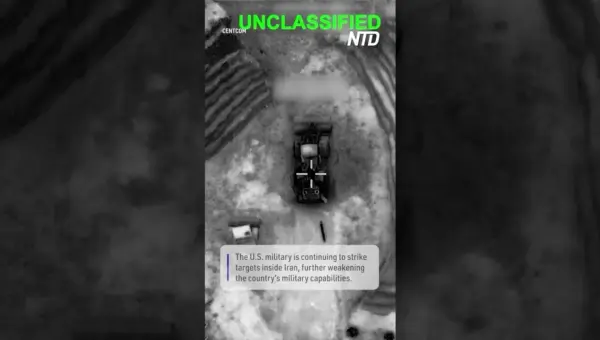
U.S. Central Command reports ongoing strikes inside Iran are significantly weakening its military power. This direct action aims to reshape regional security dynamics, but carries risks of escalation. The long-term impact depends on Iran's response and ability to adapt.

U.S. Iran Tensions Rise Amid Shifting Alliances
Rising tensions between the U.S. and Iran are creating a volatile geopolitical situation. With conflicting signals on de-escalation and potential shifts in alliances like NATO and U.S.-Israel relations, the path forward remains uncertain. The global economy and regional stability hang in the balance.