Trump’s ‘Illegal War’ Accusations Spark Veteran Outrage
Concerns rise over alleged illegal war acts and disregard for international law by the Trump administration. Veterans and analysts voice alarm, drawing parallels to past conflicts and questioning the erosion of accountability and checks and balances within the U.S. military.

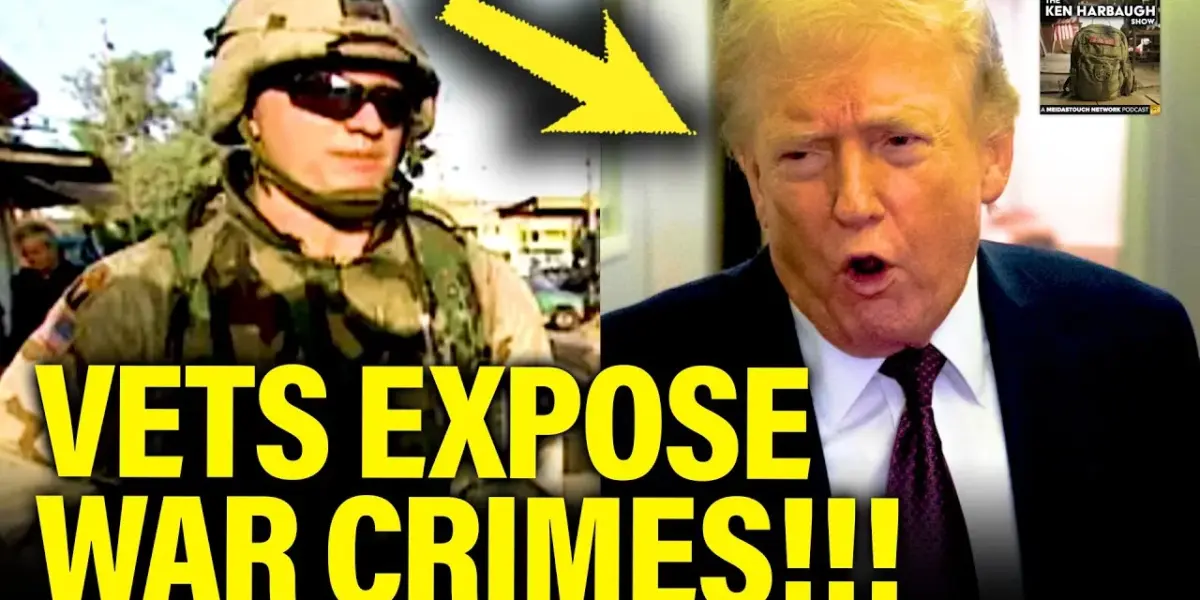
Trump’s ‘Illegal War’ Accusations Spark Veteran Outrage
Recent claims suggest that former President Donald Trump’s administration may have engaged in actions that violate the laws of armed conflict, prompting significant concern from veterans and national security analysts. The core of the accusation revolves around alleged violations of the Geneva Conventions and the U.S. Military’s Uniform Code of Justice (UCMJ), particularly concerning the treatment of enemy combatants and the targeting of civilian infrastructure.
Defining War Crimes and ‘No Quarter’
The discussion centers on statements attributed to figures within the Trump administration, including a reported proclamation that the U.S. military would not be bound by “stupid rules of engagement.” This sentiment, coupled with accusations of a “double tap strike” on a girls’ school in Iran and subsequent alleged deception by the President, has drawn sharp criticism. Experts define offering “no quarter” – meaning no chance of surrender to an enemy combatant who no longer poses a threat – as a direct violation of the laws of armed conflict. The U.S. is a signatory to the Hague Regulations of 1907 and the Geneva Conventions of 1949, which outline humane treatment for prisoners and those attempting to surrender. The Department of Defense’s Law of War manual explicitly forbids declaring that “no quarter will be given.”
Echoes of Past Conflicts
Paul Reichoff, founder of Iraq and Afghanistan Veterans of America, draws parallels between the current situation and the lead-up to the Iraq War. “Deja vu all over again, man. Here we are again,” Reichoff stated, reflecting on decades of advocating for veterans and critiquing U.S. foreign policy. He argues that past failures in Iraq and Afghanistan, which resulted in prolonged conflicts and significant loss of life, have not been adequately learned from. This sentiment is echoed by concerns from active service members who are reportedly questioning the ethical implications of U.S. military actions and the integrity of official statements, particularly when civilian casualties are involved.
Incompetence or Strategy?
A significant point of contention is whether the perceived shortcomings in planning and execution are due to sheer incompetence or a deliberate strategy. Reichoff suggests that the administration’s approach, characterized by a “rush” to achieve objectives without covering flanks or ensuring accountability, is a conscious tactic. “Failing to plan is planning to fail. But I also will warn people and bring attention to the fact that this is also the way they do business. This is a strategy,” he explained. This “all gas, no breaks” approach, he posits, allows the administration to avoid accountability by never slowing down to address the consequences of their actions. The lack of preparedness in critical areas, such as the strategic petroleum reserves, further fuels these concerns.
The Role of Military Leadership and Checks and Balances
The transcript highlights a concerning lack of pushback from senior military leaders. Reichoff notes that unlike countries with strong traditions of accountability for military failures, the U.S. has seen a generation of military leaders who, despite presiding over prolonged conflicts, now appear on television discussing future wars. There is a call for military leaders to “break glass” and engage in the political process when national security and international law are at stake, rather than adhering to a norm of staying out of politics. The potential removal of checks and balances, such as Secretary Esper and General Millie who previously provided pushback, is seen as leaving President Trump with fewer constraints. The role of the Chairman of the Joint Chiefs of Staff, Dan Kaine, is presented as a critical, albeit potentially terrifying, circuit breaker in preventing potentially disastrous actions, such as the use of nuclear weapons or the invocation of the Insurrection Act.
Governors as a Guardrail
The analysis also points to governors, particularly those who command their state’s National Guard, as a potential guardrail against executive overreach. Instances where governors have pushed back against federal directives, such as the alleged attempt to federalize National Guard troops for deployment in Washington D.C., are cited as examples of resistance. While Trump has reportedly shifted tactics when encountering such resistance, the overall strategic push forward continues through different means, such as the use of Immigration and Customs Enforcement (ICE).
The Unrestrained President and Global Instability
A key differentiator highlighted is the perception of Trump as an “unrestrained” president. Unlike previous administrations that operated under the assumption of a generally benevolent U.S. president, the current situation is seen as unprecedented. The institutions built by Americans, including the UN and NATO, were predicated on a U.S. president acting in good faith. Trump’s administration is accused of breaking these systems. Furthermore, the potential for collateral damage is deemed far worse due to the volatile region, the disruption to the global economy, and the threat posed by unsecured nuclear materials in Iran. The narrative questions the reliability of leaders worldwide, including authoritarian regimes, and the implications for global stability.
A Call for a Counter-Narrative
The discussion concludes with a strong call for a counter-narrative to the one presented by the Trump administration. The sentiment is that even if Trump were removed from office, the damage and instability he has unleashed would require a generation to repair. The urgency for independent voices, particularly those of combat veterans, to offer truth and a vision for responsible governance is emphasized. The effort to organize independent veterans and unaffiliated voters to support democratic candidates and uphold the Constitution is presented as a crucial component of this fight. The message is clear: Donald Trump does not represent the values of most Americans, and a concerted effort is underway to reclaim power and restore accountability.
Why This Matters
This analysis is critical because it touches upon fundamental aspects of national security, international law, and democratic governance. The accusations of war crimes and the disregard for established protocols raise profound questions about U.S. foreign policy and its adherence to international norms. The discussion about incompetence versus strategy highlights the potential for deliberate destabilization and the erosion of accountability. The role of military leadership and the potential breakdown of checks and balances are paramount in preventing potentially catastrophic decisions. Furthermore, the call for a counter-narrative and the mobilization of independent voters underscores the deep divisions within the U.S. and the ongoing struggle to define the nation’s identity and its place in the world. The implications for global stability, particularly in volatile regions, are immense, and the potential for a rogue American presidency to destabilize international relations cannot be overstated.
Implications, Trends, and Future Outlook
The implications of these allegations are far-reaching. If proven, they could lead to international condemnation, sanctions, and a significant erosion of U.S. credibility on the global stage. The trend towards increasingly aggressive rhetoric and potentially unlawful actions by political leaders, coupled with a seemingly compliant or silenced military establishment, is a dangerous precedent. The future outlook suggests a continued struggle to uphold democratic values and international law against forces that appear willing to disregard them. The emphasis on the independent voter and veteran mobilization indicates a growing recognition that traditional political structures may be insufficient to counter these challenges, necessitating grassroots efforts to preserve democratic norms.
Historical Context and Background
The historical context provided by the Iraq and Afghanistan wars is crucial. These conflicts, initiated under the Bush administration, were marked by controversial justifications, significant civilian casualties, and prolonged engagements that ultimately did not achieve their stated objectives. The debate over the WMD narrative used to justify the Iraq War serves as a stark reminder of how strategic misrepresentations can lead to devastating consequences. The current discussion about potential nuclear materials in Iran and the lack of a clear plan to secure them echoes the WMD debate, highlighting a recurring pattern of engaging in conflict without adequate foresight or preparedness. The post-9/11 era has seen a significant expansion of executive power in matters of national security, and the current discourse suggests a further challenge to the established legal and ethical frameworks governing the use of military force.
Source: Vets BLOWS WHISTLE on Trump ILLEGAL WAR Acts (YouTube)

Related Articles

FBI Director’s Hacked Emails Expose Personal Life, Security Failures
FBI Director Cash Patel's personal email account was reportedly hacked by Iranian-linked hackers, exposing sensitive personal information and raising serious questions about his security practices and competence. The breach includes details about his private life, finances, and alleged visits to adult websites.
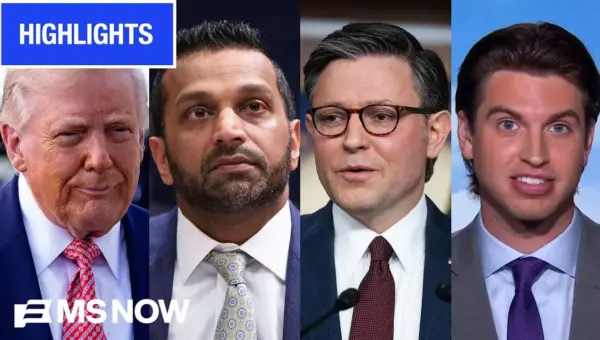
Iran Hackers Target FBI Director; US Weighs Troop Buildup Amid Tensions
Iran-linked hackers claim to have breached FBI Director Kash Patel's personal emails, publishing sensitive documents. This comes as the U.S. extends a deadline for Iran to reopen the Strait of Hormuz, while the Pentagon reportedly considers sending thousands more troops to the Middle East amid escalating tensions. Experts express concern over Iran's cyber capabilities and the strategic direction of U.S. policy.

Trump’s ‘Loser’ Comments Reveal Deep Insecurity, Risky Foreign Policy
Donald Trump's controversial "loser" comment reveals a deep insecurity driving his foreign policy, leading to poorly planned actions like the escalating Iran crisis. This pattern of surrounding himself with less capable individuals, rather than challenging experts, poses significant risks for international stability and suggests a dangerous approach to critical global decisions.