China’s Shadow Broker: Iran’s Military Ties Under Scrutiny
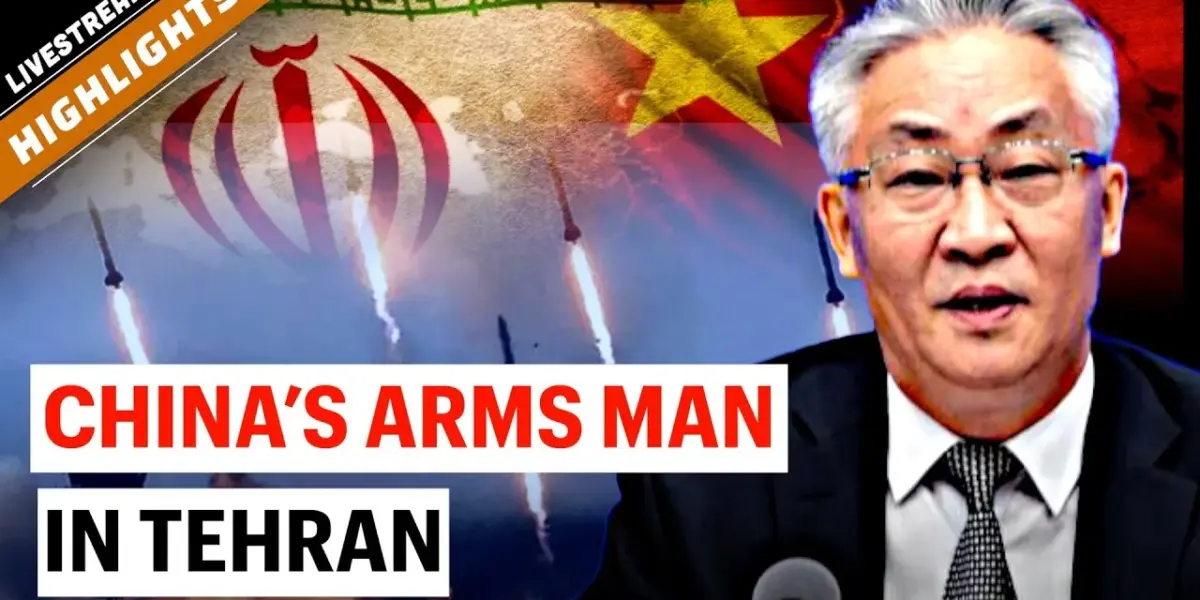
Vice Premier Ding Xuexiang, with a background in explosives engineering and arms dealing, is reportedly managing China's sensitive military ties with Iran. His unique expertise and rapid political rise highlight Beijing's strategy of leveraging industrial connections for geopolitical gain, even as the risks of reputational damage loom large.

China’s Shadow Broker: Iran’s Military Ties Under Scrutiny
As the protracted conflict in Iran continues to reshape global geopolitics, China finds itself navigating a treacherous diplomatic tightrope. Beijing’s strategic calculus dictates that Iran is too vital an economic and geopolitical partner to abandon, yet overt support carries significant risks. Beneath the surface of missile technology and drone warfare lies a sophisticated ecosystem of industry, technology, and international alliances, with a prominent figure at its nexus: Vice Premier Ding Xuexiang.
The Architect of Beijing’s Iran Strategy?
Ding Xuexiang, a member of the Communist Party’s Politburo and a close confidant of Xi Jinping, has emerged as a pivotal player in managing China’s complex relationship with Iran, particularly concerning military and technological cooperation. His background offers a unique lens through which to understand the evolution of these ties.
From Explosives to Tehran’s Corridors
Ding’s early career is deeply rooted in China’s military-industrial complex. A graduate of the Beijing Institute of Technology, renowned for its engineering programs, he specialized in explosives engineering. His professional journey then led him to Norinco (China North Industries Group), a colossal state-owned enterprise integral to China’s defense manufacturing. Norinco’s extensive portfolio, ranging from armored vehicles to advanced electronics, underscores its significance.
However, Norinco’s global reach, particularly its role in the international arms trade, is where Ding’s trajectory becomes particularly noteworthy. For a substantial period in the late 1980s and 1990s, Ding was not in Beijing but stationed in Tehran. He served in key representative roles for Norinco’s operations in Iran, effectively managing defense trade and commercial activities. In certain circles, he gained a reputation as a formidable arms dealer, cultivating an intimate understanding of the Middle Eastern political landscape and the intricate industrial networks linking Chinese state firms with Iranian entities.
A Meteoric Rise Fueled by Experience
Ding’s success in the Middle East accelerated his ascent within Norinco, culminating in his appointment as Party Secretary at a remarkably young age. Public records indicate that in 2004, while serving as President of Norinco, he was instrumental in securing an $800 million contract to construct Tehran’s Metro Line 4. Such large-scale infrastructure projects often served as more than mere construction deals; they were frequently embedded within broader frameworks of industrial cooperation, technology transfer, and long-term strategic partnerships between Chinese state-owned enterprises and foreign governments.
This firsthand experience in Iran and his deep immersion in China’s military-industrial complex positioned Ding as a rare asset among emerging Chinese leaders. His career took a significant turn in 2013, following Xi Jinping’s ascension to power, when he transitioned from Norinco to local politics, swiftly climbing the ranks to become a provincial party secretary and, subsequently, a member of the Politburo in 2022.
The General’s Mandate: Coordinating Defense Supply Chains
Ding’s appointment as Vice Premier in March 2023 solidified his position as a top-tier leader, a promotion widely attributed to Xi Jinping’s emphasis on military-civil fusion and defense modernization. Ding embodies this agenda, possessing expertise in military technology, experience managing a major defense conglomerate, and a proven track record in industrial governance and international network building.
Recent reports suggest Ding has become increasingly active in coordinating China’s engagement with Iran amidst heightened Middle Eastern tensions. Multiple sources within the Chinese Communist Party (CCP) system indicate that Ding is the key coordinator for China-Iran arms trade networks and negotiations. Following escalations in the region, Ding was reportedly tasked directly by Xi Jinping to leverage his military-industrial background to manage defense supply chains and maintain technological and industrial links with Iran and other Middle Eastern regimes.
A Strategic Observation Window
Beyond direct arms trade, China’s technological engagement with Iran is multifaceted. Reports suggest that Chinese tech firms have been involved in building Iran’s telecommunication networks and surveillance systems since at least 2016. Furthermore, Chinese technology is reportedly employed to monitor U.S. military movements in the Persian Gulf, creating an invisible yet crucial pillar of the China-Iran relationship.
This technological transfer is not without risk for China. Unlike Western nations, China’s military hardware has seen limited large-scale combat testing. The performance of Chinese systems in real-world conflicts, such as in Iran, could significantly impact Beijing’s reputation as a global arms supplier. For Ding, whose career is intrinsically linked to the defense industry, such outcomes carry substantial political weight.
The Double-Edged Sword of Expertise
Ding Xuexiang’s deep understanding of Iran and his extensive experience in the military-industrial complex, which propelled his rapid rise, could also become a liability. In the high-stakes political environment of the CCP, where accountability is often sought when things go awry, the official most closely associated with the Iran relationship could become a convenient scapegoat. Even if he is not directly implicated in any technical failures or policy missteps, the political winds within Beijing can shift unpredictably. The performance of every missile launched by Iran, and its ultimate fate, may well be scrutinized not only for its impact on the conflict but also for its potential implications on Ding Xuexiang’s own political future.
Why This Matters
The elevation of Vice Premier Ding Xuexiang to a central role in managing China’s sensitive military and technological ties with Iran underscores a critical trend: the increasing integration of China’s defense industry with its foreign policy and geopolitical strategy. Ding’s unique background—a former arms dealer turned high-ranking official—highlights Beijing’s willingness to leverage deep industry expertise and personal networks to advance its interests abroad, even in highly volatile regions.
Implications and Future Outlook
This development has several critical implications. Firstly, it signals Beijing’s commitment to maintaining its strategic partnership with Iran, despite international pressure and the risks associated with supporting a nation under sanctions and involved in regional conflicts. Secondly, it suggests a more proactive and coordinated approach by China in managing its defense exports and technological collaborations, moving beyond purely commercial considerations to encompass strategic objectives. The potential for China’s military technology to be tested and scrutinized in real-world conflict scenarios carries significant reputational risks for Beijing, potentially impacting its standing as a global arms supplier.
Historical Context
China’s relationship with Iran has evolved significantly over the decades. Initially characterized by economic ties and a shared stance against U.S. influence, it has deepened to include significant military and technological cooperation. This cooperation has often occurred under the radar, facilitated by state-owned enterprises like Norinco, where individuals like Ding Xuexiang gained invaluable experience. The current situation represents an escalation, with a top-tier political leader now directly involved in coordinating these sensitive links, reflecting a strategic maturation and a greater willingness to engage in complex geopolitical maneuvering.
Trends
Several trends are evident: the growing influence of China’s military-industrial complex within the highest echelons of political power; the increasing sophistication of China’s defense export strategy; and Beijing’s growing assertiveness in projecting its influence in the Middle East. Ding Xuexiang’s prominent role exemplifies the fusion of industrial expertise with political power, a model that Xi Jinping appears to favor for advancing China’s global ambitions.
The future outlook suggests that China will continue to tread a fine line, balancing its strategic interests with the need to manage international perceptions. The effectiveness of Chinese military technology in ongoing conflicts will be a key factor in shaping both regional dynamics and China’s global standing. For Vice Premier Ding, his career trajectory is now inextricably linked to the outcomes of these complex and high-stakes international engagements.
Source: The Vice Premier Managing Beijing’s Iran Military Links (YouTube)

Related Articles
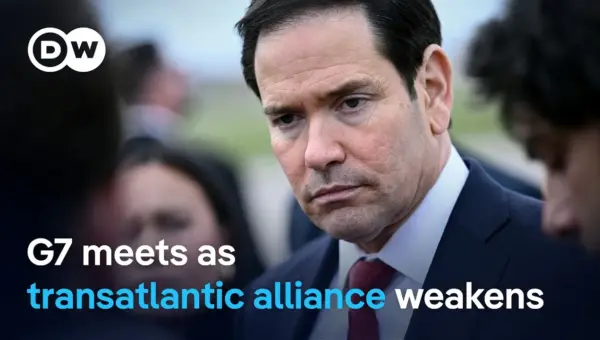
G7 Allies Clash Over Iran War Strategy, Urge Focus on Russia
G7 foreign ministers met in Paris, revealing deep divisions over the U.S. war with Iran. European allies urged the U.S. to pressure Russia, linking its actions to the conflict and fearing support for Ukraine will wane.
Iran Blocks China Ships, Exposing Beijing’s Weak Grip
Iran's recent decision to block Chinese ships at the Strait of Hormuz is exposing the limits of Beijing's influence in the Middle East. This action is causing delays and cancellations for Chinese manufacturers, turning a perceived geopolitical win into an economic strain.
Trump’s “Walk Away” Tactic Signals Tougher Stance on China
Retired Air Force Brigadier General David Stillwell believes President Trump's strategy of being willing to walk away from negotiations puts pressure on China. This tactic, combined with US global actions and strengthened alliances, signals a more assertive American foreign policy.