Vance’s Iran Stance Shift: A Pivot or Political Expediency?
Vice President JD Vance's response to questions about his stance on the Iran conflict reveals a perceived shift from past skepticism of foreign intervention. Critics argue his evolving position is driven by political expediency rather than steadfast principles, highlighting the complex nature of political maneuvering.

Vance’s Iran Stance Shift: A Pivot or Political Expediency?
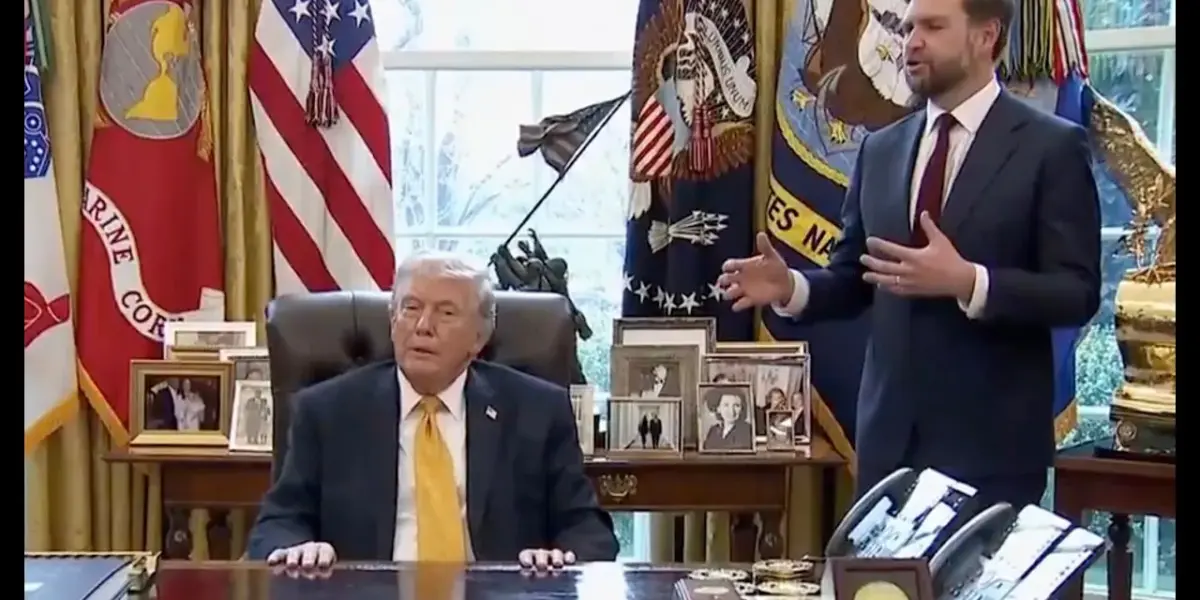
The political landscape is often a theater of evolving positions, where past pronouncements can become inconvenient baggage in the pursuit of present power. This dynamic is starkly illustrated in the recent interactions surrounding Vice President JD Vance and the administration’s stance on Iran. A questioning by reporter Phil Mattingly, and Vance’s subsequent responses, highlight a perceived shift from his previously articulated skepticism of foreign intervention to a more aligned, albeit carefully worded, position with the current administration’s actions.
The Reporter’s Challenge
The exchange began with two pointed questions directed at Vice President Vance. First, Vance was asked about being labeled a “fraud” by Democrats and his reaction to it. Second, and perhaps more critically, given his past skepticism of foreign adventurism, he was pressed on whether he was “completely on board with the current war in Iran.” Vance’s initial reaction, calling the “fraud” label a “good title” and stating, “I like it,” seemed to deflect the deeper implications of the first question. However, it was his response to the Iran query that drew the most scrutiny.
Vance framed the administration’s actions as tackling a problem that had “festered in this country for far too long,” positioning the current administration as distinct for its willingness to confront such issues. He then attempted to preemptively characterize the reporter’s line of questioning as an effort to “drive a wedge between members of the administration, between me and the president.” He reiterated the consistent stance that “Iran should not have a nuclear weapon” and stated, “We have taken this military action under the president’s leadership.” He concluded by urging prayers for the success and safety of the troops involved.
Past Pronouncements vs. Present Alignment
The core of the controversy lies in the apparent divergence between Vance’s historical statements and his current alignment. The transcript highlights past instances where Vance expressed significant reservations about foreign intervention. He is quoted as saying, “Our interest, I think, very much is in not going to war with Iran, right? It would be huge distraction of resources. It would be massively expensive to our country.” He also positioned Donald Trump as a “candidate of peace through strength, defending America, protecting the people who serve, and preventing these crazy wars from breaking out all over the country.” These statements painted Vance as an anti-interventionist figure, a narrative that seemed to be challenged by his current role and statements regarding the Iran situation.
When directly confronted with this apparent contradiction, Vance attributed the difference to the presence of a “smart president” in Donald Trump, contrasting him with “dumb presidents” of the past. He expressed trust in Trump’s ability to “get the job done” and avoid repeating past mistakes. This explanation, however, was met with skepticism by critics who saw it as a contortion to align with Trump’s current policy, rather than a genuine evolution of his own principles.
The “Skeptical Voice” Narrative and Its Rebuttal
Further complicating the narrative is a Politico report suggesting Vance was a “skeptical voice in White House on Iran strikes.” This report, which Vance’s team is alleged to have facilitated, positioned him as a cautious advisor. However, this portrayal was directly contradicted by reporting from The New York Times. According to the Times, Vance was not merely skeptical but, in a White House situation room meeting, argued that if the U.S. was going to strike Iran, it “should go big and go fast.” This suggests a position not of restraint, but of advocating for a more aggressive initial response.
When pressed by Bill Weir on his advice to the president regarding Iran and any concerns about economic fallout, Vance invoked the classified nature of the situation room. He cited security protocols and the importance of confidential discussions between the president and his advisors, stating he would not reveal what was said to avoid legal repercussions and to maintain the integrity of presidential deliberations. Critics, however, interpreted this as a convenient evasion, contrasting his refusal to disclose his specific advice in a public forum with the alleged placement of stories to shape his image.
Ambition Over Ideology?
The transcript repeatedly suggests that Vance’s shifts in position are driven by political ambition rather than steadfast ideology. The commentary points to his past criticisms of Donald Trump, including calling him “America’s Hitler” and a “terrible candidate.” Yet, Vance has since publicly stated, “I was wrong about Donald Trump. I didn’t think he was going to be a good president. He was a great president.” He frames this as an honest change of mind, acknowledging he was proven wrong and is now working to ensure Trump’s re-election. This pivot is presented by Vance as an opportunity to connect with voters who may have shared similar initial doubts about Trump.
However, the prevailing interpretation from the transcript’s narrator is that Vance is a political actor whose primary motivation is power. His willingness to publicly disavow past strong criticisms and adopt a seemingly contradictory stance on foreign policy is seen as evidence of a lack of core principles, making him a figure who “stands for nothing other than his own shameless pursuit of power.” This perspective suggests that Vance’s current role and pronouncements are less about genuine conviction and more about strategic positioning within the current political power structure.
Why This Matters
This episode is significant for several reasons. Firstly, it underscores the fluid nature of political identity in contemporary American politics, where ideological consistency can be sacrificed for perceived strategic advantage. Secondly, it raises questions about the reliability of political figures when their public statements appear to shift dramatically based on their proximity to power. The contrast between Vance’s past anti-interventionist rhetoric and his current defense of an administration engaged in military action in the Middle East is a prime example of this phenomenon.
Furthermore, the alleged manipulation of media narratives – with Vance’s team reportedly planting stories to shape his image – highlights the increasing sophistication and importance of public relations in political maneuvering. The ability to control or influence the perception of one’s stance, even when that stance appears to contradict past positions, is a powerful tool in the modern political arena.
Implications and Future Outlook
The situation with JD Vance and the Iran conflict has broader implications for the Republican party and American foreign policy discourse. It suggests a potential softening of the anti-interventionist wing within the party, or at least a willingness for its prominent figures to align with more hawkish policies when politically expedient. This could embolden administrations to pursue more assertive foreign policies, with less internal party pushback.
For Vance himself, this episode will likely shape his political future. His ability to navigate these perceived inconsistencies will be a test for his credibility with both his base and the broader electorate. His defense of his evolving stance hinges on convincing the public that he is adaptable and willing to admit when he is wrong, rather than opportunistic. The outcome of this narrative will undoubtedly influence his standing in future political contests, particularly if he continues to be a prominent figure within a potential Trump administration.
Historical Context
The tension between interventionism and non-interventionism has been a recurring theme in American foreign policy throughout history. From debates over World War I and II to the Cold War and the post-9/11 era, the U.S. has oscillated between periods of engagement and isolationism. Figures who have historically championed non-intervention often face intense scrutiny when circumstances appear to demand a more active role. Vance’s situation echoes past instances where politicians have been accused of abandoning their stated principles for political gain, a charge that has been leveled against many figures across the political spectrum throughout American history.
The specific context of U.S.-Iran relations has also been fraught with decades of tension, making any military engagement highly sensitive and politically charged. The economic implications, such as rising gas prices mentioned in the transcript, further amplify the domestic political stakes of such foreign policy decisions, demanding careful communication and justification from administration officials.
In conclusion, the public questioning of JD Vance regarding his stance on Iran reveals a critical juncture where past anti-war rhetoric appears to clash with current policy alignment. Whether this represents a genuine pivot, a strategic adaptation, or a compromise of principles remains a subject of debate, but it undeniably highlights the complex and often contradictory nature of politics in the pursuit of power.
Source: Vance SQUIRMS when called out IN FRONT OF TRUMP (YouTube)

Related Articles
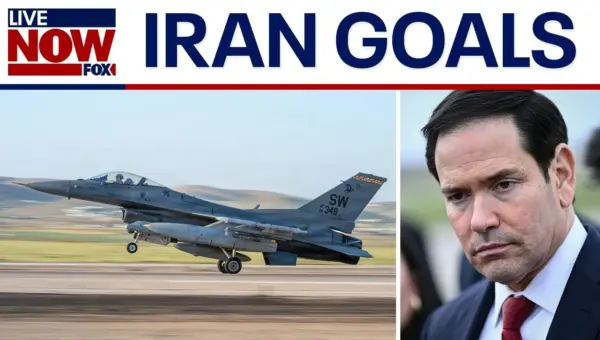
Rubio: US Can Achieve Iran War Goals Without Troops
Senator Marco Rubio outlined a strategy to counter Iran without deploying U.S. ground troops, focusing on weakening the regime and enhancing maritime security. He also criticized Cuba's economic system and expressed concerns about West Bank violence.
Trump’s “Walk Away” Tactic Signals Tougher Stance on China
Retired Air Force Brigadier General David Stillwell believes President Trump's strategy of being willing to walk away from negotiations puts pressure on China. This tactic, combined with US global actions and strengthened alliances, signals a more assertive American foreign policy.
Vance Tackles Federal Fraud: A New War on Waste
Vice President JD Vance has launched a new White House task force to combat fraud in federal benefit programs. The initiative aims to improve verification processes and foster inter-agency cooperation to stop waste and restore public trust. The task force highlights issues in states that allegedly operate on an honor system for benefit distribution.