Penis Politics: How a Feud Exposed MAGA’s Absurdity
A bizarre feud involving Megyn Kelly, Mark Levin, Donald Trump, and Marjorie Taylor Greene over a personal insult has exposed the absurd depths of MAGA politics. This episode highlights the erosion of serious discourse and the prioritization of spectacle over substance.

The Unhinged Arena of Online Politics: A Case Study in Absurdity
The digital public square, once envisioned as a forum for robust debate and the exchange of ideas, has increasingly devolved into a chaotic spectacle. Nowhere is this more evident than in the volatile realm of partisan politics, where personal insults and petty grievances often overshadow substantive discourse. A recent, bizarre spat involving media personalities Megyn Kelly and Mark Levin, with an assist from former President Donald Trump and Representative Marjorie Taylor Greene, offers a stark, albeit darkly humorous, illustration of this phenomenon. What began as a seemingly personal attack has spiraled into a public exhibition of MAGA-aligned figures engaging in what can only be described as profoundly unserious, and frankly, absurd, behavior.
From Personal Grievance to Public Spectacle
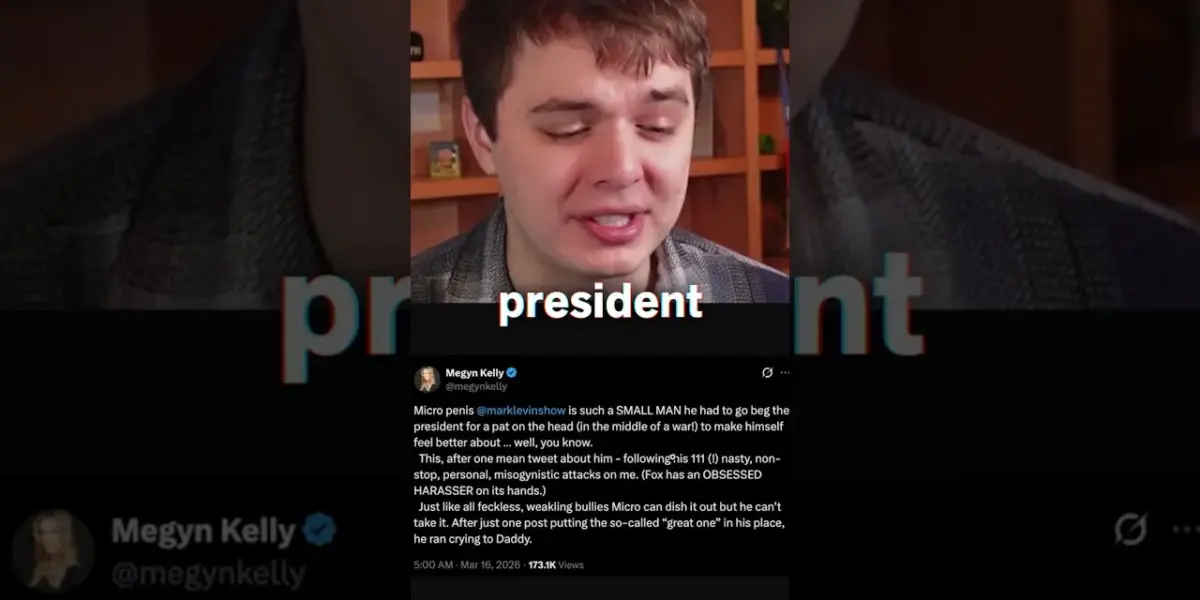
The catalyst for this peculiar drama appears to be a public feud between Megyn Kelly and Mark Levin. Kelly, in a series of unsparing remarks, directly attacked Levin, accusing him of obsessively tweeting about her in crude terms. Her assertion that his animosity stemmed from a perceived inadequacy – specifically, a “micro penis” – was not only deeply personal but also remarkably vulgar for public commentary, especially from someone who often positions herself as a serious commentator.
Kelly’s initial broadside was followed by a seemingly calculated escalation. She continued her attack the following morning, doubling down on the personal insult and connecting it to Levin’s relationship with Donald Trump. She framed it as Levin seeking validation from the former president, suggesting he needed a “pat on the head” amidst a geopolitical crisis (the context of which is not fully detailed in the provided transcript, but appears to involve a war initiated by Trump). The implication was that Levin, despite his public persona, was driven by insecurity, and that Trump’s engagement with this personal drama was a distraction from more pressing matters.
“Is it not absurd that the president of the United States amidst a war that he started is defending his friend from micro penis allegations? We’re joking here, right?”
The MAGA Ecosystem Responds: Loyalty and Absurdity Entwine
The unfolding drama soon drew in other prominent figures within the MAGA sphere. Marjorie Taylor Greene, a staunch ally of Trump, surprisingly entered the fray, offering her unequivocal support for Kelly’s public shaming of Levin. Her statement, “I wholeheartedly support Megan Kelly telling the world that Mark Leavvin has a micro penis,” highlights a peculiar loyalty dynamic. It suggests that in this political ecosystem, personal attacks, even those of a highly salacious nature, can be weaponized and embraced by allies if they are perceived to serve a broader agenda or target a perceived enemy, or in this case, a fellow traveler in distress.
Donald Trump himself eventually weighed in, posting a statement on Truth Social defending Mark Levin. Trump lauded Levin as a “truly great American patriot” and “tough, strong, brilliant,” bestowing upon him the nickname “the great one.” This response, however, was met with derision by observers who noted the stark contrast between Trump’s praise and the recent public accusation of a “micro penis.” The irony was not lost on those watching, as Trump’s endorsement felt like an attempt to restore Levin’s image after he had been publicly humiliated, a move that only amplified the absurdity of the situation.
Levin’s own response, shared publicly, expressed gratitude to Trump for his “beautiful note.” This exchange between Levin and Trump, framed as two powerful men bonding over a deeply personal and embarrassing insult, was seen by many as the nadir of the entire affair. It underscored the perception that political figures, even those wielding significant influence, could become entangled in trivial personal disputes, to the detriment of their public image and the seriousness of their political roles.
Why This Matters: A Symptom of a Deeper Malaise
This episode, while seemingly trivial and comical on its surface, is indicative of a broader trend within contemporary political discourse, particularly within the MAGA movement. It exposes a willingness to engage in ad hominem attacks, personal degradation, and a prioritization of loyalty and spectacle over substance and decorum.
- The Erosion of Serious Discourse: When political figures and their allies resort to personal insults of such a nature, it signals a departure from meaningful policy debate. The focus shifts from governance and ideology to personal vendettas and online warfare.
- The Power of Online Virality: The speed and reach of social media platforms like Twitter and Truth Social allow personal disputes to escalate rapidly into public spectacles. These platforms can amplify trivial matters, turning them into major news events within partisan circles.
- Loyalty Over Logic: The intervention of figures like Marjorie Taylor Greene and Donald Trump suggests a tribalistic loyalty within the MAGA movement. Support is offered not necessarily based on the validity of the situation but on allegiance to the perceived ‘side.’
- The Politicization of the Personal: The line between personal life and public persona has become increasingly blurred. Intimate details and personal insecurities are weaponized for political gain, demonstrating a disturbing lack of boundaries.
Historical Context and Future Outlook
While political figures have always engaged in personal attacks, the nature and public display of such feuds have evolved with technology. Historically, political insults were often confined to the pages of newspapers or behind-the-scenes whispers. Today, social media ensures that the most undignified exchanges are broadcast to millions in real-time. The Trump presidency, in particular, normalized a certain level of personal invective and public spectacle in political communication, a trend that appears to be continuing and evolving.
The future outlook suggests that such absurd public feuds are likely to persist, if not increase, within the polarized political landscape. As the stakes of political power remain high, and as social media continues to be a dominant communication tool, figures may increasingly resort to sensationalism and personal attacks to gain attention, rally their base, and undermine opponents. The “micro penis” feud, while an extreme example, serves as a potent reminder of how quickly the discourse can descend into the absurd, and how willing some political actors are to participate in such a descent.
Ultimately, this episode reveals a MAGA political ecosystem that, at times, seems more preoccupied with internecine squabbles and personal vindications than with the serious issues facing the nation. The willingness of prominent figures to engage in and amplify such a profoundly undignified public spat is not just a source of dark humor; it is a symptom of a political culture that has embraced chaos and personal vilification as legitimate tools of engagement, leaving many to question the state of political discourse and the priorities of its leading voices.
Source: Megyn Kelly’s “Micro Penis” Feud Turns MAGA Into Chaos #politics #fyp #new (YouTube)

Related Articles
Trump’s Name Everywhere: A ‘Stain’ on GOP Legacy?
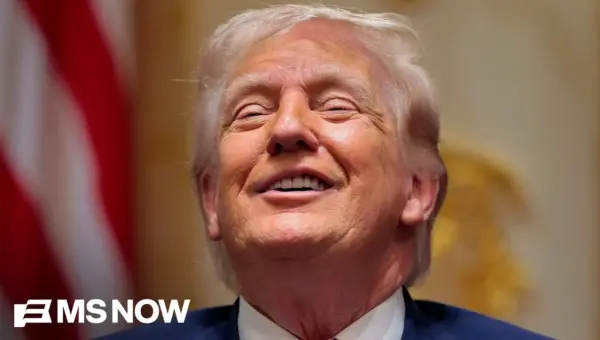
Former President Donald Trump's efforts to brand national symbols, including a proposed signature on dollar bills, spark debate. Critics view this as an authoritarian attempt to embed his legacy, potentially staining the Republican Party's history and contrasting with democratic ideals of public ownership.

Trump’s War Talk Stuns Financial Crowd
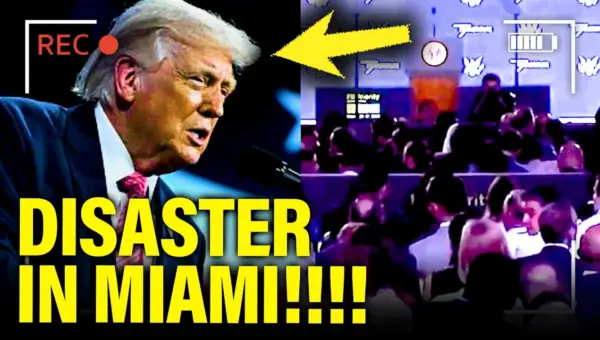
Donald Trump's recent speech in Miami focused on his foreign policy, particularly his critical views on NATO and his vision for international relations. He declared the U.S. would no longer defend NATO allies, questioned the value of existing alliances, and suggested renaming the Strait of Hormuz. The speech also touched on his personal views of success, his allies, and his perceived role as a global peacemaker.
Trump’s Warpath: New Threats Signal Imperial Ambitions
Recent statements from Donald Trump reveal a potential embrace of increased military action and interventionist foreign policy. This approach, characterized by critics as "imperialism 2.0," contrasts with his past promises of peace and has even drawn criticism from parts of his own base. The implications for U.S. global engagement and domestic priorities are significant.