Vance’s Tightrope: Navigating Trump’s War and Shifting Alliances
Vice President JD Vance faces a political tightrope, balancing his past anti-interventionist stance with President Trump's current military actions in the Middle East. The analysis dissects Vance's rhetoric, Trump's contradictory statements, and the broader implications for political consistency and public trust.

Vance’s Tightrope: Navigating Trump’s War and Shifting Alliances
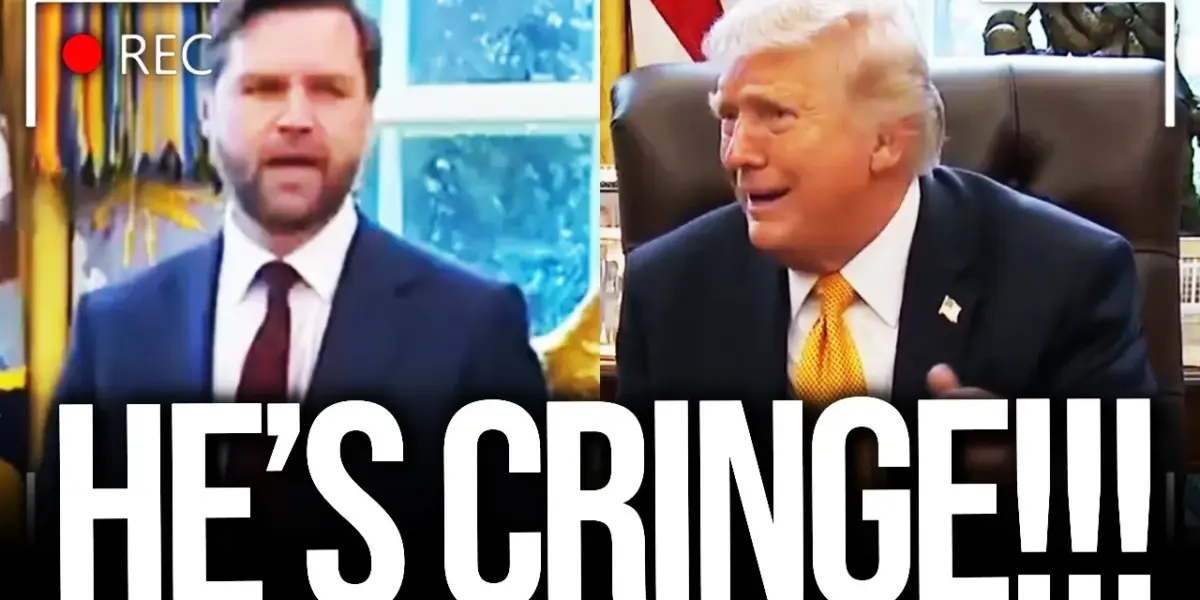
In a recent Oval Office exchange, Vice President JD Vance found himself in a precarious position, attempting to reconcile his past skepticism of foreign intervention with the current administration’s military actions in the Middle East. The situation, as highlighted by an analysis of the interaction, underscores the complex political maneuvering required when past convictions clash with present allegiances, particularly when standing beside a figure as dominant and unpredictable as Donald Trump.
The Paradox of Intervention
Vance has been a vocal critic of “regime change wars” and “forever wars,” advocating against repeating the costly and protracted conflicts seen in Afghanistan and Iraq. The irony, and Vance’s evident struggle, lies in his proximity to President Trump, who has initiated a new military operation in the Middle East. This creates a classic case of “mission creep” – where initial objectives expand, timelines lengthen, and resources are further committed, mirroring the patterns observed in past U.S. interventions.
The analysis points out Vance’s inability to offer an unequivocal “yes” when asked if he was on board with the current operation. Instead, he deflected, questioned the reporter’s intent to create division, and pivoted to praising President Trump’s leadership. “What the president said consistently going back to 2015, and I agreed with him, is that Iran should not have a nuclear weapon. We have taken this military action under the president’s leadership,” Vance stated, attempting to frame the action within a consistent policy goal.
Rewriting the Narrative: “Smart” vs. “Dumb” Presidents
A key element of Vance’s defense was his assertion that the current administration, under Trump, possesses a “smart president,” contrasting with “dumb presidents” of the past. This narrative, however, has a curious echo. An earlier clip from June 2025 shows Vance using nearly identical phrasing: “The difference is that we used to have dumb presidents and now we have a president who actually knows how to accomplish America’s national security objectives. So this is not going to be some long drawn out thing.”
The analysis suggests Vance subtly altered his statement this time around, omitting the prediction that it wouldn’t be a “long drawn out thing.” This alteration is interpreted as an acknowledgment that the operation, nine months later, is indeed becoming protracted, potentially due to the failure of a previous initiative, “Operation Midnight Hammer.” The repetition of the “smart president” line, albeit tweaked, highlights the pressure Vance faces to align his rhetoric with the administration’s actions, even when it appears to contradict his earlier stances.
The Spectacle of Leadership: Trump and Vance
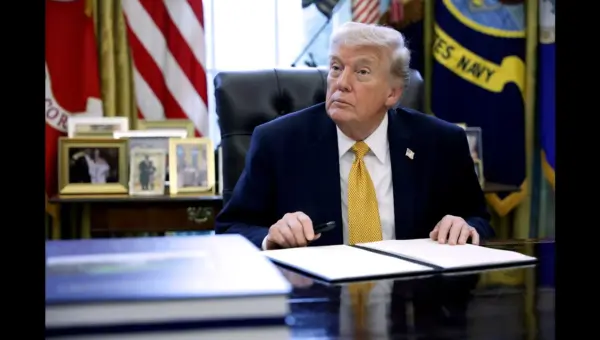
Beyond the policy specifics, the visual dynamic between Trump and Vance is also scrutinized. The analysis describes Vance as appearing unconvincing in his own defense and Trump as looking “incredibly disinterested.” This observation leads to a provocative assessment of Vance’s political “talent,” suggesting that his lack of charisma and “spark” makes his attempts to defend the administration appear “dry as a piece of toast.” In contrast, even a diminished Trump is seen as possessing a certain stage presence, a ability to “dominate a stage” that Vance seemingly lacks.
The core argument is that regardless of Vance’s efforts to distance himself or moderate his public appearances, he will remain inextricably linked to Trump’s policies and actions. The “murdering of Renee Nicole Good and Alex Spreddy” (a misstatement in the transcript, likely referring to a different event or individual) and the current military actions are presented as indelible stains on Vance’s political record, destined to follow him into future electoral cycles.
Schrödinger’s Strait of Hormuz: The Logic of War
The exchange then shifts to President Trump’s own remarks about the conflict, particularly his assertion that Iran’s air force and navy have been “totally obliterated.” When asked if the war could conclude within the week, Trump responded, “Yeah, sure.” However, when pressed, “Will we?” he conceded, “I don’t think so, but it’ll be soon.” This oscillation between definitive statements and uncertain timelines is a recurring theme.
A significant point of contention arises from Trump’s claim that Iran’s military is no longer a threat to ships in the Strait of Hormuz, despite the strait remaining closed. The analysis labels this as a “fundamental flaw” and a “Schrödinger’s Strait of Hormuz” paradox, where two contradictory conditions (a destroyed navy and a navy threatening shipping) appear to exist simultaneously. This logical inconsistency fuels skepticism about the administration’s narrative and objectives.
International Ripples and Speculative Diplomacy
The broader implications of the current geopolitical climate are also touched upon. The analysis links the lifting of oil sanctions on Russia to increased Russian funding, potential escalation in Ukraine, and the provision of intelligence to Iran, all while oil prices rise and stock markets falter. This paints a picture of a world not necessarily becoming “safer overall” through these actions.
Adding another layer of intrigue, Trump’s repeated references to consulting with a “former president” about the Iran strikes are explored. While he initially hesitates to name names, the conversation strongly suggests it was Bill Clinton. The former president, according to Trump, expressed regret for not taking similar action: “that person said I wish I did it.” This speculative diplomacy, with former leaders weighing in on current military decisions, adds a peculiar dimension to the ongoing events.
The Ayatollah, Dyslexia, and Projection
The discussion veers into more unusual territory when Trump is asked about reports concerning the new Iranian Supreme Leader, including claims of his potential homosexuality and a narrow escape from an air strike. Trump’s response focuses on the perceived threat of Iran obtaining nuclear weapons, a threat he claims to have prevented. However, his interpretation of intelligence about the Supreme Leader’s son being “not very bright” is quickly twisted into speculation about his sexuality.
This leads to an abrupt pivot to attacking California Governor Gavin Newsom, accusing him of having learning disabilities and making a false claim about a rally audience being Black. The analysis refutes these claims, stating that Newsom was making a joke and the audience was not Black. The commentary concludes that Trump’s own rhetoric, filled with insults about intelligence, reading ability, and accusations of racism, suggests a strong element of projection.
Why This Matters
The situation surrounding JD Vance and the Trump administration’s foreign policy highlights critical issues for American governance and public trust. Firstly, it exposes the challenges of political consistency in a high-stakes environment. Vance’s struggle to reconcile his past statements with current actions raises questions about the fluidity of political principles when power and loyalty are at play. This can erode public trust if perceived as opportunistic rather than principled.
Secondly, the analysis underscores the importance of clear and consistent communication from leadership, particularly during times of military conflict. The contradictory statements and logical inconsistencies attributed to President Trump regarding the conflict in Iran and its impact on global security create confusion and undermine the credibility of the administration’s strategy. The “Schrödinger’s Strait of Hormuz” example is a stark illustration of how opaque or contradictory messaging can breed skepticism.
Thirdly, the dynamic between Vance and Trump serves as a case study in political alignment. Vance’s apparent need to defend Trump’s actions, even when seemingly at odds with his own stated beliefs, demonstrates the powerful influence of party loyalty and presidential authority within the Republican party. The analysis suggests that this alignment, while politically necessary for Vance in the short term, could have long-term repercussions for his political identity and future aspirations.
Implications, Trends, and Future Outlook
The events described suggest a continuing trend of assertive, often unilateral, foreign policy actions driven by presidential prerogative, with legislative and even vice-presidential support being secondary or performative. The reliance on rhetoric that contrasts past “dumb” leadership with present “smart” leadership could become a more common framing device for administrations seeking to legitimize their actions.
The analysis also points to a potential increase in proxy conflicts or escalating tensions in the Middle East, especially if the stated objectives of current military actions are not met swiftly or clearly. The connection drawn to global energy markets and broader geopolitical stability suggests that regional conflicts can have far-reaching and unpredictable consequences.
For JD Vance, his association with this period of foreign policy will likely be a defining aspect of his career. His ability to navigate these challenges and redefine his political brand in the future will be closely watched. The broader trend of political figures being tightly bound to the persona and policies of a dominant leader like Trump suggests a future where independent ideological stances may become increasingly difficult to maintain within certain political factions.
Historical Context and Background
The transcript’s references to the “global war on terror,” and the “mid-2000s” interventions in Afghanistan and Iraq, provide crucial historical context. These conflicts, characterized by immense financial cost (trillions of dollars) and prolonged engagement (20 years), serve as a cautionary tale against open-ended military commitments. Vance’s initial skepticism aligns with a segment of the American public and political spectrum that has grown weary of these lengthy and costly interventions.
The concept of “mission creep” itself is a well-documented phenomenon in military history, where initial, limited objectives gradually expand due to unforeseen circumstances, political pressures, or a desire for more comprehensive outcomes. The comparison to Afghanistan and Iraq is apt, as both conflicts saw significant shifts in their stated goals and durations from their initial conception.
Furthermore, the mention of Iran’s nuclear program and the Strait of Hormuz taps into decades of U.S. foreign policy concerning the region. The U.S. has long sought to prevent Iran from developing nuclear weapons and has maintained a significant naval presence to ensure freedom of navigation in critical waterways like the Strait of Hormuz. The current administration’s actions are framed as a direct response to these long-standing concerns, albeit executed in a manner that draws criticism for its execution and transparency.
The tightrope JD Vance walks is not just about foreign policy; it’s about the very definition of political integrity in the shadow of a larger-than-life figure. His ability to articulate a consistent vision, or his struggle to do so, will shape perceptions of his leadership for years to come.
Source: JD Vance STRUGGLES as Trump WATCHES IN DISGUST (YouTube)

Related Articles
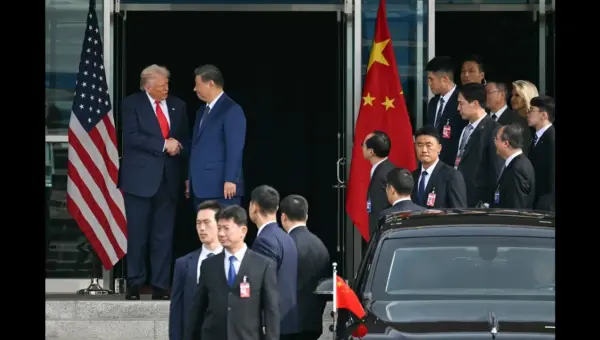
Trump’s “Walk Away” Tactic Signals Tougher Stance on China
Retired Air Force Brigadier General David Stillwell believes President Trump's strategy of being willing to walk away from negotiations puts pressure on China. This tactic, combined with US global actions and strengthened alliances, signals a more assertive American foreign policy.
Vance Tackles Federal Fraud: A New War on Waste
Vice President JD Vance has launched a new White House task force to combat fraud in federal benefit programs. The initiative aims to improve verification processes and foster inter-agency cooperation to stop waste and restore public trust. The task force highlights issues in states that allegedly operate on an honor system for benefit distribution.


Israelis Forge Resilience Amidst Constant Bomb Shelter Drills
Life in Israel is a blend of resilience and constant vigilance, with many families adapting to frequent bomb shelter drills and even sleeping in makeshift shelters. Despite ongoing missile attacks, Israelis strive to maintain normalcy, though businesses face disruption and emotional fatigue is a growing concern.