Supreme Court Strikes Down Trump’s ‘Liberation Day’ Tariffs, Plunging UK Businesses into Deep Uncertainty
The US Supreme Court has ruled Donald Trump's 'Liberation Day' tariffs illegal, creating profound uncertainty for UK businesses. While Trump swiftly announced new temporary tariffs, the decision leaves exporters grappling with unstable trade conditions, an inability to plan long-term, and an unclear path for potential refunds on billions of dollars in collected duties.

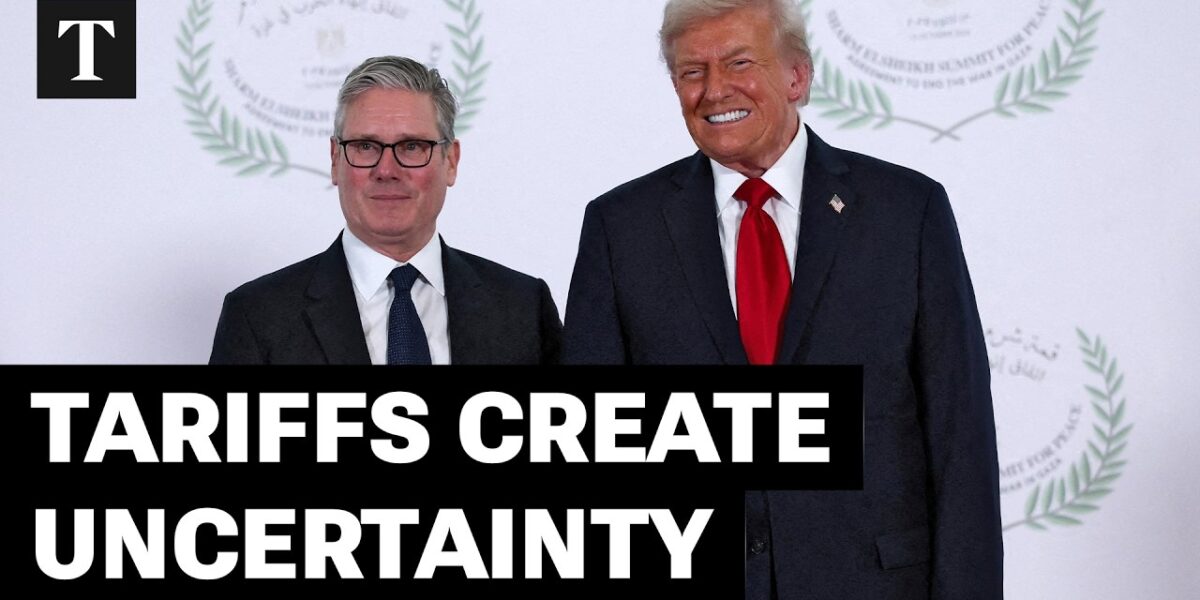
Supreme Court Strikes Down Trump’s ‘Liberation Day’ Tariffs, Plunging UK Businesses into Deep Uncertainty
In a significant blow to Donald Trump’s economic agenda, the United States Supreme Court has ruled that his controversial ‘Liberation Day’ tariffs, announced on April 2nd, were illegal. The decision, which saw the court vote 6-3 against the former President’s policy, has not only sparked a furious reaction from Trump but has also cast a long shadow of uncertainty over UK businesses heavily reliant on trade with the US.
While Trump swiftly announced a new, temporary 10% global tariff to replace the invalidated measures, the rapid policy shifts and the looming question of refunds for previously collected duties have left exporters, particularly those in the United Kingdom, struggling to plan for the future. Economist Daniel Smith from the Center for Economics and Business Research highlighted the precarious position of these businesses, emphasizing their inability to engage in long-term strategic planning amidst the volatile trade landscape.
The Supreme Court’s Decisive Ruling and Trump’s Outcry
The Supreme Court’s decision centered on the legality of Trump’s initial tariffs, which were levied using emergency powers. This approach had been contested through various courts, with many legal observers anticipating a Supreme Court challenge. Daniel Smith confirmed this sentiment, stating, "In some ways, no. Um, the announcement using emergency powers was contested through a variety of courts and it looked likely that the Supreme Court was going to strike it down." The decisiveness of the 6-3 vote, notably with two Trump appointees voting against the policy, underscores the legal community’s concerns regarding the executive branch’s use of emergency powers for broad economic policy.
Speaking from the White House following the ruling, a visibly furious Trump did not mince words. He expressed profound disappointment and shame concerning certain members of the court, accusing them of lacking the courage to "do what’s right for our country." Despite the legal setback, Trump vowed to pursue alternative avenues to push through his initial tariff agenda, signaling an unwavering commitment to his protectionist trade policies.
Trump’s Immediate Response: A New, Temporary Tariff Regime
True to his word, Trump wasted no time in unveiling a new tariff measure. While his original ‘Liberation Day’ 10% minimum global tariffs were deemed illegal, he announced an alternative act that allows him to implement a 10% global tariff for a maximum of 150 days. This effectively serves as a temporary replacement for the invalidated April announcement.
This rapid pivot, however, offers little comfort to international businesses. The temporary nature of the new tariffs — guaranteed for only 150 days — introduces a fresh layer of uncertainty. As Daniel Smith explained, "These new tariffs are only guaranteed to be in play for 150 days. What this means is that contracts regarding shipping and imports to the United States that are often signed maybe long term, these the tariff rate around them is unknown. It’s not clear if that 10% is still going to be there in at the second half of the year or whether the rate will change."
For businesses that operate on long-term contracts and require stable regulatory environments to thrive, this short-term, fluctuating tariff policy is a significant impediment. The inability to predict future tariff rates makes it incredibly difficult to price goods, manage supply chains, and negotiate international agreements, thereby stifling investment and growth.
The UK’s Precarious Position in Global Trade
The United Kingdom finds itself in a particularly delicate position. Post-Brexit, the UK has been actively seeking new trade agreements, with a comprehensive deal with the US being a high priority. The 10% tariff rate, which the UK had reportedly negotiated as a "very good deal" compared to other nations and the EU under Trump’s previous regime, is now subject to the same instability. The question of whether this preferential rate, or any rate, will endure beyond the 150-day window is paramount for UK exporters.
Smith underscored the profound impact on British businesses: "This is in many ways the issue for lots of… many UK businesses is that these announcements come so thick and fast and there’s so much uncertainty for all these businesses that are exporters to the US." The constant flux in US trade policy makes it exceedingly difficult for UK companies to engage in the necessary forward planning required for international trade. This affects everything from production schedules and logistics to financial forecasting and market entry strategies.
The Complexities of Tariff Refunds: A Long and Uncertain Battle
One of the most pressing and complex issues arising from the Supreme Court’s ruling is the question of refunds for tariffs collected under the now-illegal policy. The tariffs in question have reportedly brought a staggering $175 billion into the US Treasury, with approximately $130 billion specifically stemming from the duties deemed unlawful.
Many UK businesses, having been impacted by these ‘Liberation Day’ tariffs, feel they are entitled to a share of any refunds. However, the path to recovering these funds is anything but clear. Trump has indicated that any refund process would be protracted, likely involving lengthy court battles. "The actual state of refunds is another area in which things are very, very uncertain at the moment," Daniel Smith stated, highlighting the lack of clarity.
The absence of clear precedents for tariff refunds in such situations further complicates matters. While American companies had previously formed pressure groups to highlight the adverse impact of tariffs on US consumers, the likelihood of individuals, companies, or even countries successfully clawing back these substantial sums remains highly speculative. The prospect of mounting a successful legal challenge, given the potential for prolonged and costly litigation, deters many, leaving billions in limbo.
Broader Implications and the Enduring Tariff Strategy
Despite the Supreme Court’s ruling, Trump’s commitment to using tariffs as a central economic and political tool remains undiminished. His swift announcement of a replacement tariff, albeit temporary, signals that the underlying strategy of leveraging import duties to achieve various objectives — from protecting domestic industries to exerting geopolitical pressure — will persist.
The specific avenue for levying tariffs that was outlawed by the Supreme Court was the use of the International Emergency Economic Powers Act (IEEPA). This act grants the President broad authority to regulate international commerce during a national emergency. The court’s ruling suggests a limitation on how expansively this power can be applied for general economic policy rather than genuine emergency situations.
However, as Smith pointed out, "ultimately the president is still pursuing a system of tariffs." This means that the impacts felt by consumers, such as higher prices for imported goods, are likely to continue. The question now is whether Trump will seek other legal routes or legislative approvals to implement his tariff agenda on a more permanent basis, circumventing the limitations imposed by the Supreme Court.
For UK exporters and the global trading community, the core takeaway is the enduring uncertainty. "This incredible uncertainty, this inability to forward plan is highly likely to continue into the future," Smith concluded. The political dynamics surrounding trade policy, combined with the rapid and often unpredictable nature of announcements, create a challenging environment for international commerce. Businesses must now brace themselves for continued volatility, adapting to a landscape where long-term strategic planning is increasingly difficult, and the stability of trade relations remains a moving target.
Source: Trump's Tariffs Leave UK Business In Limbo With Inability To Plan Ahead | Daniel Smith (YouTube)

Related Articles
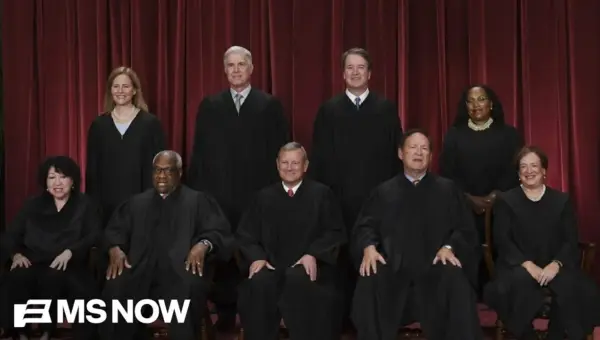
Supreme Court’s Legitimacy Tested: A Look Inside
The Supreme Court is increasingly seen as the "last branch standing" to resolve national disputes, a role that strains its legitimacy. Author Sarah Isker's new book, 'Last Branch Standing,' examines the court's internal dynamics and its complex relationship with public opinion and other branches of government.

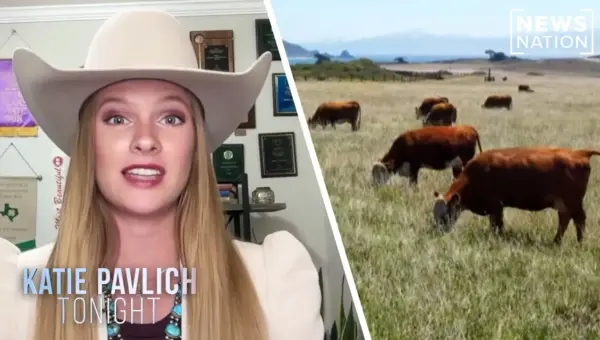
US Beef Faces Global Strain, Seeks Domestic Boost
American cattle ranchers face rising costs and foreign competition, leading to a new voluntary labeling initiative for U.S. beef launching in 2026. This aims to empower domestic producers and inform consumers amidst complex global trade rules.
Justice Dept. Fails in Bid for Voter Data
The Justice Department is facing significant legal defeats in its efforts to obtain sensitive state voter data. Despite numerous lawsuits, the department has lost every case on its merits, raising concerns about its motives and strategy. The legal battles are now heading towards higher courts, including the Supreme Court.