Trump’s Shifting Stance Exposes MAGA’s Unspoken Doubts
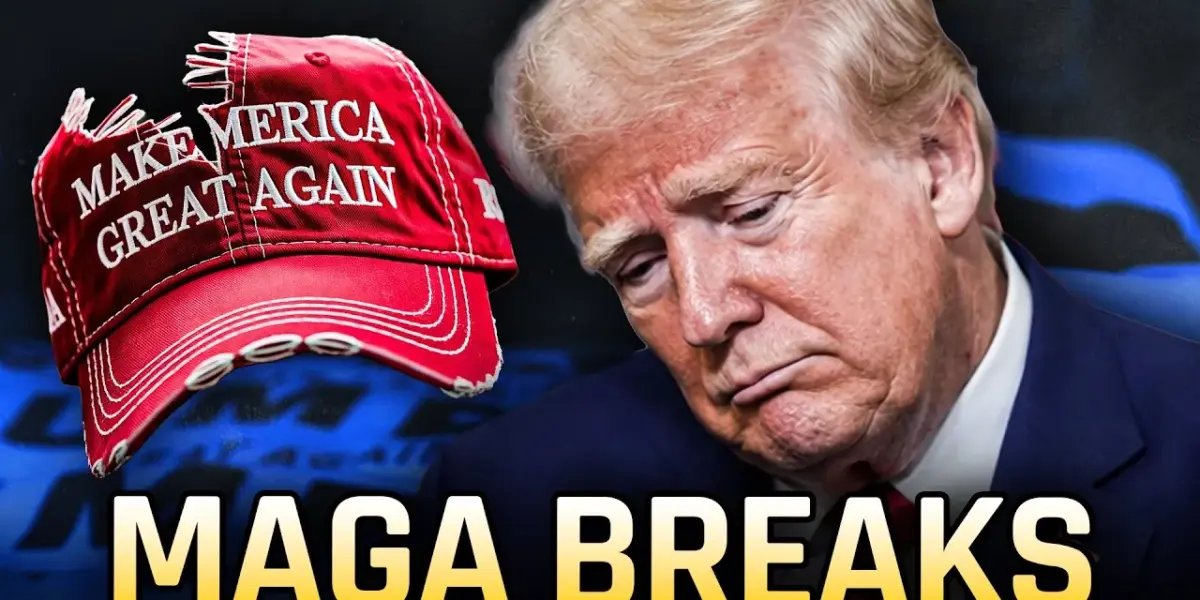
Piers Morgan's candid remarks about Donald Trump's shifting Middle East policy highlight a growing, unspoken doubt within the MAGA movement. The phrase 'we didn't vote for this' signals a quiet reckoning, suggesting a dawning realization that criticisms once dismissed may hold truth.

Trump’s Shifting Stance Exposes MAGA’s Unspoken Doubts
The political landscape is often a theater of unwavering conviction, where loyalty is paramount and admission of error is a rarity. Yet, cracks are beginning to show in the seemingly monolithic edifice of MAGA support, not through public recantations, but through the subtle, often unacknowledged, shifts in rhetoric from within its own ranks. A recent observation, sparked by a headline concerning Piers Morgan’s candid remarks about Donald Trump’s foreign policy indecision, highlights a fascinating phenomenon: the dawning realization among some Trump loyalists that the criticisms once leveled against their leader might, in fact, hold a kernel of truth. While a full-throated endorsement of the ‘left’s’ perspective is unlikely, the growing chorus of ‘we didn’t vote for this’ signals a quiet, internal reckoning.
The Piers Morgan Revelation
The catalyst for this reflection, as noted, was Piers Morgan’s interview discussing Donald Trump. Morgan, a figure known for his long-standing support of Trump, expressed bewilderment at the former president’s evolving and seemingly contradictory stances on the Middle East. “He doesn’t have a clue about what he wants in the Middle East. His mission statements have changed hour by hour,” Morgan reportedly stated, conveying a sense of frustration and confusion that belies his usual staunch defense. This observation from a supporter, rather than an opponent, carries significant weight. It suggests that even those closest to Trump, those who have championed his cause, are beginning to question the coherence and consistency of his positions.
Beyond the Echo Chamber: The ‘We Didn’t Vote For This’ Sentiment
What is particularly striking is the absence of any public admission from figures like Morgan, Joe Rogan, or Marjorie Taylor Greene that the ‘left’ was correct in its long-held criticisms of Trump. The narrative of being ‘duped’ or that ‘the left was right’ is conspicuously absent. This is understandable; the political identity of many MAGA supporters is deeply intertwined with their unwavering belief in Trump and their opposition to what they perceive as liberal overreach. To admit the ‘left’ was right would be to dismantle a significant portion of their own worldview and to concede a profound personal misjudgment.
However, the transcript points to a phenomenon that is perhaps more potent than an overt admission: the emergence of the phrase, ‘we didn’t vote for this.’ This sentiment, repeated across various platforms, is interpreted by the observer not as a rejection of Trump’s core ideology, but as a coded acknowledgment of error. It’s a way of saying, “We screwed up. You guys were right.” This nuanced expression allows individuals to distance themselves from specific outcomes or behaviors without fully renouncing their overall political alignment or admitting fault to those they have previously dismissed.
The Unspoken Realization: A Departure from Alternative Realities
The piece posits that for years, Trump’s critics were often derided as suffering from ‘Trump Derangement Syndrome,’ accused of being overly emotional, irrational, and blinded by partisan animosity. The argument presented is that these critics were not driven by hatred, but by an adherence to reality. They observed Trump’s actions, his rhetoric, and his policy shifts and concluded that he was not the consistent, infallible leader his supporters believed him to be. The current wave of ‘we didn’t vote for this’ sentiment suggests that a segment of the MAGA base is now beginning to see what the critics saw all along.
The observer suggests that many Trump supporters have been living in an ‘alternative reality bubble,’ where Trump was viewed as a messianic figure, incapable of error or inconsistency. The current disillusionment, even if unspoken, indicates a dawning awareness that this alternate reality is crumbling. The realization that their leader may not be who they thought he was leads to a logical conclusion: the critics weren’t lying; Trump was. The difficulty for these supporters lies in admitting this, not necessarily to the public, but to themselves, and by extension, to those they previously alienated.
The Cult of Personality and the Cost of Ego
The analysis touches upon the concept of ‘cult mentality’ as a reason why many within the MAGA movement may never publicly acknowledge the validity of past criticisms. This mentality, characterized by unwavering devotion and a resistance to external information that contradicts the group’s beliefs, makes it difficult for individuals to break away or admit they were wrong. For those who have invested deeply in Trump’s narrative, admitting error would be a significant blow to their ego, a concept the observer likens to Trump’s own aversion to admitting mistakes.
The observer empathizes with this reluctance, acknowledging that admitting such a profound mistake would be emotionally devastating and require a level of maturity that may be lacking. However, the underlying message remains: the observer is content with this unspoken realization. The truth, they argue, is that the critics were not mistaken. Trump, it is asserted, will continue to exploit, grift, lie, cheat, and steal, selling out his supporters when it is profitable. These are not new accusations; they are statements that have been made since Trump’s political ascent in 2015 and are now, perhaps, being quietly validated by those who once vehemently denied them.
Why This Matters
The significance of this subtle shift cannot be overstated. It speaks to the potential for introspection, even within the most fervent political movements. While a mass exodus from MAGA or a widespread public renunciation of Trump is unlikely, the growing sentiment of ‘we didn’t vote for this’ represents a critical juncture. It suggests that the unwavering loyalty that once defined the movement is beginning to fray at the edges. This internal dissonance, even if unvoiced, could have profound implications for future political discourse and the trajectory of the MAGA movement itself. It implies a growing awareness of the gap between the promised ideal and the experienced reality, a gap that could lead to disengagement, a re-evaluation of political allegiances, or at the very least, a more critical and less deferential approach from a segment of the base.
Implications, Trends, and Future Outlook
The trend observed is a slow, almost imperceptible erosion of absolute belief. The future outlook for MAGA may involve a more fragmented base, with some members clinging to the original fervor and others quietly distancing themselves from specific actions or statements. The ‘we didn’t vote for this’ sentiment could become a more common, albeit still coded, expression of disillusionment. This could lead to a more nuanced political landscape, where the monolithic image of Trump support is replaced by a spectrum of engagement and belief. The implications extend to how political movements are sustained; relying solely on an uncritical cult of personality may prove unsustainable in the long run as reality inevitably intrudes.
Historical Context and Background
Donald Trump’s political career has been marked by a consistent pattern of challenging established norms and attracting a fiercely loyal following. His initial rise in 2015 was met with widespread skepticism and criticism from mainstream political figures and media outlets, who often pointed to his perceived lack of policy depth, his controversial rhetoric, and his business dealings. The term ‘Trump Derangement Syndrome’ emerged as a counter-narrative from his supporters, framing any criticism as politically motivated hysteria. This dynamic has created a deep ideological chasm, with critics on the left often highlighting Trump’s perceived inconsistencies and self-serving behavior, while supporters defended him as an outsider fighting a corrupt establishment. The current observations suggest a potential recalibration of this dynamic, where some of the very criticisms once dismissed as partisan attacks are now being privately considered, if not publicly acknowledged.
Source: Trump Deteriorating As MAGA Crumbles (YouTube)

Related Articles

Polls Spell Doom: Republicans Face Voter Backlash
New polling data reveals a sharp decline in public confidence regarding the economic impact of Republican policies, particularly under Donald Trump. A significant majority now feel financially worse off, a trend that is especially pronounced among independent voters. This economic discontent poses a major challenge for the Republican party heading into future elections.
Trump Delays Iran Strike Deadline Amidst Shifting Diplomacy
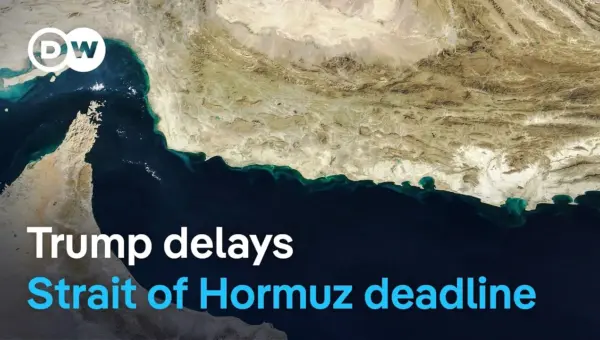
President Donald Trump has extended his deadline for potential strikes on Iranian energy plants to April 6th, amid reports of U.S.-Iran diplomatic talks mediated by Pakistan. This move comes as Israel continues its strikes on Iran and the U.S. deploys additional military assets to the region. Analysts point to mixed signals, economic pressures, and strategic miscalculations as key factors shaping the evolving situation.
Iran War Claims Ring Hollow as US Troops Injured in New Attack
Days after Donald Trump claimed "we've won" the war with Iran, a new attack injured approximately a dozen U.S. troops and damaged aircraft. This incident contradicts Trump's assertions of victory and raises serious questions about the strategy and reality of the ongoing conflict.