NATO Allies Reject Trump’s Hormuz Request
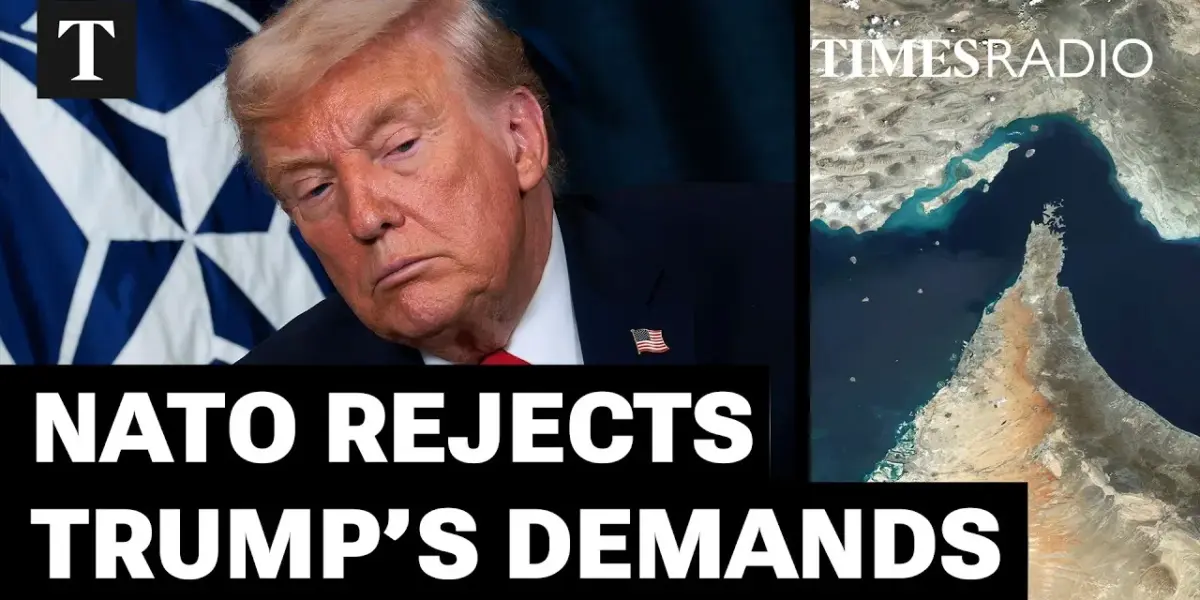
European allies have largely rejected U.S. President Donald Trump's demand for assistance in protecting the Strait of Hormuz, citing NATO's defensive mandate and geographic limitations. Experts point to a transactional approach, with European nations prioritizing their own security interests and wary of being drawn into a conflict initiated by others.

NATO Allies Balk at Trump’s Strait of Hormuz Demand
European nations have largely rejected U.S. President Donald Trump’s call for assistance in protecting the vital Strait of Hormuz, a crucial global shipping lane currently at the center of escalating tensions with Iran. The demand, made as the confrontation between the U.S. and Iran enters its third week, has been met with a firm stance from key NATO allies who argue the operation falls outside the defensive alliance’s mandate and geographic scope.
A Transactional Approach to Security
President Trump expressed frustration with NATO allies, questioning why the U.S. should protect nations that do not reciprocate, stating, “We were going to protect them, but I always said when in need, they won’t protect us.” He emphasized the U.S. military’s strength and the expectation that allies should readily provide support when needed, particularly for specialized assets like mine-sweeping vessels, an area where the UK possesses particular expertise.
However, experts like Ed Arnold, a Senior Research Fellow for European Security at the Royal United Services Institute (RUSI), highlight Trump’s “transactional approach” to international relations. Arnold explained that European nations were not consulted on the initial U.S.-Israeli operation against Iran. Now, as Iran employs economic pressure, Trump is seeking support, but the request faces significant hurdles.
“From a NATO perspective, NATO is a defensive alliance. It doesn’t do offensive operations in that way. And also is confined in terms of what NATO can do to the Euroatlantic area of which the Middle East is not a part. So he might want to ask for member states to join but certainly at a NATO level then it’s not really a credible argument.”
Divergent Priorities and NATO’s Mandate
The core of the disagreement lies in NATO’s identity as a defensive alliance focused on the Euro-Atlantic region. The Middle East, where the Strait of Hormuz is located, falls outside this purview. Furthermore, European nations, being more reliant on the Strait for oil imports than the U.S., have their own strategic interests and threat assessments.
Federica Mogherini, the EU’s High Representative for Foreign Affairs and Security Policy, indicated a desire to strengthen a naval mission in the Red Sea, but not to expand it to the Strait of Hormuz at this time. This approach suggests a cautious strategy, focusing on areas of direct European interest and avoiding entanglement in potentially broader conflicts.
A Coalition of the Willing?
Arnold suggests that any European involvement would likely manifest as a “coalition of the willing” – individual states choosing to participate rather than a collective NATO action. This aligns with Trump’s known preference for bilateral dealings over multilateral organizations, potentially leading him to engage directly with member states to leverage their capabilities.
The UK, for instance, has limited naval capacity. Sending a significant asset to the Strait of Hormuz would strain its operational capabilities, impacting its ability to address other pressing security concerns, such as deterrence against Russia in the High North. France, however, has shown a willingness to deploy naval assets, potentially as part of a broader diplomatic signaling effort rather than a direct military confrontation.
Exposing Vulnerabilities?
Some analysts posit that Trump’s public appeals for assistance might also serve to expose the perceived inadequacies of allied defense capabilities. By highlighting specific needs, such as mine-sweeping, Trump could be indirectly pressuring allies to increase their defense spending and improve their readiness, a long-standing objective of his administration.
Germany’s Defense Minister, Boris Pistorius, articulated a common sentiment among European allies, stating, “This is not our war. We have not started it.” This underscores the reluctance to be drawn into a conflict initiated by others, particularly when perceived as outside their immediate security interests.
Domestic Policies Amidst International Tensions
While international security concerns dominate headlines, domestic issues also remain a focus for European leaders. In the UK, Prime Minister Keir Starmer announced a £53 million package to support low-income families reliant on heating oil, a measure aimed at mitigating the impact of surging energy prices.
Jack Elam, Political Editor at The Sun, described the package as significant but not far-reaching, noting that it is dwarfed by previous government support measures. The announcement comes amidst ongoing debates about energy regulation and potential fuel duty adjustments, highlighting the complex interplay between international crises and domestic economic pressures.
Looking Ahead
The situation in the Strait of Hormuz remains volatile, with diplomatic efforts and military posturing continuing. The response from European allies underscores a strategic divergence from the U.S. on how to manage the escalating tensions with Iran. Future developments will likely depend on Iran’s actions, the U.S. response, and the willingness of individual European nations to commit resources, potentially outside the formal NATO framework, to ensure the continued flow of global trade.
Source: Why Nato Allies Are Refusing Trump’s Hormuz Request | Ed Arnold (YouTube)

Related Articles

Iran Blocks China Ships, Exposing Beijing’s Weak Grip
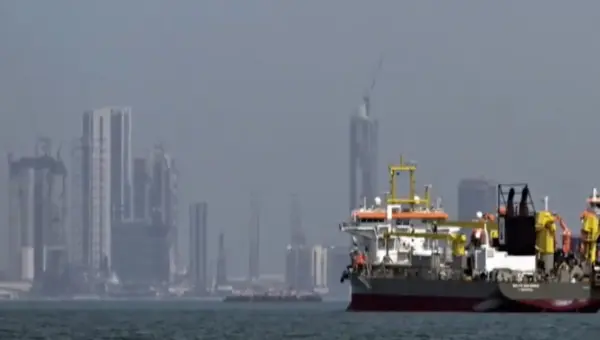
Iran's recent decision to block Chinese ships at the Strait of Hormuz is exposing the limits of Beijing's influence in the Middle East. This action is causing delays and cancellations for Chinese manufacturers, turning a perceived geopolitical win into an economic strain.
Rubio: US Can Achieve Iran War Goals Without Troops
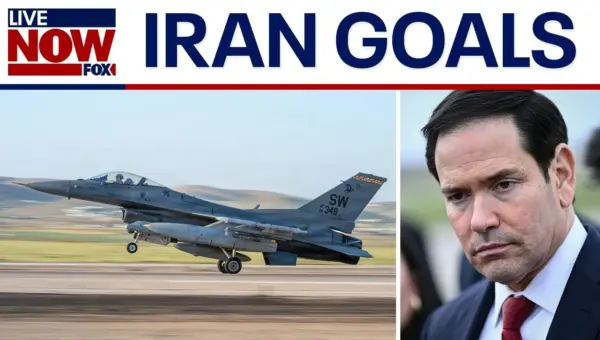
Senator Marco Rubio outlined a strategy to counter Iran without deploying U.S. ground troops, focusing on weakening the regime and enhancing maritime security. He also criticized Cuba's economic system and expressed concerns about West Bank violence.


Israel Escalates Iran Strikes, Warns of Wider War
Israel has launched significant strikes inside Iran following continued missile fire, warning of further escalation. The conflict risks wider regional instability and economic disruption, especially concerning the Strait of Hormuz.